
What if the smoothest rental tenancies are shaped before the first tenant walks through the door? A considered new landlord checklist WA is about more than preparing a property for viewings: it connects safety, clear documentation and tenant communication with the ongoing care of your investment.
It’s natural to feel unsure about what needs attention first, particularly when Western Australia’s tenancy requirements and your responsibilities don’t end once an agreement is signed. A well-presented home and a considered rent matter, but so do accurate records, timely maintenance and a clear approach to inspections. Getting these details in order from the outset can help reduce avoidable misunderstandings and make ownership more manageable.
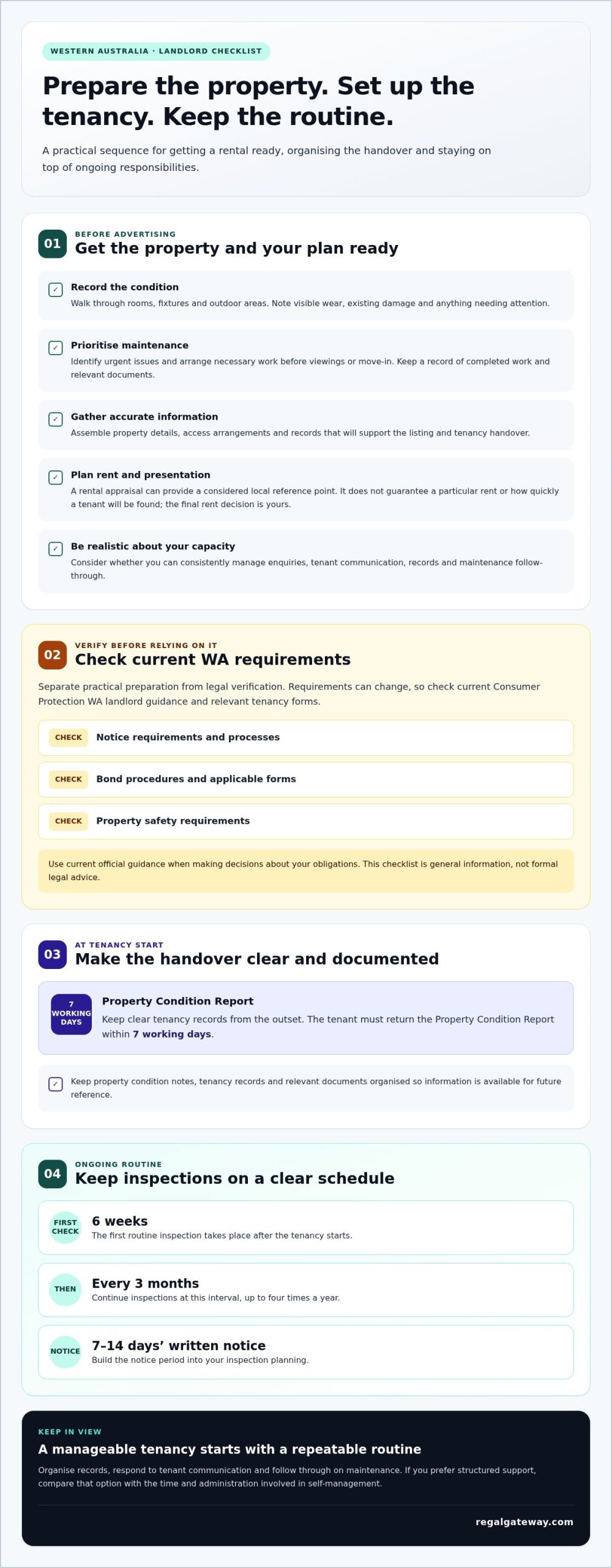
This practical checklist walks you through preparing the property, setting up tenancy documents and records, welcoming tenants responsibly, and managing repairs and communication once the tenancy begins. You’ll also learn what to keep overseeing, including routine inspections: the first takes place 6 weeks after the tenancy starts, then inspections occur every 3 months, up to four times a year, with 7-14 days’ written notice. With a structured plan, you can begin with greater confidence and choose an approach to property management that suits your investment and your time.
Key Takeaways
- Use a new landlord checklist WA to sequence property preparation, tenant handover and ongoing management tasks.
- Assess the property’s condition and maintenance needs before planning the listing and setting a considered rent.
- Keep clear tenancy records from the outset, including the Property Condition Report, which the tenant must return within 7 working days.
- Build inspections into your routine: the first is 6 weeks after move-in, then every 3 months, with 7-14 days’ written notice.
- Compare the time and administration involved in self-management with the structure of local property management support.
New landlord checklist WA: establish your responsibilities before advertising
A landlord checklist is a sequence for preparing, leasing and responsibly managing a Western Australian rental property. Used before advertising, it helps you see what’s ready, what needs attention and which decisions require more information. Think beyond presentation: the property’s condition, outstanding maintenance, tenancy records and your capacity to respond to tenant communication all contribute to a considered start.
Separate practical preparation from legal verification. You can document the home’s condition, identify repairs and organise relevant records now. For rules about notices, bonds, forms and property safety, consult current Consumer Protection WA landlord guidance before acting. Requirements can change, so don’t rely on an old checklist or assume a process applies unchanged.
What to organise before a Cockburn property is advertised
Work through the property in a deliberate order. First, assess its condition and record existing issues. Next, identify urgent maintenance and arrange what should be addressed before a tenant moves in. Then gather accurate property details, relevant records and access arrangements. A rental appraisal can help you understand how the home may be positioned in its local market.
- Condition: Note visible wear, existing damage and areas needing attention.
- Maintenance: Distinguish issues that should be resolved before move-in from items to monitor.
- Information: Assemble property details and records that support a clear listing and handover.
- Readiness: Consider whether you can manage enquiries, communication and tenancy tasks consistently.
Local rental demand and the property’s presentation can inform listing readiness, but neither guarantees a particular rent or how quickly a tenant will be found. A rental appraisal offers a considered reference point; the final decision remains yours.
Which WA landlord rules should you verify first?
Before advertising, review current Consumer Protection WA guidance and the relevant tenancy forms. Give particular attention to requirements concerning notices, bonds and property safety, since these details can change. A broad overview of landlord-tenant law may introduce the general relationship, but it isn’t a guide to Western Australian requirements.
Use this simple separation to keep your preparation organised:
- Prepare now: Assess condition, plan necessary maintenance, gather records and decide how you’ll manage the tenancy.
- Verify before relying on it: Check current WA guidance for applicable forms, notice processes, bond procedures and safety requirements.
This checklist is general information, not formal legal advice; use current official guidance when making decisions about your obligations.
Finally, be realistic about your time. Self-management involves keeping records organised, responding to tenant communication and following through on maintenance. If you’d prefer structured support, Regal Gateway Property provides landlord support, rental appraisals and property management across Atwell and surrounding Cockburn suburbs. Understanding the responsibilities first helps you choose an approach with confidence.
Prepare the rental property, set a considered rent and plan the listing
Once you’ve mapped out your responsibilities, prepare the property in a sequence that supports a confident handover: inspect its condition, address necessary maintenance, gather accurate property information, then plan the marketing. This order helps prevent attractive presentation from obscuring issues that should be resolved before a tenant moves in.
How to prepare a rental home for prospective tenants
Walk through the home as a prospective tenant might. Review cleanliness, presentation, access and visible maintenance, noting anything that could affect comfort or use. Prioritise unresolved urgent maintenance rather than treating fresh paint or polished photographs as evidence that the property is ready. Keep a record of work completed and retain relevant documents for future reference.
- Inspect: Record the condition of rooms, fixtures and outdoor areas, and note any concerns.
- Arrange: Address necessary maintenance before viewings or move-in, with urgent issues taking priority.
- Gather: Assemble accurate property details, access arrangements and relevant records for the listing and tenancy handover.
- Plan: Decide how the property will be presented and marketed once preparation is complete.
Local context can help shape how you describe the home to prospective tenants. Focus on features that are relevant to the property and its suburb, rather than relying on generic claims. If you’re assessing the home as part of a broader investment strategy, the Atwell property investment guide offers a local perspective to consider alongside your own objectives.
How to set rent without overlooking vacancy risk
You can set the rent as the owner, but the figure also affects how your property is positioned in its local market. If it sits above what comparable homes and current demand support, it may take longer to secure a suitable tenant. An aspirational asking rent isn’t automatically the strongest investment decision if the property remains vacant while you wait.
Compare relevant local rental evidence, looking for properties with similar features, condition and location. Avoid basing your decision on one headline figure or on what you hope the property will achieve. A rental appraisal can provide a considered reference point, but it isn’t a guarantee of rent or leasing speed. The final choice should reflect both the home’s qualities and the market conditions you’re observing.
For long-term planning, consider how presentation, maintenance and rent positioning work together to support your investment objectives. Regal Gateway Property provides rental appraisals and landlord support for owners in Atwell and surrounding Cockburn suburbs. Its local property management perspective can help organise the practical work behind a well-prepared listing. You can also explore local property management support as you decide how to manage the tenancy.
Use a tenant-start checklist for records, bond and clear responsibilities
A well-managed handover gives both parties a clear record of the property and the practical arrangements for the tenancy. Use this checklist to make sure key documents, contact details and responsibilities are addressed before the tenant settles in. Keep copies of completed documents and important communications together, so you can refer to the same information if a question arises later.
The Property Condition Report and bond: what to record
The Property Condition Report records the property’s condition at the start of the tenancy. It gives the tenant an opportunity to review the documented condition and note any differences, helping establish a useful reference for the tenancy record. The tenant must return the Property Condition Report within 7 working days. Keep the completed report and associated records securely on file.
Handle the bond as security, not as a source of rent. Rent cannot intentionally be paid from the bond. Before receiving or lodging a bond, review current Consumer Protection WA guidance for the applicable bond administration process and forms. Procedures can change, so use current official instructions rather than relying on an old template or an informal summary.
Emergency contacts, utilities and tenant responsibilities
Make responsibilities plain at handover, ideally in writing. The tenant must provide a contactable emergency contact for approval of emergency repairs. Explain how to report maintenance and distinguish routine requests from emergencies, so the tenant knows what communication channel to use. Clear instructions can help prevent confusion when a repair needs attention.
- Records: Keep the signed tenancy documents, condition report and key correspondence together.
- Bond: Treat it as security and follow current WA guidance for administration.
- Emergency contact: Obtain a contactable person for approval of emergency repairs.
- Utilities: Tenants are responsible for their utilities unless another arrangement applies. Don’t imply the agency connects services.
- Keys: Make clear that tenants are responsible for lost keys. If they’re locked out after hours, they must arrange their own locksmith.
Good communication is specific and professional. For example, provide the tenant with the relevant contact details, explain how to submit non-urgent maintenance, and record any agreed arrangements. If an emergency occurs, it must be reported by calling 08 9414 3788, not by email.
When looking for tenancy information online, check that the source applies to Western Australia. The Washington State Attorney General’s Landlord-Tenant Resources concern Washington State in the United States, not Western Australia, so they aren’t a guide to WA tenancy requirements. For local bond and tenancy procedures, rely on current Consumer Protection WA guidance. This distinction is a useful final check in any new landlord checklist WA: the right documents matter, and so does using the right jurisdiction.
Manage inspections and repairs with a consistent WA tenancy routine
Once a tenant has moved in, consistent follow-through helps you keep informed about the property’s condition and respond to maintenance concerns in an organised way. Build inspections, written records and clear communication into your regular landlord routine, while checking current WA requirements before relying on procedural details beyond the schedule below.
What to check and document during routine inspections
The routine inspection schedule is specific: the first inspection is 6 weeks after the tenant moves in, followed by inspections every 3 months, up to 4 per year. Each routine inspection requires 7-14 days’ written notice. Owners may attend only when their attendance has been disclosed to the tenants.
Use each inspection to observe the property’s general condition and note maintenance concerns. An inspection helps identify issues, but it doesn’t replace arranging appropriate follow-up. Keep the process respectful of tenant privacy, and make sure any owner attendance has been disclosed rather than assumed.
Regal Gateway Property’s routine inspections include detailed reports with photos, which are stored on file. A consistent report gives the landlord a useful record of observations over time. Where a concern needs action, record the issue, communicate the next step clearly and keep relevant maintenance correspondence together. That way, inspection findings can inform follow-up rather than sitting as isolated notes.
How to handle routine and emergency maintenance
A repeatable maintenance process starts by distinguishing non-urgent requests from emergency issues. For non-urgent maintenance, tenants can submit a request by email or through the website maintenance request form. Property owners pay for maintenance and repairs. Keep the request and subsequent communication organised, so it’s clear what was reported and what follow-up occurred.
Emergencies must be reported by calling 08 9414 3788. Don’t direct emergency issues to email. Tenants must also provide a contactable emergency contact for approval of emergency repairs, so confirm those details are available as part of your tenancy records.
- Schedule: Set reminders for the first inspection 6 weeks after move-in and every 3 months thereafter, within the annual limit.
- Notice: Provide 7-14 days’ written notice for routine inspections and verify current WA requirements before adding other procedural steps.
- Record: File reports, photos and relevant maintenance communication together.
- Follow up: Track reported issues through to the next action, keeping routine requests separate from emergencies.
This structure can make ongoing oversight more manageable without removing the landlord’s responsibility to understand tenancy obligations. If you’d like support coordinating inspections and maintenance, explore Regal Gateway Property management for local landlord support.
Choose a manageable landlord routine and local property management support
Letting a property is the beginning of an ongoing commitment, not a task that ends when a tenant moves in. The right management approach depends on the time you can set aside, your confidence with documentation and how you prefer to handle tenant communication and maintenance follow-up. Self-management can suit landlords who have a reliable system; professional management offers a way to organise recurring work through an agency.
What self-management requires beyond finding a tenant
Day-to-day ownership includes responding to tenant communication, keeping records in order, scheduling inspections and coordinating maintenance. A dependable calendar and filing process can help you track deadlines, decisions and follow-up without relying on memory. Consider not only how much time these tasks take, but whether you can maintain the routine consistently when several matters need attention at once.
| Area | Self-management | Delegated management support |
|---|---|---|
| Communication | You handle tenant enquiries and keep a record of key exchanges. | The agency provides landlord support and helps organise tenancy communication. |
| Inspections and records | You arrange inspections and maintain reports and related documents. | Routine inspections include detailed photo reports stored on file. |
| Maintenance | You receive requests, coordinate follow-up and retain relevant records. | The agency coordinates maintenance and keeps communication organised. |
Neither approach is automatically right for every landlord. Your choice may depend on the number of tasks you’re comfortable managing, the time available and the level of oversight you want to retain. Even with an agent, understanding your responsibilities remains part of informed ownership; exploring how dedicated agencies like Ali & Co Property Services Ltd manage residential lettings can provide useful insight into the level of ongoing support available.
How local property management supports Cockburn landlords
Regal Gateway Property is an independent boutique agency based in Atwell, serving landlords in Atwell, Aubin Grove, Wandi, Hammond Park, Success, Treeby and Mandogalup. Its property management includes landlord support, routine inspections with detailed photo reports stored on file, and maintenance coordination. A 24-hour emergency contact service is also available. For emergencies, tenants must call 08 9414 3788 rather than email.
Local support can bring structure to recurring tasks while giving you documented information to oversee your investment. For example, photo reports offer a record of inspection observations, while organised maintenance communication helps keep reported issues and follow-up connected. The value is practical: you have clearer visibility of ongoing property management without having to personally coordinate every administrative step.
If you’re weighing up how much of the routine to manage yourself, consider which responsibilities you want to retain and which you’d prefer to delegate. Explore Atwell property management support and request a rental appraisal through Regal Gateway Property to inform your next decision.
Make your next landlord decision with confidence
Your first tenancy can set the tone for how you manage the property over time. Treat your new landlord checklist WA as a working framework: revisit it as circumstances change, keep your decisions documented, and refine the routines that help you stay informed without letting administration take over.
There’s no single management approach that suits every owner. The right fit is the one that supports your investment goals and gives you confidence in the details. For Cockburn landlords, Regal Gateway Property brings an independent boutique perspective and local market knowledge to property management, with photo inspection reports that support clear oversight of the home.
If you’re ready to explore how that support could fit your plans, contact Regal Gateway Property about local property management. A considered next step can make the transition from ownership to a well-managed tenancy feel more assured. With the right structure in place, you can focus on the long-term value of your investment and move forward with confidence.
Frequently Asked Questions
What should a new landlord do before renting out a property in WA?
Before advertising, assess the property’s condition, organise necessary maintenance, collect accurate property details and check current WA tenancy guidance. A new landlord checklist WA can help you track these tasks and decide how you’ll manage tenant communication and records. For local context, compare relevant rental evidence and consider an appraisal for your suburb, whether the property is in Atwell, Aubin Grove, Wandi, Hammond Park, Success, Treeby or Mandogalup.
How often can a landlord inspect a rental property in WA?
WA tenancy rules allow up to 4 routine inspections per year. They take place every 3 months after the first inspection and require 7-14 days’ written notice. Keep a calendar of completed and planned inspections so you can monitor the annual schedule and retain a record of notices. Check current Consumer Protection WA guidance before relying on any additional procedural detail, as requirements can change.
When is the first rental inspection after a tenant moves in?
The first routine inspection is 6 weeks after the tenant moves in. After that, the schedule is every 3 months, within the limit of up to four routine inspections per year. To keep the timing clear, record the move-in date and calculate the first inspection date from it, then plan later dates while allowing for the required written notice.
How many days does a tenant have to return a Property Condition Report in WA?
The tenant must return the Property Condition Report within 7 working days. They should review each area carefully, compare the report with the property and record any differences they observe before returning it. Keep the completed report with the tenancy records, so the parties can refer to the same document if a question about the property’s original condition arises later.
Can a landlord use the bond to cover unpaid rent in WA?
No. The bond is security, and rent cannot intentionally be paid from it. If rent falls behind, keep a clear record of amounts due and communications, and follow the appropriate tenancy process rather than treating the bond as a rent account. For current information about bond administration or resolving a bond matter, refer to Consumer Protection WA guidance.
Can an owner attend a routine rental inspection in WA?
An owner may attend only when their attendance has been disclosed to the tenant. If you plan to be present, communicate that in advance and coordinate the inspection appropriately, rather than arriving without prior disclosure. Respectful, clear arrangements help keep the inspection professional and maintain a constructive relationship with the tenant. Check current WA guidance for any other applicable inspection procedures.
What should a tenant do if an emergency repair is needed?
The tenant should report an emergency by calling Regal Gateway Property’s 24-hour contact number, 08 9414 3788, not by email. They should also provide a contactable emergency contact for approval of emergency repairs. For a non-urgent maintenance issue, the tenant can use email or the website maintenance request form, keeping emergency reports separate from routine requests.