
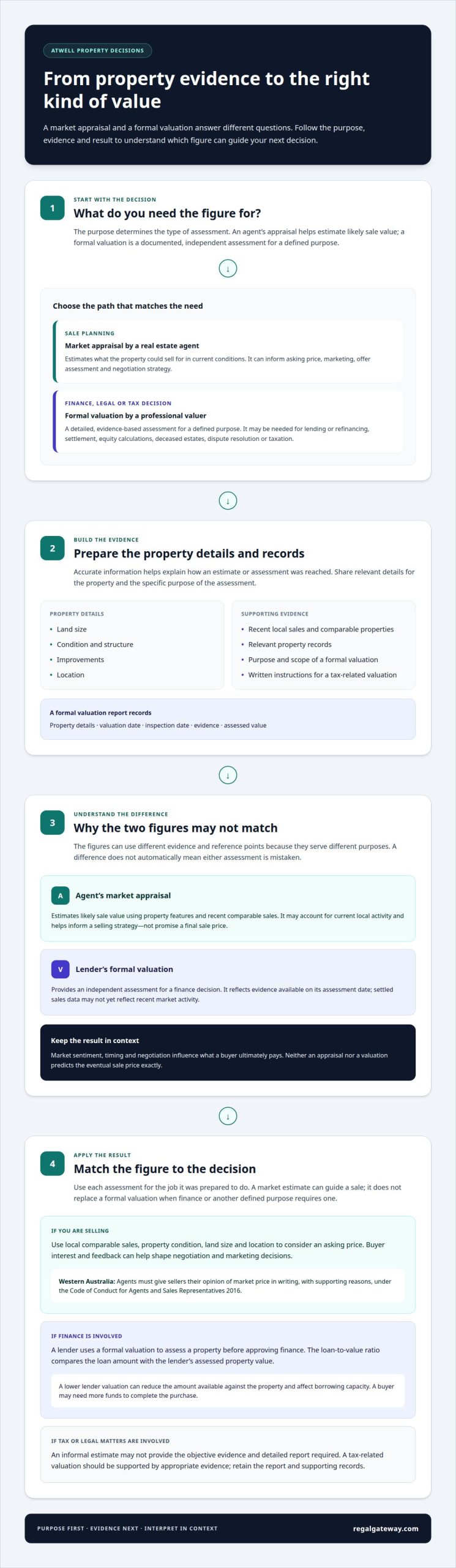
A bank’s valuation can be lower than an agent’s appraisal because the two figures serve different purposes and may rely on different evidence. In an Atwell market appraisal vs valuation, an appraisal estimates what a property could sell for in the current market, while a lender’s valuation provides an independent assessment for a finance decision. If settled sales data hasn’t caught up with recent market activity, the estimates may differ.
A lower bank figure can feel like a setback, especially when you’re planning a sale or considering an offer. But it doesn’t automatically mean the agent’s appraisal is wrong or that the bank has overlooked your home’s appeal.
This guide explains how each figure is prepared, why a lender’s assessment may be lower, and how to use an appraisal to shape your asking price and selling strategy. It also explains when a formal valuation matters, so you can interpret both figures with greater clarity.
Key Takeaways
- Interpret a lower lender figure in light of its finance purpose; it doesn’t automatically invalidate an agent’s market estimate.
- Know when an informal appraisal can guide a sale and when a formal valuation is needed for lending or other decisions.
- Use local market evidence and property-specific factors to shape a considered asking price and negotiation strategy.
- Understand how a written agent appraisal in Western Australia can help you assess the reasoning behind a proposed market price.
Differences between market expectations and formal value
For an Atwell appraisal or valuation, prepare accurate details about the property’s land size, condition, structure and improvements. Recent local sales and the property’s location also help inform an agent’s market appraisal. For a formal valuation, clarify its purpose and scope, and provide relevant property records. The report records the property details, valuation date, inspection date, evidence and assessed value.
A real estate agent estimates what a property could sell for in current conditions, while a professional valuer provides a formal, evidence-based assessment. Certified Practising Valuers undertake study and training in valuation; agent training follows a different professional path. In Western Australia, agents must give sellers their opinion of market price in writing, with supporting reasons, under the Code of Conduct for Agents and Sales Representatives 2016. A bank’s figure may differ because the lender needs an independent assessment for finance, not a recommended listing price.
For Australian tax purposes, market value means the estimated monetary worth of an asset on the open market at a particular time. The definition can vary by tax provision and asset type. It considers the asset’s most valuable use, which may differ from its current use. A tax-related valuation should be objective and supported by appropriate evidence. If engaging a valuer for a tax matter, set out the instructions in a written request or letter of engagement, then retain the report and supporting records.
A lender uses a formal valuation to assess a property before approving finance. The loan-to-value ratio compares the loan amount with the lender’s assessed property value. A lower valuation can reduce the amount available against the property and affect borrowing capacity. For example, if the bank’s figure is below an agent’s estimate, the buyer may need more funds to complete the purchase. An appraisal can inform sale expectations, but it doesn’t replace the lender’s valuation for a loan decision.
Atwell Market provides both market appraisals and formal valuations. The formal valuation is an evidence-based assessment provided by a professional valuer.
Difference between a market appraisal and a formal valuation
An agent’s appraisal estimates likely sale value, while a formal property valuation is an independent, detailed assessment. The right option depends on whether you’re preparing to list, arranging finance or addressing a legal or taxation matter.
When a Formal Valuation Is Needed
A formal valuation is a documented assessment by a qualified property valuer for a defined purpose. It can support loan applications or refinancing, settlement, equity calculations, deceased estates, dispute resolution and taxation. In Atwell, a market appraisal is an agent’s estimate; a formal valuation is a separate service conducted by a professional valuer. A lender commissions its own valuation when assessing finance, so an agent’s estimate can’t replace that requirement.
Commercial property valuations may also be used for financing, taxation and settlement disputes. A formal business valuation supports different decisions, including partnership buyouts, family law proceedings, mergers and acquisitions, estate planning, financing, litigation and tax matters. The purpose determines the valuation’s scope and method.
Comparing Appraisal and Valuation Accuracy
An agent’s appraisal estimates a likely sale price using property features and recent comparable sales. A formal valuation is a detailed report that considers multiple factors and comparable property values. Its independence can make it more suitable when an institution or legal process requires a documented assessment. Neither figure predicts the eventual sale price exactly, since market sentiment, timing and negotiation influence what a buyer pays.
Accuracy also depends on the evidence, valuation date and purpose. A valuation reflects the information available on its assessment date, while an agent’s view may account for current local activity. In a changing market, these different reference points can produce different estimates without either being inherently mistaken.
Risks of Relying on an Appraisal
Relying on an appraisal alone for a loan can leave a gap: lenders use formal valuations to assess property before approving finance. For taxation or legal matters, an informal estimate may not provide the objective evidence and detailed report those purposes require. A business appraisal is also distinct from a formal business valuation prepared by a qualified professional using recognised methods.
For commercial property, a basic appraisal may provide an initial estimate, while a formal assessment can include inspection, market research and financial analysis. Match the assessment to the decision: an appraisal can inform sale expectations, but finance, tax or dispute matters call for a valuation suited to that purpose.
Market appraisals for asking-price and selling-strategy decisions
For an Atwell home, a market appraisal helps translate property features and recent local sales into a practical selling estimate. The Atwell market appraisal vs valuation distinction matters because an appraisal can inform decisions about listing price, negotiation and marketing, while a formal valuation serves a different purpose. An appraisal reflects current market conditions, including comparable sales, property condition, land size and location. It guides your strategy, rather than promising a final sale price.
An appraisal can help shape the asking price and marketing approach. If comparable homes have attracted buyer interest at different price levels, that evidence can help position your property and assess offers. Sellers can use the estimate to plan negotiations and decide whether to adjust their approach as feedback comes in. A rental appraisal serves a separate purpose: estimating potential rent rather than sale value.
A lender’s valuation below the contract price creates a gap between the agreed purchase amount and the value used for its finance assessment. A buyer may discuss a revised price with the seller, contribute more funds, or reconsider the purchase in light of available funds and finance approval. In the Atwell market appraisal vs valuation comparison, remember that the lender’s figure doesn’t automatically change the contract price. Negotiation and the buyer’s financing position shape what happens next.
Business appraisals are separate from residential property appraisals. A business appraisal gives a market-based estimate of what a business might sell for, informed by comparable sales, market conditions and the business itself. It can help an owner considering a sale understand buyer expectations, but it isn’t a formal business valuation. For an Atwell property sale, use a property appraisal to inform your listing; for a rental decision, a rental appraisal can guide planning.
Real estate agent appraisals
A real estate agent’s appraisal estimates what a home could achieve in the current market. In Western Australia, agents must give sellers their opinion of market price in writing, with reasons, under the Code of Conduct for Agents and Sales Representatives 2016. That written reasoning lets you see how local evidence supports the estimate, rather than relying on a figure alone.
For an Atwell property, an agent may consider location, land and building size, condition, improvements, recent comparable sales and market trends. CoreLogic, REIWA and realestate.com.au statistics may also inform the assessment. These sources help frame the estimate, but the property’s individual features and the relevance of each comparable sale matter. For example, a renovated home may warrant a different assessment from a nearby property with a different condition or layout, which is why consultancy-led agencies such as Nikki Homes emphasise evaluating specific layout and architectural characteristics when assessing residential value.
To compare professional opinions, obtain more than one appraisal; three is a reasonable number. Compare the evidence and reasoning behind each estimate, not just the highest suggested price. A figure unsupported by relevant sales can create unrealistic listing expectations, while a well-explained estimate can inform pricing, marketing and negotiation.
Agent appraisals can also estimate rental value, helping owners consider leasing rather than selling. If you’re tracking value over time, an appraisal every couple of years can provide a useful reference; obtain another before deciding to sell, refinance or restructure. A lender still relies on a formal assessment for its finance decision, so an agent’s estimate serves a different role.
Use the appraisal as a considered starting point for your next move, then align the listing strategy with the property’s evidence and your priorities. Plan your residential property sale with a clear view of the market estimate and the decisions it can inform.
Regal Gateway Property
Regal Gateway Property helps owners in Atwell, Aubin Grove, Wandi, Hammond Park, Success, Treeby and Mandogalup make informed decisions about selling or managing residential property. An agent appraisal can guide expectations and selling strategy, while a lender’s formal valuation serves a separate finance purpose. Understanding the difference helps you weigh each figure as you plan your next move.
For owners preparing to sell, Regal Gateway Property’s residential property sales service can help you position your home in the market. If you plan to retain the property, property management and tenant selection and screening can support your rental plans. These services address different property decisions; they don’t replace a formal valuation required for lending, taxation or legal matters.
For guidance on your residential property plans, contact Regal Gateway Property.
Shape your next property decision with confidence
When weighing an Atwell market appraisal vs valuation, start with the decision ahead, not a single figure. Consider what you need to establish next: a considered sale strategy, a clearer view of your property’s market position, or a plan for ongoing ownership. Keeping that objective in focus helps you use each professional perspective appropriately and avoid treating different assessments as competing promises.
As circumstances change, revisit your priorities and bring the right property knowledge into the conversation. A well-considered next step can make a complex decision feel more manageable, whether you’re preparing for a transition or planning to hold your property for the future. Contact Regal Gateway Property to discuss the direction that best fits your property plans and move forward with greater clarity.
Frequently Asked Questions
Why does the bank’s valuation come in lower than the appraisal?
A bank’s figure can be lower because it’s prepared for lending, not to recommend a sale price. The valuer independently assesses the property using available evidence, including comparable sales and property-specific factors. In a changing Atwell market, settled sales can take weeks to become public, so the evidence may lag behind newer buyer activity. A lower figure doesn’t, by itself, establish what a buyer will pay.
How do you tell a good appraisal from a listing pitch?
A sound appraisal explains how its estimate relates to relevant local evidence, rather than relying on an attractive figure alone. In Western Australia, agents must provide sellers with their opinion of market price in writing and give reasons under the Code of Conduct for Agents and Sales Representatives 2016. Consider whether the examples reflect your property’s location, condition and features, and whether the reasoning is clear.
What is a market appraisal?
A market appraisal is a real estate agent’s estimate of a property’s likely sale or rental price under current market conditions. For an Atwell home, the agent may consider its features, comparable local sales and market trends. Sellers can use the estimate to inform a listing strategy; landlords can use a rental appraisal to consider rent expectations. It guides a market decision, not a lender’s assessment.
What is a property valuation?
A property valuation is a formal assessment prepared by a qualified property valuer for a defined purpose, such as finance, taxation or a legal matter. The resulting report records the assessed value and the evidence and basis supporting it. For example, a lender may use its valuation when considering a loan application. The valuation reflects a particular date and purpose, rather than guaranteeing a future sale outcome.
What’s the difference?
The main difference is the purpose and format of the assessment. An agent’s appraisal offers a market-informed estimate to guide selling or rental decisions, while a formal valuation provides a detailed, independent report for a specific need. For example, an owner preparing a listing may use an appraisal, while a lender needs a formal valuation to assess finance. Choose the figure that matches your decision.
What is the difference between a property market appraisal and a formal valuation in Australia?
In Australia, a property market appraisal is an agent’s estimate, usually provided informally or in a brief written format. A formal valuation is conducted by a qualified valuer and documented in a comprehensive report. The distinction matters in Atwell when deciding whether you need guidance for a sale or rental, or a report for finance, taxation, settlement or dispute resolution. One does not substitute for the other.