
If you’re asking how much rent you can get for your house in Atwell, use the suburb’s median as a starting benchmark, then compare similar homes and allow for possible vacancy when estimating income.
It’s understandable to want one clear figure, but a suburb-wide median cannot capture the differences between individual properties. Use Atwell’s median alongside current advertised rents to form a realistic weekly estimate. Compare relevant property features and consider how vacancy could affect the rent you actually collect. A tailored rental appraisal can bring these factors together and help you set a considered price for your home and the local market.
Key Takeaways
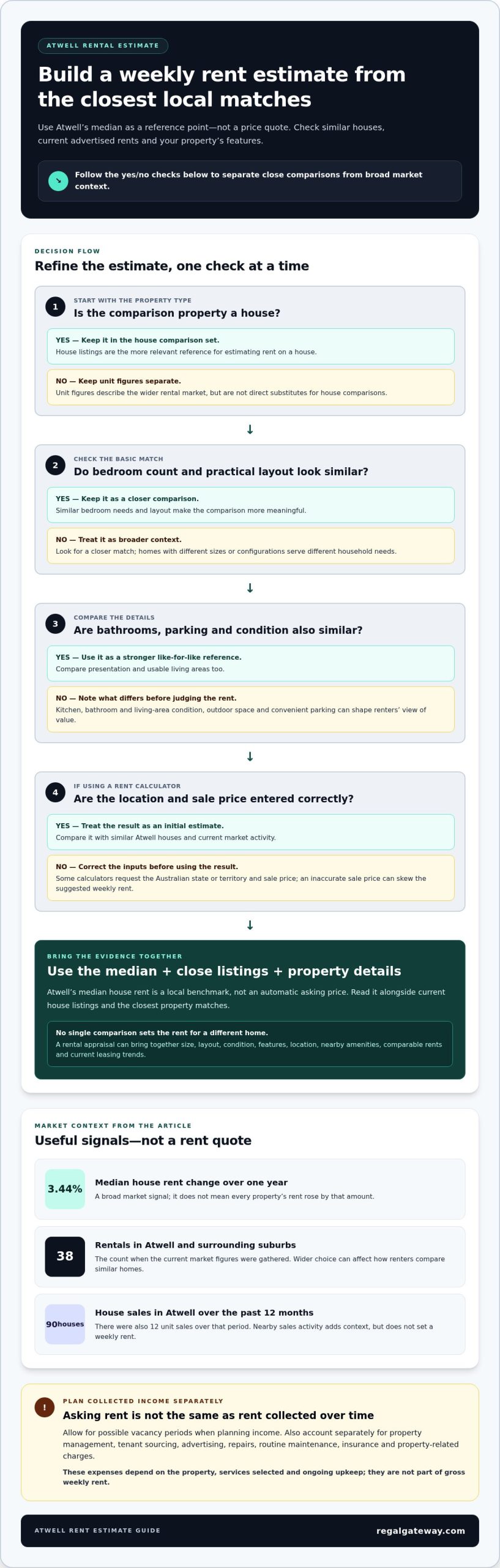
- Use Atwell’s median house rent as a market reference, then compare current listings to understand how your home’s features may affect its position.
- Make comparisons more meaningful by matching bedroom count, bathrooms, parking, layout and condition.
- Treat rent calculators as a starting point and weigh their estimates against comparable properties in the same area.
- Factor potential vacancy periods into your income planning, since the asking rent alone doesn’t show how much rent you’ll collect over time.
- Use a rental appraisal to bring property features, comparable rents and current leasing activity together before setting your price.
Advertised rents for Atwell properties
Advertised rents show what landlords are asking, not what every home will earn. Listings provide useful local reference points, but their asking prices do not establish the rent for a different property.
Property type matters. Unit figures can describe the wider rental market, but they are not direct substitutes for house comparisons.
To estimate how much rent you can get for your house in Atwell, compare it with houses that have similar bedroom and bathroom counts, parking and presentation. Size and layout affect how comfortably a household can use the space. Condition matters too: a well-maintained kitchen, bathroom and living area may compare differently from rooms needing work. Usable outdoor space and convenient parking can also shape a renter’s view of value.
Nearby sales activity adds context, but it doesn’t set a weekly rent. Atwell recorded 90 house sales and 12 unit sales in the past 12 months. Houses spent an average of 12 days on the market over that period, while units averaged six days. These are rental market days, distinct from selling times: the average time to sell a house or townhouse was 90 days, compared with 29 days for a unit.
There were 38 rentals in Atwell and surrounding suburbs when the current market figures were gathered. That wider choice can influence how renters compare homes, especially when several listings offer similar layouts. A rental appraisal brings together a property’s size, layout, condition, features, location, nearby amenities, comparable rents and current leasing trends. Use those details to judge whether a listing is a close match, rather than relying on its suburb name alone.
These are individual asking rents, not suburb medians, and the bedroom counts differ.
In Western Australia, the starting rent is agreed before the tenancy begins. Any rent increase during a tenancy must follow the agreement and applicable Western Australian residential tenancy requirements, including the relevant notice process.
Median weekly house rent in Atwell
Atwell’s median house rent is a local benchmark, not an automatic asking price. Read it alongside bedroom-specific listings and your property’s individual features.
Weekly Rents by Bedroom Count
Bedroom count is a useful first filter, but Atwell’s available examples include different property types. These asking rents illustrate how size and property type affect comparisons, rather than setting a universal rate for each bedroom count.
For a house, compare it with other houses that have a similar bedroom count and practical layout. A smaller home and a five-bedroom property serve different household needs, even in the same suburb. Bathrooms, parking, condition and usable living areas help refine the comparison. Keep apartment figures separate, as property type can affect appeal and advertised rent.
Changes in House Rents
Atwell’s median weekly house rent increased by 3.44% over one year. These measures are close, but they may reflect different datasets or calculation periods, so use each as context rather than combining them into one figure.
To assess year-on-year changes, focus on comparable houses and current listings. A suburb-wide median can shift as the mix of advertised homes changes, while an individual property’s features and condition affect its position. Like-for-like comparisons help distinguish a broad market shift from differences between homes.
When planning your budget as an Atwell landlord, account separately for property management, tenant sourcing, advertising, repairs, routine maintenance, insurance and property-related charges. The amounts depend on the property, services selected and ongoing upkeep, so do not confuse these expenses with gross weekly rent. Looking at established industry practices from experienced residential firms, such as E&S Property Management, highlights how structured oversight of tenant placement and property upkeep helps safeguard long-term rental returns.
The median is a midpoint across rental results, not a quote for every home. A median rental figure can offer context, but it should not erase the differences in how each market measure is calculated.
For a more grounded estimate, compare the median with current house listings and start with the closest matches. Check that each comparison has the same property type and a similar bedroom count, then consider differences in condition and features.
House rents in Atwell rose by 3.44% over one year, a useful signal for setting expectations. It doesn’t mean every property’s rent rose by that amount. Pair the annual change with the home’s individual attributes and the current competition, then use the median as a reference point within that broader assessment.
Estimating weekly rent
Estimate weekly rent using Atwell market benchmarks and your home’s location, size and condition. A calculator can offer a starting point; comparable local properties help refine the figure.
Address-Based Rent Estimates
An address places the property in its suburb and in relation to nearby amenities, helping frame its rental appeal. Compare nearby homes with similar layouts and presentation to judge whether the benchmark suits your property’s position.
Some rent calculators ask for the Australian state or territory and the property’s sale price. Enter the correct location, as an inaccurate sale price can skew the suggested weekly rent. Treat the result as an initial estimate, then compare it with similar Atwell houses and current market activity.
Property Size and Features
Size and layout affect how a home works for prospective tenants. Compare its bedrooms, bathrooms, usable living areas, parking and outdoor space with similar rental properties. A home with a different configuration may not be a close match, even in the same area.
Condition and features also affect how renters assess value. Consider the presentation of kitchens, bathrooms and living spaces, maintenance needs and nearby amenities. A rental appraisal brings these details together with comparable rents and current leasing trends, adding context that a calculator alone cannot provide.
For a clear comparison, follow a consistent sequence: identify the closest Atwell house examples, match bedroom and bathroom counts, then assess condition and features. Keep apartments separate because they are a different property type. The median anchors your comparison, while relevant listings show how individual homes sit around that suburb-wide measure.
Gross rental yield provides another way to view potential income against property value. The formula is annual rental income divided by property value, multiplied by 100. This measure can support investment analysis, but it doesn’t identify the right weekly asking rent by itself. A rent estimate still depends on comparable homes and the property’s specific attributes.
Treat the estimate as a working figure, not a substitute for local comparisons. Check that examples are genuinely similar in type, size, layout and condition, and consider whether they offer comparable access to amenities. If a calculator’s result differs from nearby asking rents, review its inputs, especially the selected state or territory and sale price.
In Australia, the strongest estimate combines an address-based view with property-specific details. This gives you a reasoned basis for setting weekly rent that reflects the home, rather than relying on a single automated result.
Vacancy periods and pricing
A weekly asking rent and the income you ultimately collect are different measures. A vacancy between tenancies means rent isn’t coming in, so your pricing decision should account for leasing time as well as the advertised figure. In Atwell, annual rent growth was 6.2%, but strong growth alone doesn’t remove the need to price against competing homes.
Market activity offers useful context, with an important distinction: Atwell houses spent an average of 12 days on the market over the past 12 months. That figure describes time on the market, not a guaranteed vacancy period for an individual property. The property’s presentation, asking rent, features and timing all influence how prospective tenants respond.
There were 38 rentals in Atwell and surrounding suburbs when the market figures were gathered. This gives renters a wider set of options to compare, so landlords should assess their home beside listings with similar layouts and features. Atwell’s population was 9,287 in 2021, and 18.90% of residents lived in rental accommodation. Those figures describe the suburb’s housing context, not demand for any single listing.
Allow for vacancy when planning rental income by considering both occupied and unoccupied periods. A higher asking rent may look attractive, but if it delays leasing, the additional weekly amount could be offset by lost income. Compare relevant local listings, then set a price that reflects the property’s condition, layout, parking and location. The aim is a defensible asking rent that attracts suitable interest, not a figure based only on the suburb’s growth rate.
- Review comparable listings: Match property type, bedrooms and condition, rather than comparing your house with every rental in the area.
- Assess the response: Track enquiry and inspection interest after advertising. Limited engagement can signal that the price or presentation needs attention.
- Account for vacancy: Model income using realistic occupied and unoccupied periods, not just the weekly rent multiplied across a full year.
- Revisit the price: If comparable homes attract stronger interest, reassess how your asking rent and property features align.
Atwell’s 6.2% annual rent growth is market context, not a forecast for an individual home. Growth describes change across a market measure; it doesn’t establish how quickly a particular property will lease. Use current competition and renter response to guide the asking price, then consider whether the resulting income accounts for time without a tenant.
Keep rental days on market separate from sales figures. Atwell’s average time to sell a house or townhouse was 90 days, while the 12-day rental market measure relates to houses advertised for rent. For a landlord, that distinction matters: sale timing cannot be used to estimate how long a home might remain vacant between tenancies.
What are typical weekly rents in Atwell by number of bedrooms?
Bedroom count helps narrow rental comparisons, but does not determine rent on its own. Atwell listings show different asking rents across property types and sizes, so compare houses with houses and apartments with apartments before drawing conclusions.
These are individual asking rents, not a complete bedroom-by-bedroom schedule or guaranteed outcomes for similar properties.
The difference between those examples reflects more than bedroom count: they are different property types, with different layouts and likely renter appeal. A two-bedroom apartment is not a direct benchmark for a two-bedroom house. Similarly, the five-bedroom listing is a more relevant starting point for another larger house, but condition, bathrooms, parking and outdoor space still matter.
For a practical comparison, group the evidence in this order:
- Match property type: Separate houses from apartments before comparing advertised weekly rents.
- Match bedroom count: Compare a three-bedroom home with other three-bedroom homes wherever possible.
- Review the layout: Consider bathrooms, living areas and parking alongside the bedroom total.
- Assess presentation: Compare condition and features that affect how the home functions for tenants.
A median is not a rate assigned to every home. A larger house may appeal to a different tenant group, while a smaller property’s layout and condition can affect its relative value.
When reviewing an advertised rent, note the property’s address, type, bedroom count and features. Compare it with the closest available examples rather than choosing the highest listing. This helps prevent an unusually large home or a different property type from skewing expectations for your house.
For a considered weekly price, combine bedroom comparisons with your home’s condition, layout and current competition. A like-for-like assessment gives you a more useful basis for pricing and income planning.
If you’re weighing rental options for your property, explore property management support as a next step.
Regal Gateway Property: Residential Property Sales
Regal Gateway Property can help you decide on the next step, whether you’re preparing a home for rent or weighing a sale. Its Property Management service supports landlords managing a residential investment, while Tenant Selection and Screening helps assess prospective tenants. If your plans have shifted from rental income to selling, Residential Property Sales may be the more relevant option.
Use your rent estimate, comparable listings and vacancy considerations to clarify your priorities before deciding. For support with managing or selling your property, contact Regal Gateway Property or visit regalgateway.com.
Choose the next step for your Atwell property
Deciding how much rent you can get for your house in Atwell is part of a broader investment choice: whether renting supports your plans better than selling. Consider your expected holding period, tolerance for vacancy, ongoing maintenance and how actively you want to manage the tenancy. These priorities shape a practical plan, not just an asking price.
If you’re preparing to rent, turn your estimate into a clear leasing strategy, with a considered price and a plan to present the home to suitable tenants. If your circumstances point towards selling, weigh that option alongside renting before you commit. A measured decision can help you make the property work for your next goals.
For guidance on your next property decision, contact Regal Gateway Property. Take the next step with clarity and confidence.
Frequently Asked Questions
How Do I Find A More Accurate Estimate?
Compare your home with recently advertised properties that match its type and layout, then assess differences in condition and features. A rent calculator can provide an initial figure, but the result depends on accurate inputs, including the Australian state or territory and property sale price. For example, entering the wrong sale price can distort the suggested rent. Refine the estimate using relevant local comparisons.
How Much Rent To Charge?
Set the asking rent by weighing comparable homes against your property’s condition, layout and location. A similar house is usually a more relevant comparison than a larger home or an apartment with a different configuration. Consider how your price positions the property among current rental options. Comparable listings give you a clearer basis for attracting interest and assessing potential income.
How much is my property worth to rent?
A property’s rental value is the weekly rent its features and location support in the current market. This differs from its sale value: the purchase price alone does not establish rental worth. Assess the house against comparable rentals, considering size, layout, condition and nearby amenities. The estimate helps you consider potential rental income separately from ownership costs and other investment decisions.
How much will my house rent for?
Atwell’s median weekly house rent is a useful starting benchmark, but your home’s asking rent depends on its individual features and current competition. A well-presented house with a practical layout may compare differently from a similar-sized property needing attention. Look at comparable house listings, not just the suburb-wide figure, and consider how bedrooms, bathrooms, parking and location affect the match. This gives you a more property-specific estimate.
What is a rental appraisal?
A rental appraisal estimates a property’s likely rent based on its features and the surrounding rental market. It considers size, layout, condition, location, amenities, comparable rents and current leasing trends. To make the appraisal useful, prepare a clear account of the home’s features and any condition issues. The result can support a considered asking price instead of relying on a broad suburb benchmark alone.
What is the current average weekly rent for houses in Atwell, WA?
A separate reported median rental price is A$775 per week, so the figures differ slightly across market measures. These are medians, not a guaranteed rent for an individual house or an arithmetic average of every listing. Use them as suburb-level context, then assess current comparable houses and your property’s specific presentation.
Which features most affect rental value in Atwell, such as bedrooms, bathrooms, parking, air conditioning or a pool?
Bedroom and bathroom counts, parking, layout, condition and overall features help identify suitable comparisons. Air conditioning and a pool are also worth noting, but their effect depends on the property and competing listings. Compare houses with similar configurations and amenities, then consider how each feature affects practicality and appeal to prospective renters.
What rental demand and vacancy rates are currently reported for Atwell?
Current market figures report 38 rentals in Atwell and surrounding suburbs. Atwell houses spent an average of 12 days on the rental market over the past 12 months. These measures show available rental listings and time on market, rather than a direct vacancy-rate percentage. For an individual landlord, enquiry and inspection interest provide additional context about how a particular property is performing among local options.