
A good landlord in Atwell respects tenants’ privacy, keeps clear rental records and handles concerns professionally. In Western Australia, landlords typically need to give 24 to 72 hours’ notice before entering a rental property, except in an emergency. These habits are central to how to be a good landlord in Atwell: reliable service matters just as much as protecting the property.
Good landlording is about more than choosing a tenant and collecting rent on time. Clear communication, fair bond decisions and prompt attention to maintenance help create a more secure rental experience for everyone.
This guide covers practical ways to set respectful boundaries, organise rental finances and plan for maintenance, while distinguishing property damage from ordinary wear and tear. It also explains when professional property management can make day-to-day responsibilities easier to manage.
Key Takeaways
- Give the required notice before entering a rental property, and keep visits purposeful and respectful of tenants’ privacy.
- Track rent, expenses and maintenance records together so you can plan for upcoming repairs and keep a clear cash-flow picture.
- When assessing a bond claim, distinguish genuine damage from ordinary wear and tear and rely on clear records of the property’s condition.
- Consider property management when tenant communication, inspections and maintenance coordination become difficult to handle consistently.
- Treat leasing as a professional relationship: explain expectations clearly, respond to requests promptly and follow through on commitments.
1. Respecting tenant privacy and keeping an appropriate distance
In Western Australia, landlords typically must give 24 to 72 hours’ notice before entering a rental property, except in an emergency. For anyone learning how to be a good landlord in Atwell, the practical rule is simple: plan visits, explain their purpose, and don’t drop in unannounced.
Tenant applications also deserve a consistent, fair process. In WA, assess applicants using relevant information and apply the same criteria across applications. Tenants must not be denied a tenancy because of race, religion, nationality, sex, origin, colour, disability or familial status. Keep communications professional and decisions tied to the application, rather than assumptions about an applicant’s background.
Set expectations before the tenancy begins. Use a proper written lease, record additional agreements in writing, and give the tenant a copy of “Schedule 2 – Information for Tenants”. Explain the agreement’s practical terms, including how to submit requests and communicate about access. A written record helps both parties refer to the same arrangements later.
For a planned inspection or repair visit, send notice within the applicable period and state the reason, proposed timing and access arrangements. Keep the visit focused on that purpose. If an urgent emergency requires entry, explain what happened to the tenant as soon as practical. For routine matters, communicate first and respect the tenant’s home as their private space.
Set courteous, practical boundaries. Use a reliable channel for updates and keep messages about rent, repairs or access clear and relevant. If a tenant reports a leaking tap, acknowledge the request and explain the next step rather than making an unrelated visit. Consistent communication makes a tenancy easier to manage.
Consider requests individually. In Western Australia, tenants can ask to keep a pet or make minor modifications, and landlords need a valid reason to refuse. Consider a request to install a small shelf based on its specific effect on the property rather than dismissing it automatically. Put agreed conditions in writing.
Respond to a missed payment calmly and consistently. Follow the lease and your established process, while considering a tenant’s circumstances, such as hospitalisation, job loss or family tragedy. A conversation may clarify whether a practical arrangement is possible. Document any agreement so flexibility does not become an unclear, recurring expectation.
Keep rent changes transparent and properly timed. In WA, rent increases are limited to once every 12 months, and Consumer Protection WA says tenants must receive at least 60 days’ notice. State the change in writing and give tenants a clear opportunity to understand the notice before it takes effect.
Clear documents, respectful access and consistent responses support tenants and reduce avoidable disputes. Review the lease before acting, keep important communications in writing, and separate personal feelings from tenancy decisions. This steady approach respects the tenant’s home while helping you manage the property responsibly.
2. Tracking cashflow, expenses and future maintenance budgets
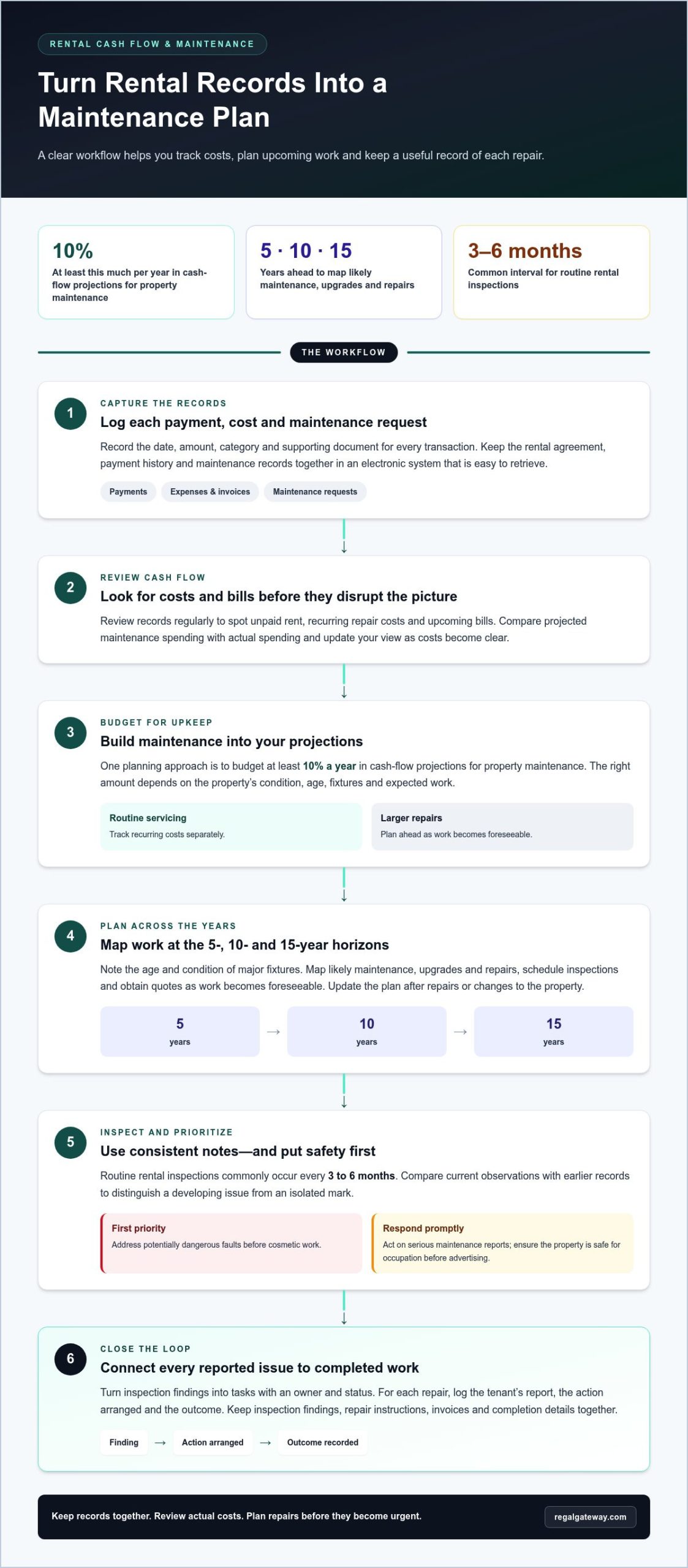
A clear rental ledger shows whether rent covers operating costs and leaves funds for upkeep. Record each payment, expense, invoice and maintenance request as it occurs. Store the rental agreement, maintenance records and payment history electronically so they are easy to retrieve. Review them regularly to spot unpaid rent, recurring repair costs and upcoming bills before they disrupt cash flow.
Build maintenance into your projections rather than treating repairs as unexpected exceptions. One planning approach is to budget at least 10% a year in cash-flow projections for property maintenance. The right amount for a property depends on its condition, age, fixtures and expected work, so review the projection against actual spending. Separate routine servicing from larger repairs to see which costs recur and which need advance planning.
Look beyond the current year. Map likely maintenance, upgrades and repairs over the next five, 10 and 15 years. For example, note the age and condition of major fixtures, then schedule inspections and obtain quotes as work becomes foreseeable. Update the plan after repairs or changes to the property. This creates a practical view of future responsibilities without assuming every year will bring the same expenses.
Let safety guide repair priorities. Address potentially dangerous faults before cosmetic work, and respond promptly to serious maintenance reports. Before advertising a property, make sure it is safe for occupation. Keep inspection findings, repair instructions, invoices and completion details together to connect the issue identified with the work completed.
Choose a tracking system that fits your workflow. A spreadsheet or property-management platform can help organise payments and maintenance tasks. For each transaction, record the date, amount, category and supporting document. For repairs, log the tenant’s report, the action arranged and the outcome. Electronic records are easier to retrieve during the tenancy or when reviewing cash flow.
For inspections, record observations consistently and turn each finding into a task with an owner and status. Routine rental inspections commonly occur every three to six months. Compare current notes with previous records, then distinguish a developing issue from an isolated mark. If a leak appears, for instance, log its location, arrange assessment and retain the invoice with the relevant inspection record.
What are landlords’ tax, insurance and record-keeping responsibilities in Australia? Keep complete records of rental income and property expenses for tax reporting, including receipts and invoices. Track insurance details, premiums, renewals and claims alongside maintenance records so you can review relevant costs and documents together. While local owners often rely on landlord insurance to mitigate loss of rent, property investors with overseas assets in regions such as the UAE can secure steady yields through rental guarantee services like Takeem.
A successful financial routine connects rent collection, inspections and repairs rather than treating them as separate tasks. Review the ledger and maintenance plan on a regular schedule, then adjust future projections when actual costs or property conditions change. This disciplined approach gives you a clearer basis for managing the rental and planning work in advance.
3. Fair treatment of rental bonds and property damage
Make bond decisions based on evidence, not assumptions. Compare the property’s condition at the start and end of the tenancy using dated records, photographs and inspection notes. Distinguish ordinary wear and tear from damage: a worn hallway carpet is different from a fresh stain or burn. Describe each concern clearly before deciding whether it supports a claim.
Since 28 March 2026, a tenant, landlord or agent in Western Australia can apply to release a bond. Keep communication factual and share the basis for any proposed deduction. For example, identify the affected room, describe the change, and match it to the relevant condition record. A transparent explanation gives both sides a clearer basis for discussing the outcome.
Routine inspections help build that record during the tenancy. They typically occur every three to six months. Use each visit to note maintenance concerns and changes, rather than searching for minor faults. If a mark appears on a wall, record its location and condition. Comparing notes across inspections can help distinguish gradual use from damage that occurred later.
Disclose known property issues before a tenant commits to renting. Tell prospective tenants about recurring pests, mould, neighbour concerns or faulty plumbing. If a leak has occurred, explain where it was and what repairs have been completed. Clear disclosure supports an informed decision and gives everyone a shared starting point for monitoring the property.
Consider pet requests individually and respond with care. In Western Australia, tenants can ask to keep a pet, and landlords need a valid reason to refuse. Assess the request in relation to the property and circumstances, then explain the decision and any agreed expectations clearly. A fair process builds a more welcoming rental relationship than automatic acceptance or refusal.
Choose an investment property with its ongoing obligations in mind. The home should fit your financial goals and your capacity to maintain it. Structuring the right financing—such as consulting specialized advisers like Mortgage Suite Ltd on residential investment property loans—is just as crucial as planning for ongoing upkeep. Consider its condition, recurring maintenance needs and known issues before purchase. A property that needs work may still suit your plans, but likely repairs and management demands should inform your decision.
Keep bond and condition records together in an accessible file. Store entry condition documents, inspection notes, repair invoices and tenant communications. If a tenant reports damage, record the date, location and steps taken. This creates a consistent account, particularly if an issue arises between routine inspections.
Treat everyone fairly by applying the same evidence-based approach throughout the tenancy. Listen to the tenant’s explanation, review the records and distinguish maintenance from damage. A plumbing fault, for example, should be assessed as a repair issue, not automatically treated as tenant-caused damage. Careful decisions protect the property and support a respectful tenancy.
4. Using a property manager or leasing agent
A property manager can coordinate communication, rent collection, inspections and maintenance between a landlord and tenant. This can suit an owner who lives elsewhere, has limited time or wants a consistent contact for tenancy matters. The landlord should still understand the management agreement and stay involved in decisions affecting the property.
Agree on responsibilities before management begins. Clarify who handles tenant messages, records payments, arranges repairs and reports issues. Set expectations for updates and decisions in writing. For example, agree how the manager will bring a non-urgent repair request to you and how urgent maintenance will be communicated. Clear roles help prevent duplicated messages and missed tasks.
How can landlords find reliable tradespeople and property managers in Atwell? Look for relevant rental experience, clear communication, sound references and written scopes of work. Compare how each candidate explains their process, reporting and follow-up, then keep agreed responsibilities and decisions documented.
Stay involved after appointing a manager. Communicate reliably, consider their advice and, if attending an inspection, ensure your attendance is disclosed to the tenant. Your observations can add context, while the manager can identify patterns in tenant requests or maintenance reports. Discuss which work needs attention and what to record for future reference.
Respond promptly and consistently to late rent. Set out the payment process at the start of the tenancy, then record each missed payment and contact the tenant through the agreed channel. Ask whether a practical issue has affected payment and document any arrangement. Do not let late payments become an assumed pattern; follow the agreed process consistently.
When arrears build, use the tenancy agreement as your reference point. Keep a clear payment history, note each communication and calmly explain the next step. A property manager can monitor payments and organise correspondence, but stay informed about proposed arrangements. Consider a tenant’s hardship without losing sight of the written agreement.
What are the risks and steps for ending a tenancy or handling rent arrears in WA? Informal demands and unclear records can lead to disputes. Document arrears and communications, then follow the agreement and applicable Western Australian process. Unpaid rent alone is not permission to bypass the proper steps for ending a tenancy.
Make repair work straightforward to oversee. Describe the problem, agree on the scope and access arrangements, then retain the written estimate, updates and completion record. A property manager can coordinate these steps while you review significant decisions and keep a record of the work. This links tenant reports to practical action and accountability.
Choose an arrangement that fits your capacity. Hands-on landlords may manage routine communication themselves, while owners balancing other commitments may prefer an intermediary. Either way, agree on how rent, repairs and tenant concerns will be handled, and stay in touch with your manager throughout the tenancy.
5. Customer service and treating rentals as a business
Good service is practical: tenants know how to raise a concern, and landlords follow through on commitments. Treat the tenancy as a business relationship, not a personal favour. If a tenant reports a faulty tap, acknowledge the request, explain the next step and record the repair. A clear process prevents misunderstandings and supports a professional relationship.
Before a tenant signs, explain the lease terms that shape day-to-day responsibilities. Cover how to pay rent, submit maintenance requests and communicate with you. Give the tenant time to ask questions. If the lease sets out a repair process, explain what information to include, such as the affected room and whether the issue is getting worse.
Make contact routes easy to use. Provide tenants with practical ways to reach you, such as a phone number, email address or property management platform. If you’ll be away, tell them beforehand and provide an alternate emergency contact. For instance, a tenant facing a burst pipe should know whom to contact while you’re unavailable.
Follow the commitments in the lease. Use agreed maintenance processes and rent payment methods consistently. When a request arrives, record its date, the issue and the action taken. A record of a plumbing problem and the repair arranged can clarify what happened if the same concern returns.
Emergencies require prompt action and calm communication. For a potentially dangerous maintenance issue, focus first on addressing the risk and explaining the immediate next step. Keep the tenant updated as arrangements progress. For non-urgent requests, acknowledge the report and provide a reasonable update so the tenant knows it is being managed.
Handle difficult situations without letting emotion dictate decisions. If a tenant describes job loss or hospitalisation affecting rent, listen, review the circumstances and discuss a practical response. Document any arrangement clearly. Consider the individual situation while maintaining the lease’s payment expectations, so flexibility does not become an unclear standing agreement.
Small, reasonable requests can affect how comfortable tenants feel at home. If someone asks to hang pictures, consider the proposed change and its effect on the property before responding. Explain any conditions clearly and record what both parties agree. A measured response shows you are willing to consider requests while caring for the property.
Build a repeatable service routine: acknowledge messages, record decisions, meet lease commitments and follow up after repairs. Once work is complete, tell the tenant the issue has been addressed and retain the relevant record. These habits make good service part of responsible property management, rather than a response improvised each time.
Regal Gateway Property: Residential Property Sales
Regal Gateway Property supports landlords with Property Management and Tenant Selection and Screening. If coordinating tenant communication, rental records and property upkeep is taking more time than you can give, professional management offers a structured way to handle those responsibilities. The agency also provides rental appraisals and landlord support for residential properties across Atwell, Aubin Grove, Wandi, Hammond Park, Success, Treeby and Mandogalup.
Choose the support that fits your property plans and preferred level of involvement. To discuss your next step, contact Regal Gateway Property or visit regalgateway.com.
Shape a rental approach you can sustain
Responsible landlording depends on consistent decisions, even as circumstances change. Set a standard for how you communicate, make decisions and document agreements, then use it when a new situation tests your judgment. For owners considering how to be a good landlord in Atwell, the next step is to build a practical routine that fits their time, priorities and investment goals.
Consider how involved you want to be. You may prefer direct oversight, or find that professional support makes the responsibilities easier to manage. Choose an approach that helps you stay informed and make considered decisions about your property’s future.
If you’re ready to discuss your next property step, contact Regal Gateway Property today. A thoughtful plan can help you move forward with greater clarity and confidence.
Frequently Asked Questions
What makes a good landlord?
A good landlord is consistent, responsive and fair, balancing property upkeep with tenants’ right to enjoy their home. For landlords learning how to be a good landlord in Atwell, ask whether each decision would still seem reasonable if explained in writing. Document why a request was approved or declined, and respond consistently to similar situations. This creates a clear record and helps prevent misunderstandings.
What are a landlord’s legal obligations in Western Australia?
Landlords in Western Australia must comply with the Residential Tenancies Act 1987 and provide tenants with a copy of “Schedule 2 – Information for Tenants”. Their responsibilities include following the tenancy agreement, respecting privacy and responding to maintenance issues, especially potentially dangerous ones. Landlords must also treat applicants fairly and avoid discrimination based on protected characteristics such as race, religion, disability or sex. Keep agreements and important tenancy communications documented.
What are the current WA rules for rental bonds, rent increases and tenancy agreements?
In Western Australia, a tenant, landlord or agent can apply to release a bond, according to the rule in effect since 28 March 2026. Rent increases are limited to once every 12 months, and Consumer Protection WA says tenants must receive at least 60 days’ notice. Use a written tenancy agreement and record additional agreements in writing. Tenants may request pets or minor modifications, and landlords need a valid reason to refuse.
What are the minimum safety and maintenance standards for rental properties in WA?
Make sure a rental property is safe before offering it to tenants, and prioritise potentially dangerous maintenance issues. Assess the reported problem, decide whether it presents an immediate risk and arrange appropriate attention before cosmetic work. Record the tenant’s report and the action taken. A fault that could cause injury deserves faster attention than a non-urgent cosmetic concern.
How often can landlords inspect a rental property in Western Australia, and what notice is required?
Routine inspections commonly take place every three to six months in Western Australia. Landlords typically give 24 to 72 hours’ notice before entering, except in an emergency. Give tenants a clear reason for the visit and arrange a suitable time within the applicable notice period. Keep the inspection focused on its stated purpose, and record relevant observations so follow-up maintenance can be arranged without unnecessary additional visits.
What are the risks and steps for ending a tenancy or handling rent arrears in WA?
For rent arrears, follow the lease and an established late-payment process, and consider a reliable tenant’s circumstances, such as hospitalisation, job loss or family tragedy. Discuss any practical arrangement clearly and avoid creating an unclear recurring expectation about late payments. To end a tenancy legally in Western Australia, landlords must provide the correct termination notice period in writing according to the specific grounds allowed under the Act.