
A rental yield of 4.0% to 6.0% per annum is a useful Australian benchmark, but stronger returns depend on more than the headline figure. For investors considering how to increase rental yield in Success, the practical levers are sustainable rent, fewer vacant days and careful control of property outgoings. A higher yield only serves the investment well when the rent remains achievable and the property continues to attract suitable tenants.
It’s natural to look first at raising rent, but a property’s condition, presentation and management can also affect income over time. This guide explains how to assess rental yield, improve rental income in line with local conditions and reduce vacancy periods, while distinguishing gross from net returns. The goal is a considered strategy for your Success property that supports tenant appeal and long-term value.
Key Takeaways
- Use Australia’s 4.0% to 6.0% per annum yield range as a guide, then weigh net returns against ongoing property costs.
- Review rent against comparable properties and local conditions; in Western Australia, rent can be increased only once every 12 months for periodic and fixed-term agreements, according to the Government of Western Australia.
- Reduce vacancy risk with timely lease planning, competitive pricing, effective advertising and a well-maintained property.
- Thoughtful property management and tenant selection can support a steadier rental income while helping protect your investment.
1. Professional property management
A property manager can help protect rental income through considered rent reviews, responsive maintenance coordination and careful tenant selection. Property management can cover leasing, rent collection, routine inspections and maintenance communication, helping owners oversee an investment without managing every task themselves. Before appointing a manager, understand what the service covers and how decisions, costs and updates are handled.
For a rent review in Success, compare similar local properties and account for dwelling type, condition, features and location. Higher rent improves returns only when it aligns with renter demand. Pricing above what comparable tenants will pay can increase vacancy risk. A local property manager can use current comparisons to inform the proposed rent and explain how the home’s presentation affects its market position.
Tenant retention matters too. Clear communication and prompt maintenance coordination can support a stable tenancy, while careful tenant selection can reduce disruption between occupants. Screening may consider rental history, identity and income documents, tenancy databases, finances and work history. Assess a property manager by their communication and approach to these responsibilities, rather than by promises of higher rent.
In Western Australia, property managers must hold DMIRS registration. Investors considering professional management in Success can include this as a practical point in their assessment.
What are the current median rents and property prices in Success, WA? They vary by dwelling type, property condition and the period covered by market data, so compare properties that are genuinely similar. What are the risks of buying a high-yield investment property in Success? A high yield may be less sustainable if it reflects weaker tenant demand, significant maintenance needs or rent that is difficult to maintain. Assess the property and its appeal to local renters alongside the return.
2. How can I increase rental property income?
Start with a rent appraisal based on comparable Success properties, not an assumed increase. Compare similar property types, condition, features and location, then consider what renters may pay in the current market. Transport, schools, shopping and new services can influence rental appeal, but comparisons should reflect the home itself. Reviewing comparable rents is a practical way to increase rental yield in Success while keeping asking rent aligned with local demand.
To increase rent, weigh the proposed annual rent against tenant demand and lease timing. In Western Australia, rent can be increased only once every 12 months for both periodic and fixed-term agreements, according to the Government of Western Australia. Notice requirements and agreement terms also matter, so a rent review should account for applicable state rules before any change is issued. For owners asking how to increase rental yield in Success, a compliant, evidence-led review is a sound starting point.
Rent is only one part of rental returns. Review recurring expenses, maintenance and other property outgoings alongside income, then identify costs that can be managed without compromising the home’s condition. Keep rent records current and follow up arrears promptly with clear communication and consistent records. This helps you track income and spot when a tenancy needs attention.
Which property types in Success have the highest rental yields? Compact homes such as units can produce higher rental returns than detached houses, partly because their purchase price may be lower. Compare each property’s achievable rent with its purchase price rather than assuming yield based on property type alone.
What renovations or upgrades deliver the best rental return in Success? Consider practical improvements that refresh presentation without overcapitalising, such as updating kitchen cabinet doors or handles, replacing tired bathroom fixtures, removing mould and improving lighting. The right choice depends on the property’s condition and what local renters value, so weigh likely tenant appeal against the work involved.
A focused appraisal can connect comparable rents, property presentation and ongoing expenses in one review. A local rental income review can help shape a measured approach to income and compliance.
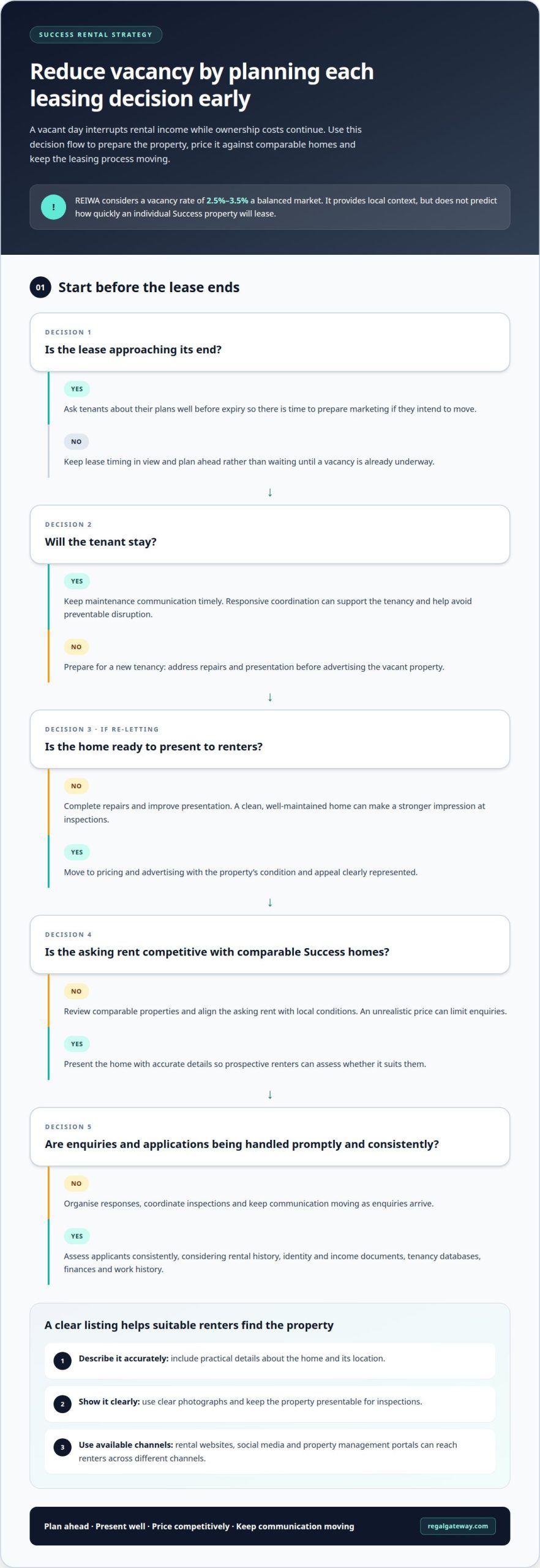
3. Reducing vacancy periods
Every vacant day interrupts rental income while ownership costs continue. REIWA considers a vacancy rate between 2.5% and 3.5% a balanced market. This local measure offers context, but it doesn’t predict how quickly an individual Success property will lease. Landlords can reduce risk by tracking local demand, keeping the home presentable and setting rent competitively against comparable properties. A property manager can help coordinate these decisions and respond as market conditions shift.
Plan ahead of the lease ending. Ask tenants about their plans well before expiry, leaving time to prepare marketing if they intend to move. If they’re staying, timely maintenance communication can support the tenancy and help avoid preventable disruption. Before advertising a vacant investment property, address repairs and presentation. A clean, well-maintained home can make a stronger impression at inspections and appeal to prospective renters.
Effective marketing helps suitable tenants find a property. Use accurate descriptions, clear photographs and practical details about the home and its location. Advertising through rental websites, social media and property management portals can reach renters across different channels. Set the asking rent in line with comparable Success homes: an unrealistic price can limit enquiries, while a competitive listing may attract suitable applicants sooner. Organise responses so interested renters receive timely information.
As enquiries arrive, coordinate inspections, assess applications consistently and keep communication moving. Tenant selection should consider rental history, identity and income documents, tenancy databases, finances and work histories. Follow applicable Western Australian regulations throughout the leasing process, including requirements for advertising and tenancy arrangements. Once a tenant is selected, clear expectations and prompt attention to reported issues can support retention. Together, thoughtful preparation, targeted marketing and careful screening help landlords reduce vacancy exposure while maximising the continuity of rental income.
Gross rental yield calculation
Rental yield shows how annual rent relates to a rental property’s value. To calculate gross yield, divide annual rental income by the property’s purchase price, then multiply by 100. The result is a percentage for comparing investment opportunities, not a complete measure of profit.
For a property you already own, use the price you paid to assess its yield. Gross yield excludes ongoing costs, including repairs, maintenance, strata levies and rates. Net yield accounts for these expenses: subtract annual outgoings from annual rent, divide the remainder by the purchase price, then multiply by 100. Keeping both calculations helps distinguish headline income from returns after costs.
Use consistent inputs when comparing properties. Make sure rent is annual, the property value basis is consistent and expenses cover the same period. A renovation may support higher rental income if it improves appeal to local renters, but include its cost when assessing net returns. Strong demand can help attract tenants, while rent above comparable homes may not be sustainable.
If a property’s market value rises while its rent stays the same, its yield measured against current value may fall. The purchase-price calculation and current-value assessment answer different questions: one tracks returns on the original investment, while the other shows income relative to today’s asset value. Reviewing rent, outgoings and condition can help identify what most affects performance.
How do Success rental yields compare with nearby suburbs such as Cockburn Central and Atwell? Compare similar homes using the same yield formula, rent period and value basis. Property type, purchase price, achievable rent and local demand shape the result, so suburb names alone do not show which yield is stronger.
For a considered view of a property’s rental potential, request a rental property appraisal.
Regal Gateway Property
Regal Gateway Property can help property owners consider rental performance alongside the broader priorities of owning or selling a residential investment. Its Property Management and Tenant Selection and Screening offerings are relevant when you want support with managing a rental or selecting tenants, while Residential Property Sales can inform decisions about selling a home. These services connect the practical considerations discussed here, from achievable rent and vacancy risk to the property’s position in your investment plans. If you’re weighing the next step for a Success property, contact Regal Gateway Property to discuss your needs and the approach that suits your circumstances.
Shape your next investment decision
A rental property performs best when its income strategy reflects your wider investment goals, not just the next rent review. Consider what you want the asset to deliver, how involved you want to be in its management, and whether holding or selling remains the right direction. This broader perspective can help turn routine property decisions into a deliberate plan for the future.
If you’re weighing how to increase rental yield in Success, focus on the choices that fit your property, your priorities and local conditions. A tailored conversation can help clarify the next step without losing sight of long-term value. Contact Regal Gateway Property today to discuss your property goals and consider a path forward with confidence.
Frequently Asked Questions
What should your yield be?
A useful Australian investment-property benchmark is 4.0% to 6.0% per annum. Treat it as a screening reference, not a promise of performance: compare properties using the same calculation and account for costs, tenant demand and vacancy exposure. A yield at either end of the range can reflect different purchase prices, property types or rental prospects, so assess the quality and sustainability of income alongside the percentage.
Can you add another bedroom or bathroom?
Adding a bedroom or bathroom can improve a property’s appeal when the layout and local renter demand support the change. Consider whether unused space could work as a bedroom and whether the existing bathroom meets likely tenants’ expectations. Compare the proposed work with potential rent and property value. An upgrade that adds complexity without improving tenant appeal may not strengthen returns.
How can I increase rental property income?
Consider furnishing the property if it suits the renters you want to attract. Furnishing can increase rental income by 10-20%, according to market guidance, although the result depends on the property and its audience. Other income decisions include reviewing rent against comparable homes, presenting the property well and considering whether useful unused spaces can generate additional income without undermining the home’s appeal.
Need help maximising your rental yield?
Regal Gateway Property can discuss your rental goals, provide a market appraisal and help with property management or tenant selection. This can help when assessing a Success home, reviewing its rental prospects or planning your next investment decision. If you’re also considering a sale, residential property sales can be part of that discussion. Contact Regal Gateway Property to clarify your priorities and discuss the next step.
What is a good rental yield in Success, WA?
Assess a Success property against the Australian benchmark, then compare it with genuinely similar local homes rather than relying on a suburb-wide assumption. Property type, purchase price, achievable rent and condition all affect the result. For context, compare like-for-like homes in Success, Atwell, Aubin Grove, Wandi, Hammond Park, Treeby and Mandogalup using the same calculation method.
How do you calculate gross and net rental yield in Australia?
For gross yield, divide annual rental income by the property’s purchase price and multiply by 100. For net yield, first subtract annual expenses and outgoings, such as repairs, maintenance, strata levies and rates, from annual rent. Divide the remaining income by the purchase price and multiply by 100. Gross yield shows income before those costs; net yield includes them.