
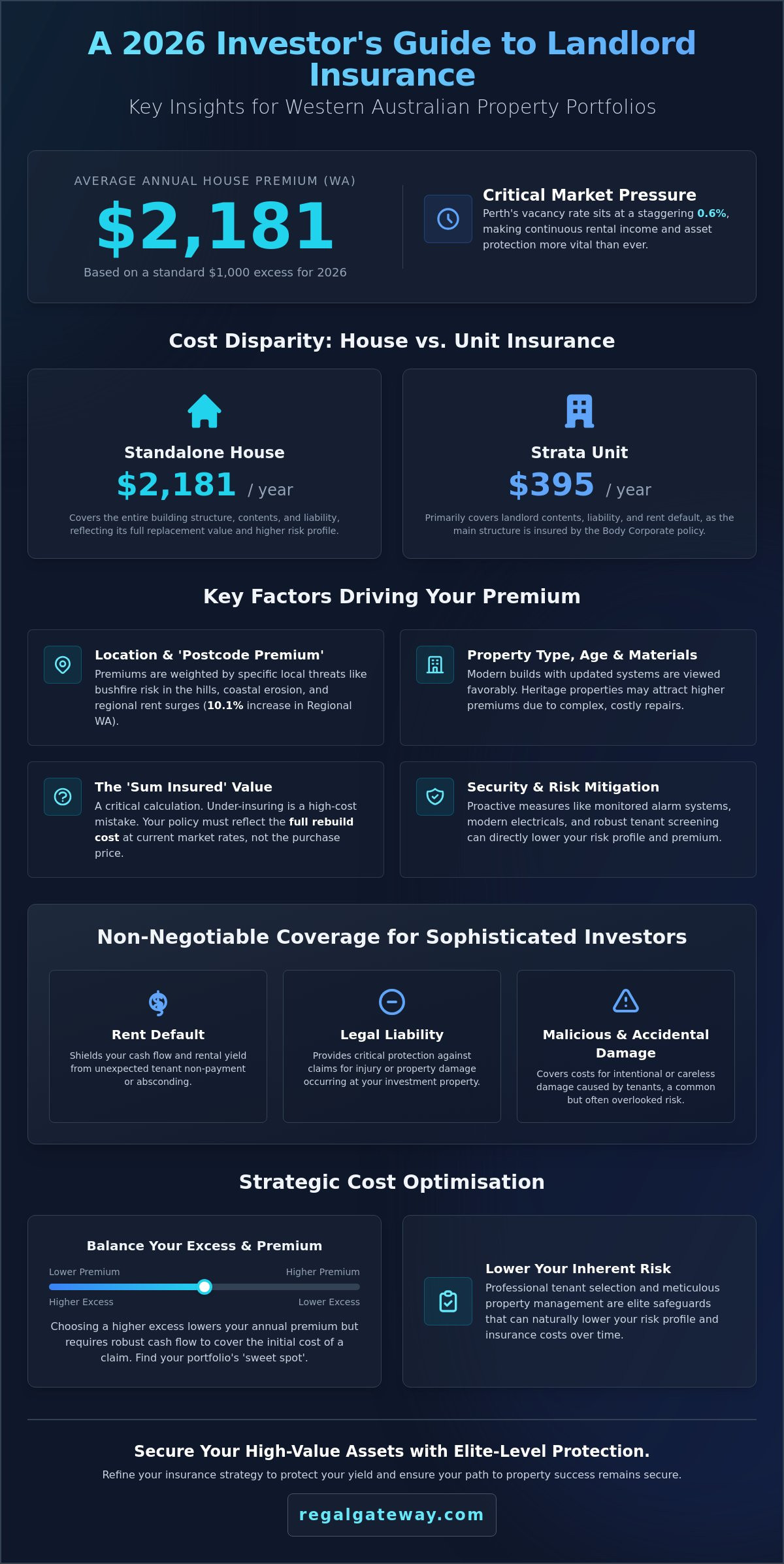
With the average annual premium for a house in Western Australia reaching $2,181 in 2026, many investors are left wondering if their portfolio is truly protected or simply over-leveraged. Understanding the landlord insurance WA cost is no longer just about comparing quotes; it’s about recognizing the sophisticated interplay between rising asset values and the evolving legislative landscape. You likely feel the pressure of tightening margins in a market where Perth vacancy rates sit at a staggering 0.6 percent, making the security of your investment more critical than ever.
We understand that the distinction between standard home cover and specialized landlord protection can often feel blurred, especially when facing risks like rent default or accidental damage. This guide provides the clarity you require by detailing the precise factors driving Western Australian premiums and offering a framework to refine your insurance strategy without compromising on quality. You’ll discover how to navigate current market averages while securing the elite-level protection your high-value assets deserve, ensuring your path to property success remains both secure and prestigious.
Key Takeaways
- Understand the 2026 benchmarks for landlord insurance WA cost to ensure your premiums reflect the true strategic value of your Western Australian investment.
- Identify how professional tenant selection and meticulous property management act as elite safeguards that can naturally lower your risk profile.
- Learn to navigate the precise balance of excess selection and payment structures to optimize your portfolio’s annual cash flow without sacrificing protection.
- Discover why rent default remains a non-negotiable inclusion for sophisticated investors and how to properly shield your assets against substantial legal liability.
- Master the calculation of your ‘Sum Insured’ to avoid the common mistake of under-insuring your unique property in a high-growth market.
Average Landlord Insurance Costs in WA for 2026
Securing an investment asset in Western Australia requires a nuanced understanding of the fiscal landscape, particularly as we navigate the complexities of the 2026 market. The current benchmark for the landlord insurance WA cost for a residential house stands at an average annual premium of $2,181, based on a standard $1,000 excess. This figure reflects a broader trend of inflationary pressure and the rising cost of property maintenance. While these numbers provide a baseline, the true cost is a reflection of your property’s specific attributes and the level of curated protection you choose to employ.
Western Australia’s premiums often diverge from those in the Eastern States due to our unique geographic profile. While Sydney or Melbourne might face different urban risks, WA properties are indexed against specific local threats, such as coastal erosion in northern suburbs or bushfire vulnerabilities in the hills. These geographic factors, combined with the extreme isolation of our regional centers, create a distinct risk pool that insurers analyze with meticulous detail. The 2026 economic climate has further influenced these figures, as the Building Services Legislation Amendment (Financial Oversight) Bill 2026 has introduced stricter oversight for builders, indirectly impacting insurance indexing by emphasizing the stability and replacement value of new constructions.
Investors must also weigh the trade-off between the ‘Excess’ and the ‘Premium’. Choosing a higher excess can lower your annual outlay, yet it requires a robust cash flow to cover the initial cost of a claim. It’s a strategic calculation where the goal isn’t merely to find the cheapest option, but to find the ‘sweet spot’ that preserves your yield while maintaining elite-level security for your portfolio.
House vs. Unit: Why the Price Gap Exists
There is a significant disparity between house and unit premiums, with strata-titled units in Perth averaging around $395 annually. This gap exists because the primary building structure is typically covered by the Body Corporate’s insurance policy. As an investor, your responsibility usually shifts toward ‘landlord contents’ cover and essential liability protection. For those refining their portfolio strategy, understanding rent insurance is vital for distinguishing between the communal building cover and the private protection required for your internal assets and rental income.
Regional Variations: Perth Metro vs. Regional WA
Location remains the most powerful variable in determining your quote. Regional WA has experienced a dramatic rent surge of 10.1 percent in the year leading to early 2026, which often correlates with higher insurance requirements to protect those increased yields. In metro areas like Atwell, property age and local crime statistics are weighed against the sophisticated security features you’ve installed. The ‘Postcode Premium’ effect is a strategic weighting where 2026 risk data for specific suburbs directly dictates the baseline landlord insurance WA cost for any given asset. This ensures that your premium is a precise reflection of the environment in which your investment resides.
Primary Factors Influencing Your WA Landlord Premium
The landlord insurance WA cost is rarely a static figure. It is a bespoke calculation that reflects the physical and strategic reality of your asset. In suburbs like Atwell, where modern builds dominate the landscape, insurers often look favorably upon contemporary construction materials and updated electrical systems. Conversely, heritage-style properties, while possessing undeniable prestige and character, may attract higher premiums due to the increased complexity of repairing specialized masonry or aged plumbing. Your premium is essentially a reflection of the insurer’s confidence in the structural integrity and safety of your investment.
A critical component of this calculation is the ‘Sum Insured’ value. In 2026, under-insuring is a high-cost mistake that can leave investors exposed during a total loss. With Western Australian construction costs continuing to climb, your policy must reflect the actual expense of a full rebuild at current market rates, not just the purchase price of the land. Beyond the building itself, optional extras such as rent default, malicious damage, and motor burnout cover provide an essential layer of security. While these additions increase the initial premium, they act as a safeguard for your cash flow. Integrating robust security features, such as monitored alarms and deadbolts in your Cockburn rentals, serves as a proactive measure that many insurers reward with reduced rates. To ensure these physical protections are complemented by legal compliance, investors should remain diligent regarding landlord maintenance responsibilities in WA, as a well-maintained property is fundamentally less risky to insure.
The Impact of Tenant Profiles and Lease Terms
The caliber of your residents significantly influences the insurer’s risk appetite. Long-term, stable leases are viewed as a hallmark of a secure investment, often leading to more favorable terms compared to the high turnover associated with short-term rental strategies. This is where professional tenant selection becomes a strategic financial tool rather than just an administrative task. By securing high-quality tenants through a rigorous screening process, you reduce the likelihood of the very claims that drive premiums upward over time.
Environmental and Geographic Risks in WA
Western Australia’s vast landscape introduces specific environmental variables that dictate building cover costs. Properties located in the bushfire-prone zones of outer-metro Perth require specialized assessment, while those situated along the Cockburn coast must account for the increasing frequency of storm and salt-spray damage. The replacement cost inflation currently impacting WA construction means that 2026 premiums have been adjusted upward to account for the heightened expense of labor and materials required to restore a property to its original standard. Ensuring your policy is attuned to these geographic nuances is the only way to guarantee your retreat remains an enduring asset.
Rent Default and Liability: The Essential ‘Hidden’ Costs
While the base landlord insurance WA cost covers physical structures, the true strategic value of a policy often lies in its protection against the intangible risks of human behavior. Rent default remains the most frequently claimed feature for Western Australian investors, particularly as the market begins to normalize from the extreme vacancy lows of recent years. In a landscape where the median rent reached $747 per week in April 2026, even a brief period of lost income represents a significant financial disruption. Sophisticated investors treat this cover not as an optional extra, but as a critical component of their risk mitigation framework.
The decision to include ‘Malicious Damage’ cover is another calculated step in preserving asset value. While standard wear and tear is a predictable expense, the cost to remediate intentional destruction can easily exceed a standard bond. When you weigh the minor increase in your annual premium against the potential for five-figure repair bills, the cost-benefit analysis clearly favors comprehensive protection. This is especially relevant given the 2026 updates to the Residential Tenancies Act 1987 (WA), which implemented a streamlined bond release process. While this efficiency allows for faster resolutions, it places a higher burden on landlords to provide immediate, irrefutable evidence of damage to align with insurance claim timelines.
Understanding the interaction between WA’s specific eviction laws and your policy is vital. Recent legislative shifts have aimed to provide more security for tenants, including limitations that restrict rent increases to once every 12 months. These regulations can influence the duration of a default period, making it essential that your insurance policy is robust enough to cover the full timeline of a legal vacancy or eviction process.
Navigating Rent Default Claims in Western Australia
Securing a successful claim for lost rent requires a meticulous approach to documentation. Insurers typically demand a comprehensive paper trail, including the original signed lease, up-to-date rent ledgers, and copies of all formal notices issued. You should also be mindful of the standard waiting periods and claim limits found in most WA policies, which often dictate how many weeks of lost rent are recoverable. For those seeking to minimize these risks through superior oversight, our guide on Property Management Atwell: The Definitive Landlord’s Strategy offers deeper insights into maintaining the gold standard of tenancy documentation.
Public Liability: A Non-Negotiable Protection
Public liability acts as the silent sentinel of your investment strategy. With $20 million now considered the industry standard for Western Australian rentals, this cover protects you against the catastrophic financial consequences of third-party injuries. Common triggers in residential settings include structural failures or simple slips and trips on the premises. While a basic policy might offer lower limits, the modest difference in the landlord insurance WA cost for comprehensive liability protection is a small price for the peace of mind that comes with knowing your personal wealth is shielded from high-stakes litigation.
How to Optimise and Reduce Your Landlord Insurance Costs
Optimising your landlord insurance WA cost is an exercise in strategic precision, where small adjustments to your policy structure can yield significant dividends for your annual yield. One of the most effective levers at your disposal is the strategic selection of your excess. While a standard $1,000 excess is the common benchmark, sophisticated investors often find a ‘sweet spot’ by increasing this amount to reduce their annual premiums. This approach shifts minor risks to your own cash flow while maintaining elite-level protection for catastrophic events, essentially turning your insurance into a true safety net rather than a maintenance fund.
Beyond the excess, the frequency of your payments plays a subtle yet impactful role in your total outlay. Many providers apply a premium for the convenience of monthly installments, which can effectively act as hidden interest. By opting for annual payments, you eliminate this unnecessary cost and simplify your portfolio’s financial reporting. Additionally, bundling your investment cover with your primary residence or other assets under a single provider often unlocks multi-policy discounts. This consolidated approach doesn’t just reduce costs; it provides a more cohesive overview of your total risk exposure, ensuring no gaps exist between your various private retreats and enduring assets.
Proactive maintenance is perhaps the most overlooked tool for cost reduction. Insurers are increasingly meticulous about ‘wear and tear’ exclusions, which can lead to rejected claims and future premium hikes. By maintaining your property to a high standard, you prevent the gradual deterioration that often serves as a trigger for insurers to limit their liability. If you’re looking to streamline this process, our professional property management services ensure your asset remains in peak condition, effectively acting as a frontline defense against rising insurance costs.
Security and Safety Upgrades That Pay Off
Investing in the physical security of your property is a visionary move that pays immediate dividends. Installing monitored alarm systems in high-growth corridors like Cockburn not only attracts a more discerning tenant but also signals to your insurer that you’re a low-risk client. Ensuring absolute compliance with Western Australian smoke alarm and RCD regulations is also non-negotiable. Regular professional property inspections serve to identify these safety risks before they escalate into costly claims, preserving both your reputation and your capital in the 2026 market.
Reviewing Your Policy Annually
A ‘set and forget’ mentality is a dangerous luxury in the fluctuating market of 2026. As property values and construction costs shift, a policy that was adequate twelve months ago may now leave you dangerously exposed. It’s essential to compare Product Disclosure Statements with a focus on strategic value rather than just the sticker price. While agreed value provides a predetermined payout for your asset, market value bases the compensation on the property’s current worth at the time of the loss, which can be volatile in the high-growth Western Australian market. This distinction is critical for ensuring your landlord insurance WA cost remains a calculated investment in your future prosperity.
The Regal Gateway Advantage: Lowering Risk to Protect Your Yield
The true measure of a successful investment strategy lies in the seamless integration of risk management and capital growth. While the landlord insurance WA cost is a necessary consideration for any Western Australian portfolio, the most effective way to lower this expense over the long term is by fundamentally reducing the underlying risk profile of the asset. Professional property management acts as your frontline defense, providing a level of oversight that transforms a simple building into a secure, enduring asset. By maintaining the highest standards of care, you don’t just protect your yield; you present a low-risk profile to insurers, which is essential for securing favorable terms in a competitive 2026 market.
There’s a direct, quantifiable link between rigorous tenant selection and the frequency of ‘malicious damage’ or ‘rent default’ claims. When a property is managed with a focus on excellence, the likelihood of a catastrophic claim diminishes significantly. This transition from a passive landlord to a strategic investor requires a partnership with an agency that understands the nuances of the Cockburn and Atwell growth corridors. Our approach ensures that your insurance remains a secondary safety net rather than a frequently utilized resource, allowing your capital to work harder for your lifestyle goals.
Elite Tenant Screening as Risk Mitigation
Our proprietary process for vetting high-quality tenants in the Cockburn area is designed to identify individuals who value prestige and stability as much as you do. This rigorous screening is complemented by detailed ingoing property condition reports that provide irrefutable evidence of your asset’s state at the commencement of a lease. Such meticulous documentation is vital for protecting your insurance interests, as it provides the clarity required to substantiate claims quickly and efficiently. To learn more about how we elevate the standard of service for our clients, explore Regal Gateway Property: Your Bespoke Real Estate Partner.
A Concierge Approach to Property Management
We provide a concierge-level experience that extends far beyond traditional rent collection. Our proactive maintenance coordination in suburbs like Atwell and Success is specifically designed to prevent the ‘neglect’ exclusions that insurers often employ to limit their liability. This proactive oversight is a key factor in managing the long-term landlord insurance WA cost for your portfolio. By identifying and rectifying minor issues before they escalate, we ensure your property remains a safe and habitable retreat that meets all legislative requirements. Having a local expert who understands the complexities of WA tenancy law gives you the freedom to enjoy the rewards of your success without the anxiety of day-to-day management. We invite you to experience a higher standard of asset management, where your prosperity and security are our primary objectives.
Elevating Your Investment Strategy for 2026
Navigating the complexities of the 2026 property market requires more than just an awareness of the baseline landlord insurance WA cost. It demands a visionary approach where insurance is viewed as a vital pillar of capital preservation. You’ve seen how geographic nuances and legislative shifts dictate your premiums; now is the time to transition from a reactive stance to one of strategic mastery. By optimizing your excess and ensuring your ‘Sum Insured’ reflects current construction realities, you safeguard the lifestyle your portfolio was designed to provide.
True security is found when elite protection meets professional oversight. Under the guidance of Director Samantha Francis, Regal Gateway Property provides a boutique, concierge-like service that has defined excellence in the City of Cockburn for over a decade. Our rigorous tenant screening process doesn’t just fill vacancies; it acts as a primary risk mitigation tool that preserves your asset’s integrity and your peace of mind. We invite you to secure your investment’s future with Regal Gateway’s expert property management services. Your journey toward a more prosperous and secure future starts with a commitment to a higher standard of care.
Frequently Asked Questions
Is landlord insurance compulsory for rental properties in Western Australia?
Landlord insurance is not legally mandated under the Residential Tenancies Act 1987 (WA), yet it remains a fundamental pillar of a secure investment strategy. While the law doesn’t require cover, most financial institutions insist upon it as a condition of your investment loan. Beyond compliance, it serves as a sophisticated safeguard for your capital, ensuring that the landlord insurance WA cost is viewed as a strategic investment in asset protection rather than a mere administrative burden.
What is the difference between building insurance and landlord insurance?
Building insurance focuses on protecting the physical structure against events like fire or storm, while landlord insurance provides specialized protection against tenant-specific risks. This includes cover for rent default, malicious damage, and legal liability within the rental context. For investors seeking an elevated level of security, a comprehensive landlord policy bridges the gap that standard building insurance leaves exposed, protecting your yield and your peace of mind simultaneously.
Does landlord insurance cover the cost of a tenant’s unpaid water bills in WA?
Most landlord insurance policies do not provide cover for a tenant’s unpaid water or utility bills. These expenses are typically considered a debt between the parties and are managed through the bond release process or via the Commissioner for Consumer Protection. Meticulous property management and rigorous tenant selection are the most effective ways to mitigate these minor fiscal disruptions, ensuring your cash flow remains consistent and your investment remains undisturbed.
How much does the average landlord insurance policy cost in Perth for 2026?
In the 2026 market, the average landlord insurance WA cost for a residential house is $2,181 per annum, based on data from March 2026. For those with strata-titled units in Perth, the average premium is significantly lower, at approximately $395, as the building structure is often covered by the body corporate. These figures serve as a baseline benchmark, though your specific premium will reflect the unique prestige and risk profile of your individual property.
Can I claim the cost of landlord insurance as a tax deduction in Australia?
Premiums for landlord insurance are typically a tax-deductible expense for investment property owners in Australia. Because the insurance is directly related to the production of assessable rental income, it’s categorized as an allowable deduction. This tax efficiency effectively lowers the net cost of your protection, allowing you to maintain an elite level of security for your enduring assets while optimizing your overall fiscal position at tax time.
What happens to my insurance if my property is vacant for more than 60 days?
If your property remains vacant for more than 60 consecutive days, your insurance cover may be restricted or entirely suspended. Most insurers require formal notification of extended vacancies to adjust your risk profile, which might involve a temporary premium increase or additional security requirements. Maintaining a low vacancy rate through a proactive management strategy is the most reliable way to ensure your protection remains uninterrupted and your asset stays secure.
Does landlord insurance cover ‘wear and tear’ on my Atwell investment property?
Landlord insurance is designed to protect against sudden and accidental events, meaning it does not cover gradual wear and tear on your Atwell property. Maintaining the aesthetic and structural integrity of your investment is considered a landlord’s duty of care under WA law. Proactive maintenance and regular inspections are the tools required to manage these costs, ensuring your property continues to reflect the high standards of a premium rental retreat.
How do I choose between ‘Agreed Value’ and ‘Replacement Cost’ for my WA property?
Choosing between ‘Agreed Value’ and ‘Replacement Cost’ depends on your appetite for risk in a fluctuating market. ‘Replacement Cost’ is often the preferred choice for sophisticated investors in 2026, as it accounts for the rising expense of labor and materials in Western Australia. While ‘Agreed Value’ offers a fixed payout, it carries the risk of under-insurance if construction costs surge, potentially leaving you unable to restore your asset to its original excellence.