
You can self-manage a rental property in Western Australia without formal qualifications, but you remain responsible for meeting tenancy obligations. The choice between a private landlord and a property manager in WA is less about permission and more about whether you can confidently handle the practical and legal demands. According to Western Australian Legislation, residential tenancies are governed by the Residential Tenancies Act 1987 (WA), and Consumer Protection WA says a tenant’s security bond must be lodged with the Bond Administrator within 14 days.
Managing a difficult tenant can be demanding, particularly when communication, repairs or a breach notice need careful attention. This guide explains what self-management involves, how to handle a challenging tenancy and what a property manager can take on, so you can compare the options and choose an arrangement that suits your property and capacity. It also covers the responsibilities that apply either way, helping you make an informed decision about your investment and your relationship with your tenant.
Key Takeaways
- Choose self-management if you can consistently handle tenant communication, records, maintenance and time-sensitive decisions.
- For a difficult tenancy, keep communication clear and documented, and follow the correct process before taking action.
- A property manager can coordinate key tenancy tasks, including inspections, repairs and communication, while you retain important landlord responsibilities.
- Before deciding, weigh your availability, distance from the property and comfort with handling tenant issues directly.
Is it legal to self-manage a rental property in WA?
Yes. In Western Australia, landlords can generally manage their own investment properties without formal qualifications. Self-management gives owners direct control, but they remain responsible for meeting tenancy obligations and keeping reliable records. The same tenancy framework applies whether a landlord manages the property personally or appoints a property manager.
Landlord and Manager Compliance Liability
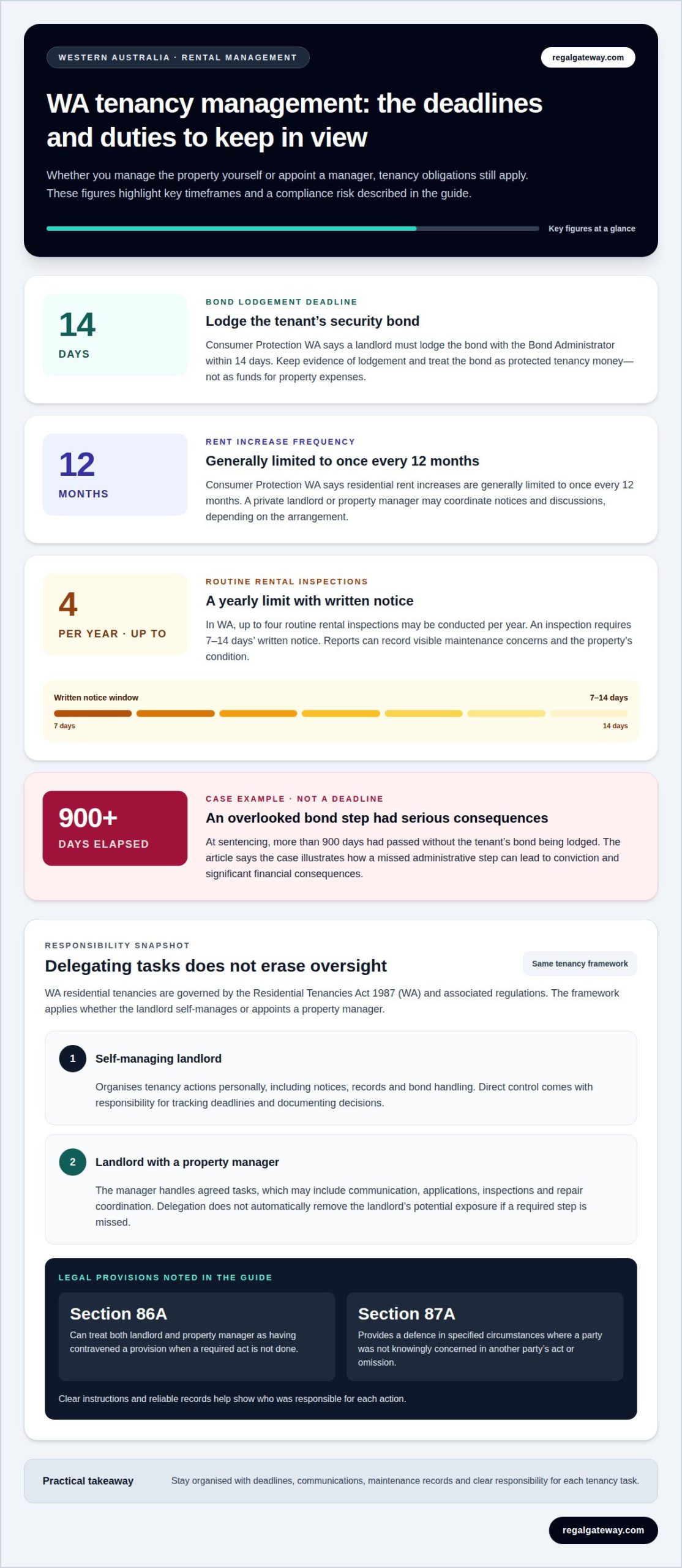
Western Australian residential tenancies are governed by the Residential Tenancies Act 1987 (WA) and associated regulations, according to Western Australian Legislation. A self-managing landlord must organise required tenancy actions personally, including notices, records and bond handling. Engaging a property manager delegates agreed tasks, but doesn’t automatically remove the landlord’s potential exposure if a required step is missed.
Section 86A can treat both a landlord and property manager as having contravened a provision when a required act isn’t done. Section 87A provides a defence in specified circumstances where a party wasn’t knowingly concerned in another party’s act or omission. Clear instructions and records help show who was responsible for each action.
Compliance Risks and Penalties
Bond handling is a practical risk for self-managing landlords. According to Consumer Protection WA, a landlord in Western Australia must lodge a tenant’s security bond with the Bond Administrator within 14 days. Treat the bond as protected tenancy money, not funds available for property expenses, and keep evidence of its lodgement.
At sentencing, more than 900 days had passed without the tenant’s bond being lodged. The case illustrates how an overlooked administrative step can lead to conviction and significant financial consequences.
| Option | Who handles compliance tasks | Key consideration |
|---|---|---|
| Self-managing landlord | The landlord organises tenancy actions and records | Direct control, with duties managed personally |
| Landlord with a property manager | The manager handles assigned tasks | Delegation doesn’t automatically remove landlord exposure |
Self-management is most suitable if you can consistently track deadlines, document decisions and follow tenancy requirements. A manager can take on agreed administrative tasks, but you should understand who is responsible for each step and keep oversight of important tenancy records.
Self-managing versus engaging a property manager
In WA, self-management gives owners direct control, while an agent can take on agreed tenancy tasks. Private landlords and agents handle applications, screening, rent increases and renewals differently, depending on who coordinates each step.
Private Landlord Rental Management
A private landlord receives applications, applies consistent screening criteria and communicates directly with prospective tenants. The owner also handles rent increase notices and lease renewal discussions, keeping records of decisions and correspondence. Consumer Protection WA says residential rent increases are generally limited to once every 12 months. Direct involvement offers control, but the landlord must organise each task and respond promptly.
For self-management, keep application records, tenancy documents, rent dates and renewal discussions organised in one reliable system. When taking over from an agent, arrange a clear handover of relevant records and confirm who will communicate with the tenant from the changeover date. You can also delegate a specific task, such as finding a tenant, while managing the ongoing tenancy yourself.
Property Manager Rental Management
A property manager coordinates the tasks agreed with the owner, which may include receiving applications, screening prospective tenants, communicating rent changes and managing renewal discussions. This can suit owners who prefer less direct tenant communication or need support coordinating the tenancy. The owner remains responsible for key investment decisions, while the manager handles the delegated administration.
Before moving from self-management to an agent, gather the current lease, application records and tenancy correspondence so the transition has context. Before taking management back, set a clear handover date and share the new contact arrangements with the tenant. For owners seeking delegated tenancy coordination, property management support can provide a structured alternative to handling every interaction personally.
Property manager duties in Western Australia
A property manager can coordinate agreed tenancy tasks, including tenant communication and maintenance arrangements. Across Perth and regional WA, the same state tenancy framework applies, though distance and local access can affect how appointments, inspections and updates are organised.
Coordinating the tenancy
For an owner, a manager can provide a consistent contact for tenant requests, rent records and lease administration. A clear process makes decisions easier to trace: record a maintenance request, assess its urgency, communicate the next step and keep the correspondence. For example, a leaking tap calls for a different response from a fault affecting an essential service.
Managers can also coordinate routine inspections and share findings with the owner. In WA, up to four routine rental inspections may be conducted per year, with 7-14 days’ written notice. An inspection report can document visible maintenance concerns, helping the owner decide what action to take and creating a record of the property’s condition.
Repairs, inspections and regional logistics
Urgent repairs require prompt organisation. In WA, repairs to essential services must be arranged within 24 hours, while other urgent repairs must be arranged within 48 hours. A manager’s role is to assess the report, arrange the required response and keep the owner informed. The owner should understand the agreed process for approvals and communication before management begins.
Perth and regional properties follow the same state tenancy rules, but coordinating access, trades and updates can be more challenging when the owner is far away. A manager may organise local access and keep a regional property owner informed remotely. In an apartment, coordination may instead involve arranging tenant access within the building.
Choose a manager by identifying the tasks you want to delegate and the updates you need. A written agreement should make clear who handles tenant contact, inspection records, repair coordination and owner approvals.
How can tenants verify a WA landlord or property manager and confirm they are authorised?
Before sharing personal information or paying rent, establish who manages the tenancy and confirm their authority. In Western Australia, a landlord can manage an investment property without formal qualifications, so a private landlord will not necessarily hold a property management credential.
Confirm the person and property
Compare the name on the proposed tenancy documents with the person communicating with you. Ask whether they are the owner or acting on the owner’s behalf, and request written confirmation of their role. If an agent sends a lease, for example, check that the agency and contact person are identified consistently in the lease and related correspondence.
Keep the property address, contact details and signed documents together. If payment instructions come from a different person or account, pause and seek written clarification using a contact method already established in the tenancy correspondence. A sudden change in bank details is a reason to verify the instructions, not proof that they are authorised.
Check the tenancy records
Before paying a bond, confirm who will lodge it and how you’ll receive evidence of lodgement. Consumer Protection WA requires landlords to lodge a tenant’s security bond with the Bond Administrator within 14 days. Keep the bond receipt or related confirmation with your lease, rent records and property condition report.
If an agent is involved, ask for the agency’s details and written confirmation that the owner has authorised it to manage the property. Compare those details with the lease and rent instructions, and keep the replies. If the person cannot clearly explain their role, do not send identity documents or funds until the inconsistency is resolved.
Clear records protect both sides: dated emails, signed agreements and payment receipts help establish who gave instructions and when. If you’re an owner seeking a more formal tenancy process, discuss your property management needs.
Regal Gateway Property
Regal Gateway Property supports owners in Atwell, Aubin Grove, Wandi, Hammond Park, Success, Treeby and Mandogalup with residential sales, property management and tenant selection and screening. Owners who want to delegate ongoing tenancy coordination can consider Property Management, while those preparing to lease can use the agency’s tenant selection services to support the leasing process.
The right choice depends on how much you want to manage tenant communication, applications and property decisions. Talk with Regal Gateway Property about whether Property Management or tenant selection support suits your immediate needs, or whether your priority is a property sale.
Contact Regal Gateway Property to discuss your property plans.
Set a management approach that fits your next chapter
Choosing between a private landlord and a property manager in WA comes down to how you want to manage your investment. Consider the time you can commit, your preferred communication style and your broader property plans. Your approach can change as your circumstances change, so today’s decision need not determine every future choice.
For some owners, direct involvement is part of the appeal. Others prefer to delegate day-to-day tenancy coordination and focus elsewhere. Choose an approach you can sustain, with clear expectations and a reliable process for decisions, records and tenant communication.
Regal Gateway Property can help you consider the next step for your property, whether your plans involve leasing, management or a sale. Contact Regal Gateway Property to discuss your circumstances and explore a path that aligns with your investment goals.
A practical plan helps you manage the tenancy with greater clarity and confidence.
Frequently Asked Questions
What is the biggest risk of self-managing?
One key risk of self-management is missing a tenancy obligation while juggling other responsibilities. A delayed response to a maintenance report, incomplete records or a poorly handled tenant concern can lead to a dispute. Use a calendar for deadlines, save written communications by property, and record decisions and actions. These habits make it easier to follow what happened and respond consistently.
What are the pros and cons of renting from a private landlord versus a property manager in Western Australia?
A private landlord may give tenants direct access to the owner, while a property manager provides an intermediary for tenancy matters. The experience depends on how promptly requests are handled and how clearly decisions are recorded. In Atwell, Aubin Grove, Wandi, Hammond Park, Success, Treeby and Mandogalup, clarify who handles requests and how to contact them before signing.
What fees can WA property managers charge landlords, and how do their fees affect rent for tenants?
Management and leasing costs depend on the agreed services and terms. Landlords should understand the costs set out in their agreement; these are not automatically charged to tenants as a separate fee. The landlord sets the rent, while market demand affects the risk of a vacancy. Tenants should refer to the rent stated in their tenancy agreement rather than assume management costs determine the amount.
What tenancy laws and obligations apply to WA landlords and property managers?
Western Australian residential tenancies are governed by the Residential Tenancies Act 1987 (WA) and associated regulations, according to Western Australian Legislation. Landlords and property managers must follow the requirements relevant to their roles, including proper handling of tenancy records and communications. For a specific disagreement, identify the action at issue, keep supporting documents, and refer to the applicable tenancy requirement before responding.
Who handles repairs, maintenance, inspections, and emergencies under each arrangement in WA?
The landlord handles these responsibilities directly when self-managing; with an agent, the manager may coordinate tasks under the management arrangement. In WA, urgent repairs to essential services must be arranged within 24 hours, and other urgent repairs within 48 hours. For example, a loss of an essential service requires faster coordination than a non-urgent cosmetic issue. Repair costs remain the owner’s responsibility.
What should a WA tenant do if a private landlord or property manager fails to meet their obligations?
Document the issue, including dates, messages and relevant photographs, then notify the landlord or manager in writing and request a clear response. Keep copies of any repair invoices and avoid treating the bond as rent. If urgent repairs aren’t arranged within the prescribed time, Section 43 allows a tenant to arrange repairs and claim reasonable costs from the landlord. Disputed bond-release applications go to the Commissioner for Consumer Protection.