
Far from eroding portfolio value, the latest updates to rental laws for landlords WA 2026 offer a sophisticated risk-mitigation framework designed to protect your investment. Even so, adapting to this statutory environment can feel demanding. Balancing the mandatory 12-month restriction on rent reviews against rising holding costs, while adhering to structured pet request protocols and administrative bond releases under Part 5A, requires meticulous operational discipline. No lessor wants to risk severe financial penalties or costly disputes through accidental lease non-compliance.
This compliance guide empowers you to master Western Australia’s 2026 tenancy reforms with authoritative insights on rent reviews, tenant rights, and statutory risk mitigation. You’ll discover how to achieve complete legislative compliance while actively preserving your property’s physical condition and net returns. Ahead, we examine each key statutory shift in detail, giving you the exact operational roadmap to structure seamless tenancy agreements that withstand regulatory scrutiny in 2026.
Key Takeaways
- Gain complete clarity on how rental laws for landlords WA 2026 mandate 12-month limits on rent reviews, outlaw rent bidding, and require strictly compliant fixed-price marketing.
- Manage tenant applications for pets and minor modifications with confidence by adhering to statutory grounds for refusal and the mandatory 14-day determination window.
- Streamline security bond disposal and conflict management through the Part 5A administrative pathway overseen directly by the Commissioner for Consumer Protection.
- Structure compliant lease documentation and lawful termination notices that withstand heightened regulatory oversight and shield against retaliatory action claims.
- Discover how dedicated boutique property management across Atwell and the broader City of Cockburn mitigates compliance liabilities while securing enduring asset value.
Understanding the Legislative Framework: WA Residential Tenancy Reforms in 2026
The modernisation of the Residential Tenancies Act 1987 (WA) marks a definitive turning point for property investors across Western Australia. Administered by Consumer Protection under the Department of Energy, Mines, Industry Regulation and Safety (DEMIRS), this updated legislative architecture recalibrates the private rental sector by balancing equitable occupancy standards with enhanced investor certainty. At its core, the updated legislation modernises established leasehold estate legal principles, rebalancing the statutory relationship between lessor and lessee to reflect contemporary housing dynamics. For owners of prime residential property throughout Cockburn and Atwell, understanding these statutory shifts is essential to protecting capital value and eliminating regulatory exposure.
Key Evolution of the Residential Tenancies Act
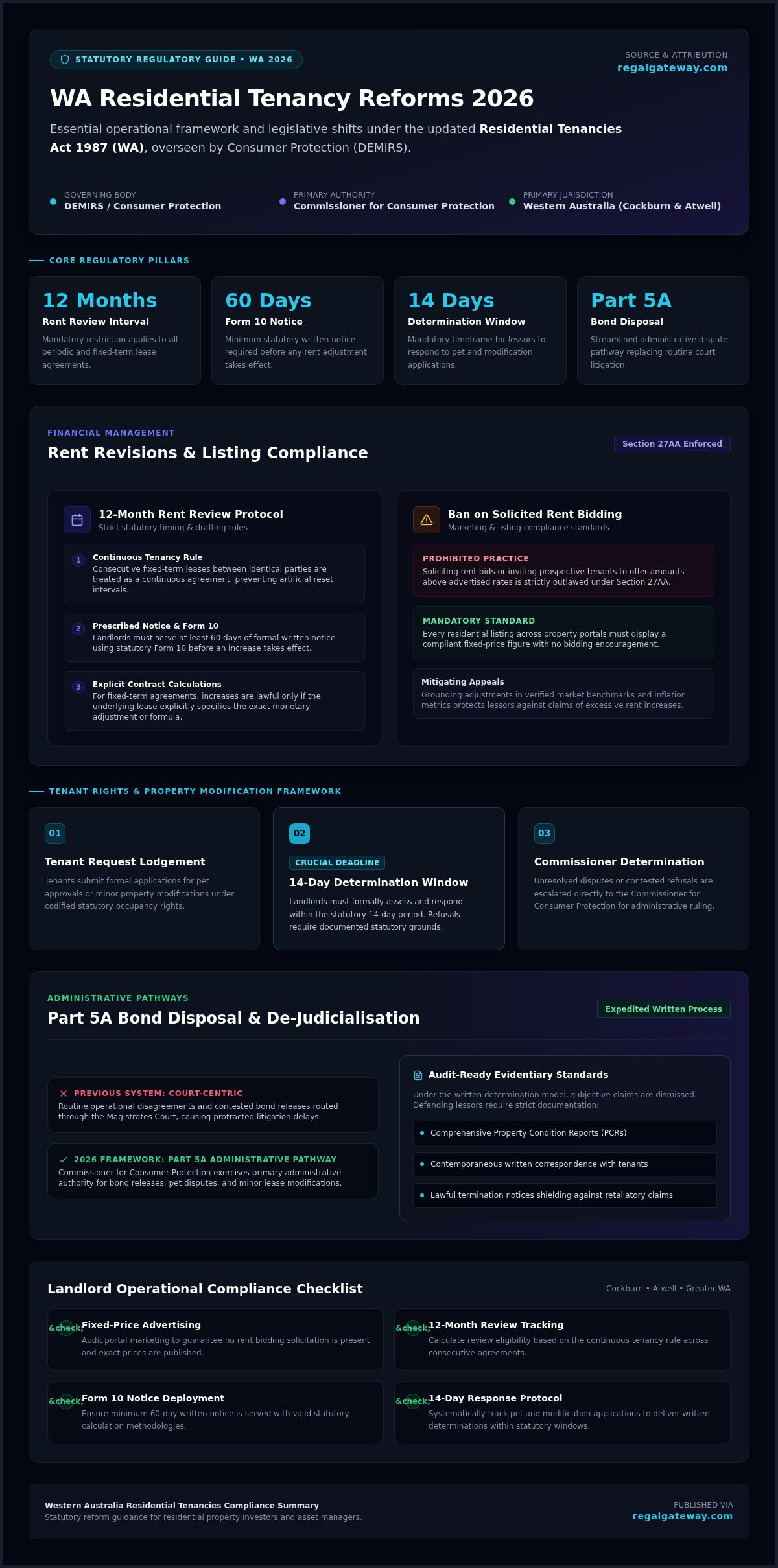
The consolidated 2026 statutes reflect a structured, multi-phase reform agenda. Following initial measures addressing rent bidding and retaliatory eviction protections, subsequent phases introduced the mandatory 12-month limit between rent increases, codified tenant entitlements regarding pets, and enacted Part 5A bond disposal mechanisms. Crucially, statutory rules treat consecutive fixed-term agreements between identical parties as a continuous tenancy. This anti-avoidance provision prevents lessors from circumventing statutory review intervals through fragmented lease contracts. In this calibrated environment, mastering the rental laws for landlords WA 2026 requires flawless lease construction, as statutory bodies actively enforce serious administrative penalties against non-compliant marketing, unapproved lease modifications, and defective tenancy paperwork.
The Role of Consumer Protection and the Commissioner
A defining element of the modernised framework is the de-judicialisation of tenancy administration. Rather than routing routine operational disagreements through the Magistrates Court, the Commissioner for Consumer Protection now holds primary administrative authority to determine minor disputes concerning pet applications, property modifications, and contested bond releases.
This shift establishes an expedited written determination process. Lessors can no longer rely on informal arrangements or subjective preferences. Defending an owner’s position requires an audit-ready standard of record-keeping, anchored by comprehensive Property Condition Reports, contemporaneous correspondence, and timely statutory notices. Engaging dedicated, boutique property management ensures these rigorous evidentiary thresholds are seamlessly met, insulating your balance sheet while sustaining asset performance.
Rent Adjustments, Rent Bidding Bans, and Financial Protocols
Sustaining robust portfolio cash flow under modern tenancy standards requires an active, data-driven methodology. Under the consolidated Residential Tenancies Act 1987 (WA), the financial mechanics surrounding leasing and yield management are closely regulated. Ensuring your portfolio remains lucrative while strictly observing rental laws for landlords WA 2026 comes down to timing, transparency, and strategic foresight.
Managing the 12-Month Rent Increase Restriction
Rental revisions can occur only once every 12 months across all residential agreements, whether fixed-term or periodic. To enforce an adjustment, lessors must serve tenants with at least 60 days of formal written notice via prescribed Form 10. For fixed-term agreements, an increase is lawful only if the underlying contract explicitly specifies the exact monetary adjustment or precise calculation method.
Arbitrary figures invite costly pushback. Aligning adjustments with verified local market benchmarks and inflation metrics insulates lessors from tenant appeals regarding excessive rent. When coordinating lease renewals, partnering with dedicated specialists in property management Atwell provides the market intelligence needed to time reviews precisely, preserving investor returns while respecting legislative thresholds.
Navigating the Ban on Solicited Rent Bidding
Section 27AA strictly outlaws solicited rent bidding. Every residential listing across Australian digital property portals must display an exact, fixed rental figure. Phrasing such as “offers over”, “rent from”, or price brackets is unlawful, exposing individual lessors to statutory penalties up to $10,000 and corporations up to $50,000.
Prospective tenants retain the legal right to submit higher, unsolicited offers voluntarily. Lessors may legally accept these offers, provided the agent or owner never encouraged or prompted the higher sum. Ensuring comprehensive documentation of all application interactions remains vital to demonstrating compliance under contemporary regulatory scrutiny. Discerning investors seeking total peace of mind often consult Regal Gateway Property to ensure their marketing campaigns remain entirely bulletproof.
Tenant Rights: Navigating Pets and Property Modifications
Modern tenancy standards establish an unequivocal statutory baseline favouring domestic comfort. Under consolidated rental laws for landlords WA 2026, tenant requests to keep domestic pets and execute minor modifications operate under a statutory presumption of approval. Safeguarding high-value physical finishes while honouring these expanded provisions requires property owners to implement proactive, structured compliance systems rather than reactive measures.
The Framework for Pet Approval and Pet Bonds
When an existing or prospective tenant lodges an approved pet request, the lessor has exactly 14 calendar days to respond. Silence carries concrete legal implications: if an owner fails to respond or lodge an exemption request within this strict two-week window, statutory approval is deemed granted automatically.
A lessor cannot refuse a companion animal arbitrarily. Valid grounds for refusal are strictly circumscribed under the Consumer Protection WA rental reforms. Owners may seek an administrative order from the Commissioner only under narrow statutory exceptions:
- The property is physically unsuitable, lacking adequate fencing, containment, or appropriate open space.
- The keeping of the animal directly breaches binding strata company by-laws or local government animal limits.
- The specific animal poses a documented, severe health or public safety hazard.
To offset potential wear, lessors may require a pet bond capped statutorily at $350. This payment must be officially lodged with the Bond Administrator and can be legitimately allocated to cover professional fumigation and animal-related repairs when the tenancy concludes.
Minor vs. Substantial Property Modifications
Tenants also enjoy the statutory right to request minor, non-structural alterations to tailor their living space. Lessors must navigate these submissions with precise regulatory awareness, differentiating basic additions from invasive adjustments.
| Modification Tier | Scope & Examples | Lessor Consent Standard |
|---|---|---|
| Minor Reversible | Picture hooks, wall furniture anchors, child-safety gates, water-efficient showerheads. | Presumed permitted. Refusal permitted only via Commissioner approval (e.g., asbestos risks, heritage constraints). |
| Substantial Structural | Hardwired electrical work, internal wall alterations, permanent outdoor landscaping. | Requires explicit written lessor consent; owner maintains full discretionary refusal rights. |
Protection of owner capital remains central to the legislation. Unless specifically waived in writing, tenants bear a strict statutory obligation to reverse all minor additions and professionally restore the premises to its original condition upon surrender of the lease.
Dispute Resolution, Tenancy Terminations, and Bond Protocols
Resolving operational friction requires objective protocols rather than emotional confrontation. Under current rental laws for landlords WA 2026, the pathway for addressing tenancy defaults, end-of-lease reconciliations, and formal terminations is precisely codified. Preserving capital value while honouring statutory duties demands absolute alignment with Consumer Protection guidelines.
Lawful Grounds for Lease Termination
Terminating a tenancy demands strict adherence to prescribed legislative mechanisms. While historically periodic agreements permitted no-grounds terminations under Section 64 with 60 days of notice, statutory standards have established prescribed reasonable grounds for lease cancellation, including asset sales requiring vacant possession, major structural renovations, or immediate owner and family re-occupation.
Statutory timelines are non-negotiable. Serving notice without unassailable evidentiary backing carries substantial risk. If an owner attempts termination shortly after a tenant requests urgent maintenance, pet consent, or lawful additions, the Magistrates Court possesses statutory authority to declare the notice invalid as a retaliatory eviction. Such findings leave landlords vulnerable to administrative penalties, prolonged vacancies, and costly legal exposure. In complex termination scenarios or contentious disputes, engaging property law specialists such as Aquarius Lawyers can help investors clarify their statutory rights and avoid court-mandated penalties.
Bond Administration and Dispute Handling
The security bond ecosystem operates under an expedited administrative framework following the introduction of Part 5A. Handled electronically via the state BondsOnline portal, either party can now initiate a unilateral application for bond disposal once the tenancy concludes. Where claims are agreed upon or go uncontested, funds release automatically.
When a tenant disputes a proposed bond deduction, the matter shifts to the Commissioner for Consumer Protection for a written determination rather than an automatic courtroom hearing. Parties have a strict 7-day window following that ruling to lodge an appeal with the Magistrates Court. Successful substantiation hinges entirely on baseline documentation: an uncompromising Form 1 Property Condition Report, high-resolution imagery, and contemporaneous inspection logs. To ensure your leases and documentation remain impervious to dispute, partner with Regal Gateway Property for rigorous statutory asset oversight.
Institutional Rigour: Strategic Asset Management in Cockburn & Atwell
Managing high-value residential property across the City of Cockburn demands a level of operational sophistication that informal oversight simply cannot deliver. In premier southern corridor enclaves like Atwell, Aubin Grove, and Success, rental vacancy rates remain historically tight at 0.86% to 0.9%, accompanied by median house rents ranging between $685 and $750 per week. While these market dynamics offer remarkable underlying capital security, they also attract heightened regulatory oversight under the consolidated rental laws for landlords WA 2026. Treating rental real estate as a passive endeavour leaves your equity exposed to escalating administrative liabilities.
The Escalating Legal Exposure of Self-Management
Private self-management is no longer merely time-consuming; it’s a high-stakes balance-sheet risk. The updated statutes require the exclusive deployment of prescribed Form 1AA lease agreements. Relying on outdated templates or informal private modifications directly violates Section 27A, attracting statutory penalties and leaving contractual terms legally unenforceable. Additionally, Consumer Protection proactively audits advertised listings, meaning an inadvertent price range or an unrecorded verbal request can invite immediate administrative sanctions. Professional agency representation acts as an indispensable compliance firewall, providing comprehensive documentation trails, professional indemnity protections, and absolute legal certainty.
Bespoke Management for Atwell, Aubin Grove, and Success
Sustained wealth creation through property investment Atwell requires combining legislative mastery with meticulous physical asset preservation. As an independent boutique agency led by Director Samantha Francis, Regal Gateway Property provides over a decade of local market leadership across the Cockburn precinct. Our dedicated property management infrastructure approaches compliance not as an obstacle, but as an active risk-mitigation discipline.
- Validated Tenant Selection: Rigorous background vetting procedures and identity verifications that identify premier occupants, mitigating delinquency before the lease begins.
- Statutory Inspection Regimens: Exhaustive incoming Form 1 reports paired with systematic periodic reviews to safeguard fine finishes and pre-empt wear.
- Tailored Concierge Service: Direct, senior-level communication that balances prompt tenant liaison with uncompromising owner advocacy.
Discerning property owners in Atwell, Treeby, and Hammond Park don’t leave their wealth to chance. Aligning your portfolio with Regal Gateway Property ensures your assets consistently achieve maximum returns while remaining completely shielded by institutional-grade compliance under rental laws for landlords WA 2026.
Securing Your Investment Legacy in a Modern Regulatory Era
Thriving under Western Australia’s evolving statutory standards requires replacing ad-hoc property management with deliberate, institutional-grade precision. By mastering annual rent review cycles, honouring streamlined pet and modification frameworks, and relying on evidence-backed documentation for Part 5A bond determinations, sophisticated property owners turn compliance into their greatest risk-mitigation advantage. Adapting seamlessly to the updated rental laws for landlords WA 2026 ensures your assets preserve both their physical condition and long-term capital trajectory.
Protecting prime residential real estate shouldn’t come at the cost of personal peace of mind. Backed by over a decade of boutique market leadership across Atwell and the Cockburn precinct, our director-led agency delivers an uncompromising standard of statutory governance. We maintain a proven history of safeguarding executive residences and maximising net yields without legal friction. Entrust your investment portfolio to the proven compliance and management specialists at Regal Gateway Property, and step into an elevated tier of secure, concierge-level asset care.
Frequently Asked Questions
How often can a landlord legally increase rent in Western Australia in 2026?
Rent increases in Western Australia are restricted to a minimum interval of 12 months across all periodic and fixed-term tenancies. Successive leases between the same parties are treated as a continuous agreement, preventing artificial resets. Lessors must issue at least 60 days of written notice using Form 10. For fixed-term agreements, adjustments are valid only if the lease contract expressly outlines the specific monetary increase or calculation formula.
Can a landlord in WA still refuse a tenant’s request to keep a pet?
Yes, but only under strictly limited statutory grounds and with formal approval from the Commissioner for Consumer Protection. Lessors cannot refuse companion animals arbitrarily. Valid reasons include property unsuitability, conflict with local council limits, or existing strata by-laws. An owner must lodge an exemption or formally respond within 14 calendar days, otherwise approval is legally deemed granted. A statutory pet bond capped at $350 may be collected.
What constitutes an unlawful rent bidding practice under current WA legislation?
Under rental laws for landlords WA 2026, soliciting or encouraging prospective tenants to offer above the listed figure is unlawful. Properties must be advertised at an exact, fixed sum; tactics like price ranges, “offers over”, or rent auctions violate Section 27AA. Penalties reach up to $10,000 for individuals and $50,000 for corporations. Landlords may only accept a higher rent if an applicant submits it completely voluntarily without prompting.
What modifications can a tenant make without prior structural building approval?
Tenants are permitted to execute minor, reversible modifications designed to enhance safety or comfort, including picture hooks, furniture safety straps, child barriers, and water-efficient fixtures. These installations do not require structural permits. While tenants must submit a formal request giving the lessor 14 days to respond, approval is presumed unless narrow safety or heritage constraints apply. Crucially, tenants remain legally bound to restore the property upon lease surrender.
How does the Commissioner for Consumer Protection resolve landlord-tenant disputes?
The Commissioner for Consumer Protection delivers binding administrative determinations for minor tenancy disagreements, including contested pet requests, property alterations, and Part 5A security bond releases. Parties submit written statements alongside contemporaneous documentation, such as the initial Form 1 Property Condition Report and inspection photos. This de-judicialised process eliminates routine court appearances, though either party retains a 7-day window to lodge a formal appeal with the Magistrates Court.
What are the legal consequences of initiating a retaliatory eviction in WA?
Initiating a lease termination or refusing renewal after a tenant exercises statutory entitlements, such as requesting essential repairs or pet approval, exposes lessors to substantial liability. Under rental laws for landlords WA 2026, the Magistrates Court has the power to declare retaliatory termination notices null and void. Offending lessors risk costly administrative sanctions, extended vacancy periods, and severe reputational damage within the local property market.
Why should private landlords in Atwell partner with a professional property manager?
Navigating complex statutory compliance while maintaining yield demands dedicated professional governance. In competitive southern suburbs like Atwell and Success, an experienced boutique agency like Regal Gateway Property provides essential protection. Led by Director Samantha Francis, our team applies rigorous tenant screening, precise Form 1 condition reporting, and statutory notice management. This concierge approach eliminates legal liability, protects physical finishes, and consistently optimises long-term returns for executive residential investments.