
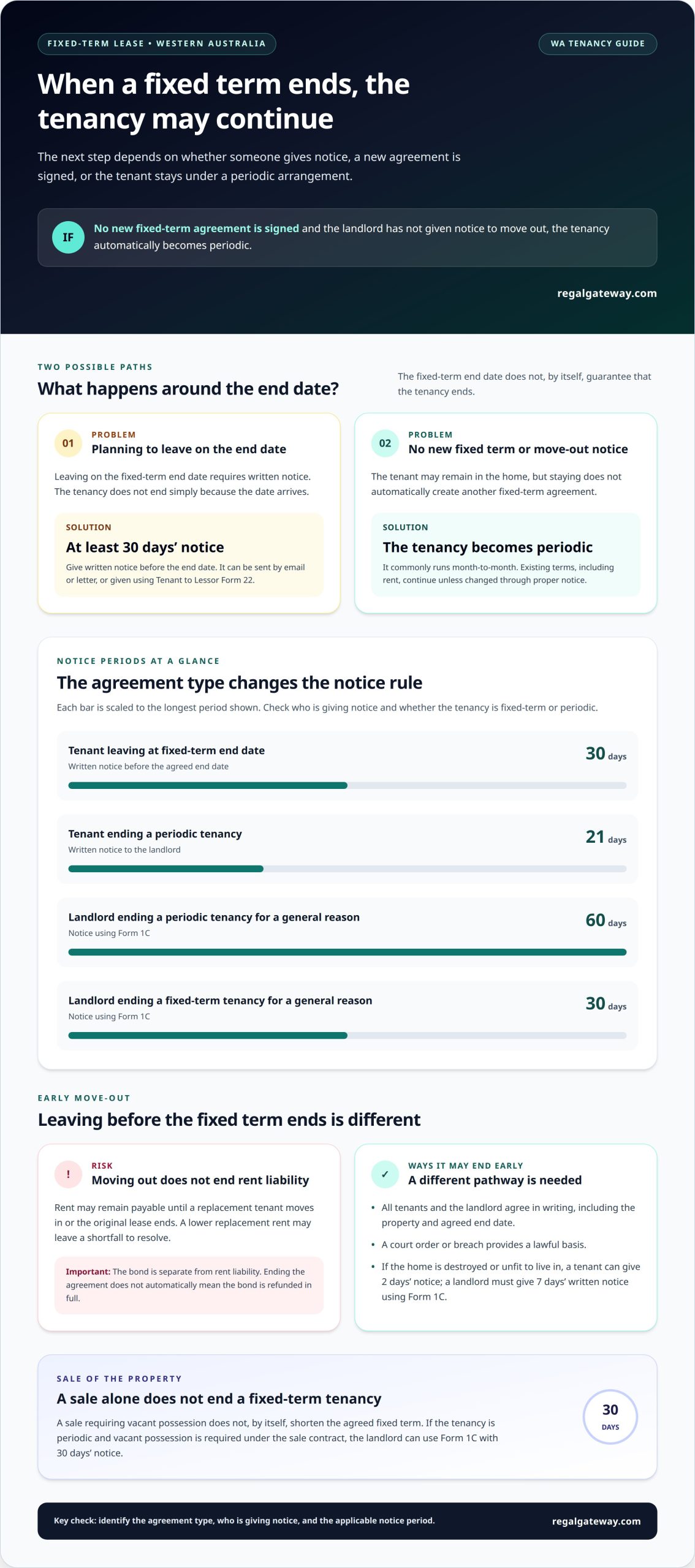
What happens when a fixed-term lease ends in WA isn’t always a move-out. If no new fixed-term agreement is signed and the landlord hasn’t given notice to move out, the tenancy automatically becomes periodic. A tenant who plans to leave on the fixed-term end date must give at least 30 days’ written notice.
The end date of a fixed-term lease can feel like a clear finish line, but it is also the time to confirm what continues and what needs to happen next. This guide explains when a tenancy can roll into a periodic agreement, which obligations carry on, and what notice applies if you or the landlord wants to end the tenancy. It also covers when a tenant may be able to leave early and why moving out before the agreed end date can leave rent or other costs to resolve. Knowing the rules helps you plan the transition with greater confidence.
Key Takeaways
- A fixed-term lease remains binding during its term, and leaving early can leave a tenant responsible for losses such as rent until a replacement tenant is found.
- Tenants and landlords can discuss ending a fixed-term tenancy early by mutual agreement, and putting the terms in writing can help clarify what has been agreed.
- If a lease rolls into a periodic tenancy, its existing terms continue; ending or changing the arrangement requires the appropriate notice.
- A property sale alone doesn’t end a fixed-term tenancy, so vacant possession depends on the applicable tenancy rules and proper notice.
Can a tenant break a fixed-term lease in WA?
A tenant has no automatic right to end a fixed-term tenancy early. How the tenancy is terminated affects notice, rent liability and whether the landlord agrees to an early end.
The bond is separate from the lease end date and any rent liability. Ending the agreement does not, by itself, mean the bond will be refunded in full.
WA’s Residential Tenancies Act 1987 includes Section 70A, which allows termination with proper notice at the fixed-term end date. Consumer Protection WA guidance also addresses these ending pathways.
Agreeing to end the tenancy
All tenants and the landlord can agree in writing to end a fixed-term tenancy early. The written record should identify the property, the agreed end date and the reasons for ending the agreement.
A written agreement gives everyone a clear record of the termination date. If you are unsure whether the tenancy has formally ended, confirm the agreed end date in writing.
Different rules apply if the home is destroyed or declared unfit to live in. A tenant can give 2 days’ notice in that situation, while a landlord must give seven days’ written notice using Form 1C. If the landlord agrees in writing, the tenant can end the tenancy immediately.
At the fixed-term end date, a tenant can give written notice by email, letter or Notice of termination (Tenant to Lessor Form 22). The tenant must give at least 30 days’ notice to leave on that date.
Rent liability after moving out
Moving out early does not, by itself, end a tenant’s rent obligations. If the tenant leaves before a replacement tenant is found, rent may remain payable until the replacement moves in or the original lease ends.
A landlord may also claim direct financial loss caused by a breach. If a replacement tenant pays less rent, the departing tenant may be liable for the shortfall until the original agreement would have ended.
Section 78 requires a landlord to take reasonable steps to limit losses after a tenant abandons the property. Section 57 makes clauses imposing penalties or liquidated damages for a breach void, and WA law sets no fixed break-lease fee or calculation formula.
Fixed-term agreements becoming periodic
A fixed-term tenancy may continue as a periodic agreement when the term ends, depending on whether a new agreement or notice is in place. To understand what happens when a fixed-term lease ends in WA, consider all these conditions together. The tenant staying in the property is not the only factor.
A periodic agreement is commonly described as month-to-month and continues under the same terms as the preceding agreement. Existing conditions, including rent, continue unless changed through proper notice. For example, staying in the home after the fixed term ends does not automatically create a new fixed-term agreement.
A tenant planning to leave on the fixed-term end date must give written notice at least 30 days beforehand. Notice can be sent by email or letter, or given using Notice of termination (Tenant to Lessor Form 22). If plans change and the tenant stays, knowing what happens when a fixed-term lease ends in WA can help clarify why the tenancy may continue instead of ending on that date.
After the agreement becomes periodic, a tenant ending the tenancy must give the landlord at least 21 days’ written notice. For a general reason, a landlord ending a periodic tenancy must give 60 days’ notice using Form 1C. A landlord ending a fixed-term tenancy for a general reason must give 30 days’ notice using Form 1C. The applicable period depends on the agreement type and who is giving notice.
Early termination during a fixed term follows a different pathway. It may occur by written agreement, court order, breach or because the home is unsafe or uninhabitable. A sale requiring vacant possession doesn’t itself end a fixed-term tenancy early. If a sold home’s contract requires vacant premises, a landlord can end a periodic tenancy using Form 1C with 30 days’ notice. Identifying the agreement type helps clarify which notice rule applies.
Fixed-term lease basics
A fixed-term rental agreement sets a defined tenancy period and an agreed end date. Fixed terms commonly last six or twelve months in Australia. Both landlord and tenant are bound by the agreement during that period, so the end date matters when planning a move or deciding whether to continue.
The signed agreement is the key record of the arrangement. It sets out the agreed term and conditions, providing evidence of what both parties accepted. Keep the end date clear in your records. A calendar reminder gives you time to consider renewal, give notice or discuss a change before the term expires.
The end date alone does not automatically bring a WA tenancy to a close. If neither party takes action, the tenant may remain in the home and the agreement can continue as a periodic tenancy when the required conditions are met. The fixed term ends, but the tenancy relationship may carry on.
A landlord may choose not to offer another fixed-term agreement and can end the tenancy on its end date without giving a reason. Proper notice is still required. A tenant does not have to leave before the fixed-term end date just because the landlord wants possession sooner.
A sale doesn’t cancel the existing tenancy. In WA, a landlord cannot terminate a fixed-term tenancy early solely because the property is being sold with vacant possession, or because the landlord has no stated ground during the term. Sections 63(4) and 64(5) of the Residential Tenancies Act 1987 address those limits. For example, a sale contract requiring vacant possession doesn’t itself shorten the tenant’s agreed term. Reviewing the signed agreement and its end date helps clarify which transition applies.
Fixed-term lease obligations in Western Australia
A fixed-term agreement binds the landlord and tenant until it ends or is lawfully terminated. During the term, the agreed conditions still apply, including the requirement to pay rent. Reaching the end date does not cancel outstanding responsibilities or make the home immediately available to another tenant.
For a tenant preparing to move, the practical handover involves more than leaving the property. In Western Australia, the tenancy ends when the tenant has removed all belongings and returned the keys or security devices to the landlord. Leaving possessions behind or keeping a key can affect whether the handover is complete.
The final inspection records the property’s condition at handover. The property manager compares it with the original Property Condition Report, giving both sides evidence to assess any changes. For example, a mark recorded at the final inspection can be compared with the report from the start of the tenancy rather than assessed in isolation.
Until the tenancy ends, rent and the agreement’s other terms continue to apply. A tenant who has given notice but remains in the property during the notice period must keep meeting the agreement’s obligations. If the tenancy becomes periodic, the preceding agreement’s terms continue; the change in term does not reset them.
Rent changes are also subject to rules. In Australia, rent increases must comply with the applicable state legislation, reflect market conditions and be communicated with proper notice. They cannot be treated as informal adjustments separate from the agreement and relevant state requirements. The notice and legal basis matter.
For a landlord, a clear handover record helps connect the outgoing tenancy with the next decision, whether that means preparing for another tenant or planning a different use for the property. Plan your property’s next tenancy transition with careful attention to the agreement, condition report and returned access devices.
Regal Gateway Property
Regal Gateway Property helps owners plan what comes after a fixed-term tenancy, whether they intend to retain the property, prepare it for sale or find a new tenant. Property Management supports owners who want professional management as a tenancy changes, while Tenant Selection and Screening assists with choosing a prospective tenant. Owners considering a sale can explore Residential Property Sales as part of their longer-term plans.
The right next step depends on your situation. A tenant may need to focus on notice and handover, while an owner may be planning continued management, a new tenancy or a sale. Contact Regal Gateway Property to discuss your property plans.
Make your next property decision with clarity
Understanding what happens when a fixed-term lease ends in WA gives you a clearer starting point, but the transition also raises a broader question: what should come next for the property or your housing plans? For tenants, that may mean aligning a move with the next stage of daily life. For owners, it may mean considering the property’s longer-term role.
Instead of treating the end date as an isolated event, use it to bring timing, priorities and practical arrangements into focus. A considered plan can reduce uncertainty and make the next steps easier to manage.
If you’re weighing up what comes next for your property, contact Regal Gateway Property to discuss your plans. Each transition can open a fresh opportunity to move forward with purpose and confidence.
Frequently Asked Questions
Can You Increase the Rent When the Lease Ends?
A rent increase must comply with Western Australian legislation, reflect market conditions and be communicated with proper notice. The fixed-term end date does not, by itself, make a new rent amount effective. If the tenancy continues as periodic, the applicable rules still govern any increase. An owner proposing different rent for a renewed arrangement should treat it as a formal change, not an informal adjustment.
Does the tenant have to keep paying rent after they’ve moved out?
Possibly. Moving your belongings out does not automatically release you from rent obligations while the agreement remains in force. If you leave early, rent may remain payable until a replacement tenant moves in or the original fixed term ends. If the new tenant pays less, you may also be liable for the rent shortfall through the original end date.
What If You Want the Tenant to Vacate?
A landlord can end a fixed-term tenancy at its end date without giving a reason, but must provide proper notice. A landlord should follow the required notice process when seeking to end a tenancy. Selling the property alone doesn’t end the fixed term early. If the tenant remains after a valid notice, the landlord may need to follow the formal legal process to obtain possession.
What If the Tenant Wants to Leave?
A tenant planning to leave on the fixed-term end date must give written notice at least 30 days beforehand. If they need to leave earlier, they should tell the property manager promptly, allowing the landlord to consider an agreed end date and replacement tenant. For example, a tenant in Atwell or Success can communicate their proposed move date early, rather than assuming that returning keys ends rent liability.
What happens when a fixed-term tenancy agreement ends in Western Australia?
The tenancy may end, continue under a new fixed-term agreement, or become periodic, depending on the parties’ actions and notices. If the tenant is leaving, the handover includes removing belongings and returning keys or security devices. A final inspection compares the property’s condition with its original Property Condition Report, helping document the handover rather than relying on memory.
Does a fixed-term lease automatically become periodic in WA if the tenant stays?
Yes, if the fixed-term end date passes, no new fixed-term agreement has been signed, and the landlord has not given notice to move out. The tenancy then becomes periodic under the preceding agreement’s terms. Staying in the property is not the only factor: whether a new agreement was signed and whether the landlord gave notice also determine what happens after the fixed term.