
Success’s rental vacancy rate is 0.78%, but a tight rental market doesn’t make every property a sound investment. So, is Success a good suburb to invest in? The answer depends on how local demand, purchase price and ongoing costs align with your strategy.
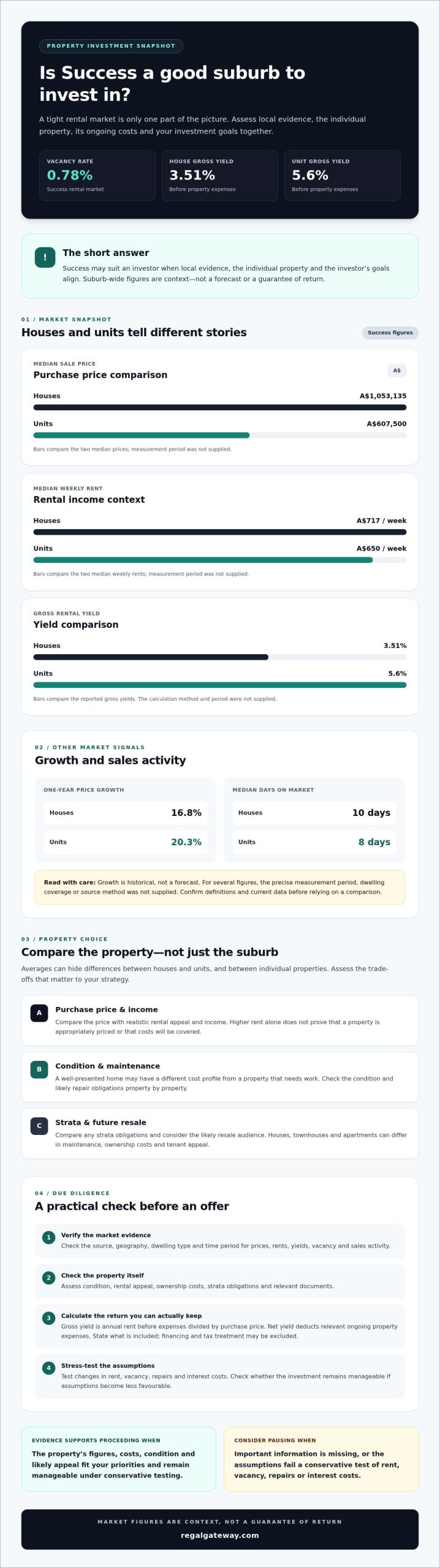
Suburb-wide growth and rental figures can offer a useful starting point, but averages may hide important differences between houses and units, and between individual properties. As of September 2026, median prices are A$1,053,135 for houses and A$607,500 for units, while gross rental yields are 3.51% and 5.6%, respectively. These figures provide context, not a forecast or guarantee of return.
This guide reviews Success through sales and rental indicators, affordability and potential holding costs, then outlines the property-level checks to make before an offer. You’ll learn how to weigh tenant appeal, rental income and growth potential against your priorities, including the details suburb statistics can’t show. Local market knowledge can help frame your assessment, but you’ll still need to verify each property’s figures.
Key Takeaways
- Whether Success is a good suburb to invest in depends on the evidence, property choice and investment goals, not suburb-wide claims alone.
- Compare houses, townhouses and apartments by purchase price, rental appeal, maintenance, strata obligations and likely resale audience.
- Use a structured due diligence process to check market data, property condition, ownership costs and relevant documents before making an offer.
- Stress-test your figures against changes in rent, vacancy, repairs and interest costs to see whether the investment remains manageable.
- Know when the evidence supports proceeding, and when missing information or assumptions that fail conservative testing call for a pause.
Is Success a Good Suburb to Invest In? Start With the Evidence
Success may suit an investor when local evidence, the individual property and the investor’s goals align. There isn’t a simple yes-or-no answer to “is Success a good suburb to invest in?” Rental demand matters, but so do net cash flow, ownership costs, risk and the property’s likely appeal to future buyers. Suburb-wide trends can inform your decision, but they can’t guarantee how a particular home will perform.
Start with the numbers, then test how they apply to the property you’re considering. A well-presented home in a sought-after position may appeal to different tenants and have a different cost profile from a property that needs work or carries strata obligations. Local market knowledge can help put those differences in context, but each property still needs its own assessment.
What does a good investment suburb need to demonstrate?
Consider rents, vacancy, sales activity, available supply and evidence of tenant demand together. Rising rents may look attractive, for example, but don’t establish that rent will cover ongoing costs or that a property is appropriately priced. Historical results describe what happened over a defined period; they don’t promise future growth, occupancy or income.
Gross yield is annual rent before expenses divided by the property’s purchase price, expressed as a percentage. Net yield deducts relevant ongoing property expenses before calculating the percentage. State which expenses are included, as financing and tax treatment may be excluded. Neither figure alone shows the full investment picture.
Why assess Success separately from broader Perth trends?
Perth-wide conditions provide useful context, but may obscure differences between suburbs, dwelling types and local supply. The September 2026 research snapshot reports one-year price growth of 16.8% for Success houses and 20.3% for units. These are historical indicators, not forecasts. Compare them with Perth or City of Cockburn figures only when the geography, property type and measurement period match.
Check whether a statistic covers houses, units or all dwellings, and whether it describes a quarterly or annual period. A median house price shouldn’t be compared with an all-dwelling measure as though they were equivalent. For general context on the suburb’s geography and amenities, see Success, Western Australia; for a broader local overview, read the Success WA living and investing guide.
Regal Gateway Property’s local knowledge across Success and the wider City of Cockburn can help you assess the property in context. Compare current evidence with your intended holding period, capacity for costs and investment priorities rather than relying on a suburb label alone.
Success Property Investment Fundamentals: What the 2026 Data Should Show
A useful market snapshot puts prices, rents, yields, vacancy and sales activity side by side, while making clear what each figure measures. The table below reflects the research snapshot for September 2026. As the underlying data provider and precise measurement windows weren’t supplied for every statistic, confirm the latest figures and definitions against REIWA Success property market data before relying on them.
| Indicator | Success figure | Dwelling type, geography and period | Source and access date |
|---|---|---|---|
| Median sale price | House: A$1,053,135; unit: A$607,500 | Success; separate dwelling types; exact measurement period not supplied | Verified research snapshot; accessed September 2026. Confirm provider and period. |
| Median weekly rent | House: A$717; unit: A$650 | Success; separate dwelling types; exact measurement period not supplied | Verified research snapshot; accessed September 2026. Confirm provider and period. |
| Gross rental yield | House: 3.51%; unit: 5.6% | Success; separate dwelling types; period and calculation method not supplied | Verified research snapshot; accessed September 2026. Check calculation basis. |
| Vacancy rate | 0.78% | Success; dwelling coverage and measurement period not supplied | Verified research snapshot; accessed September 2026. Check boundary and provider. |
| Sales activity | Median days on market: houses 10; units 8 | Success; separate dwelling types; exact measurement period not supplied | Verified research snapshot; accessed September 2026. Confirm period and sample. |
These figures offer an initial read, not a complete comparison. The supplied Perth house-price benchmarks refer to different periods, and a comparable City of Cockburn series hasn’t been provided. Don’t treat them as like-for-like until the source, geography, dwelling type and measurement window match. Apply the same care when comparing houses, units and all-dwelling statistics.
How should investors interpret rent, yield and vacancy?
Calculate gross yield as annual rent ÷ purchase price × 100. Use the property’s expected annual rent and relevant purchase price, then treat the result as a starting point: it excludes expenses and finance costs. Net cash flow requires a fuller cost model. Vacancy rates also vary by provider and boundary, so don’t mistake one monthly reading or a small sample for a lasting trend.
Which local demand and supply signals deserve a closer look?
Assess tenant demand alongside available rental stock, sales activity and current planning information. Check the specific property’s practical access to Cockburn Central, transport links and local services rather than assuming proximity or investment impact from the suburb name. Review City of Cockburn planning and development information for potential competing supply; proposed projects don’t guarantee a particular outcome. For a nearby-suburb perspective, compare the Atwell property investment market guide, using matched data periods and property types.
When weighing whether Success suits your circumstances, local market advice can help put comparable evidence in context. Discuss the property and its rental assumptions with a local professional, then verify the figures independently before committing.
Which Success Property Type Best Fits Your Investment Strategy?
Property type affects more than purchase price. It can influence rental appeal, maintenance exposure, shared costs and the pool of future buyers. The September 2026 snapshot provides separate median price and rent indicators for Success houses and units, but doesn’t isolate townhouses or establish that every unit is an apartment. Treat the figures as clues, then check current local listings and comparable sales for the exact dwelling type you’re considering.
| Property type | Observed local evidence | Investor-specific priorities |
|---|---|---|
| House | The supplied snapshot reports separate Success house price and rent medians. | Assess land and outdoor areas, building condition, likely maintenance, insurance and the fit between the layout and intended tenants. |
| Townhouse | No standalone Success townhouse figures are supplied; confirm how local data classifies attached homes. | Compare purchase price and rent with genuinely similar properties. Check shared areas, strata obligations if applicable, maintenance responsibilities and resale appeal. |
| Apartment or unit | Unit figures are available, but the data doesn’t confirm which types of dwellings they include. | Verify the property’s classification, strata fees, rules and capital works obligations. Consider shared costs, building condition, layout and the likely buyer and tenant audience. |
House or lower-maintenance dwelling: what changes for an investor?
A house may offer more land and direct control over its upkeep, alongside greater responsibility for maintaining the building and outdoor areas. A strata property may share some responsibilities, but also comes with fees, rules and potential capital works costs to review. Neither format is automatically easier to manage or more attractive to tenants. Inspect the property and confirm who is responsible for each cost before comparing likely returns.
Assess tenant appeal through the dwelling’s features, condition, layout and access to services prospective renters may value. Avoid assuming a particular household profile from suburb-wide demographics; test your view against comparable rental listings and local leasing evidence.
How do you match a property to cash flow or growth goals?
A cash-flow-focused approach pays close attention to rent after expenses and the ability to meet holding costs. A long-term growth approach may give more weight to purchase quality, resale audience and your capacity to hold through changing conditions. Neither approach guarantees an outcome. Model rent, vacancy, maintenance, insurance, property management and finance assumptions separately, then test whether the figures remain workable under more conservative assumptions.
For a closer look at the practical demands of ongoing ownership, see this Atwell property management guide. The right Success property depends on the strategy you choose. Compare like with like, verify strata and maintenance details, and assess each dwelling on its own merits.
Success Investment Due Diligence: Test the Numbers Before You Buy
A suburb-level snapshot is only a starting point. Before making an offer, assess the property, confirm your rental assumptions and check whether the investment remains manageable if costs rise or income is interrupted. This sequence helps turn broad market indicators into a considered property-level decision.
- Validate the market evidence. Confirm that comparable sales, rents and vacancy figures relate to Success, the same dwelling type and a clearly stated measurement period. Check current rental comparables rather than relying on a suburb median alone.
- Inspect the property. Review building condition, arrange appropriate building and pest inspections, investigate likely maintenance and check whether suitable insurance is available for the property.
- Model the costs. Estimate achievable rent, possible vacancy, repairs, insurance, council rates, property management and finance costs separately. Use current quotes or figures relevant to the specific property where possible.
- Review the documents. Have relevant professionals check title, zoning, easements, approvals and, for strata property, strata records, fees, rules and capital works obligations.
- Decide against your criteria. Proceed only if the verified information and conservative cash-flow scenario fit your budget, risk tolerance and intended holding period.
Which property-level checks can change the investment decision?
Condition can materially affect the cost and practicality of ownership. Inspection findings may reveal repairs that change your initial budget, while insurance availability and terms should be confirmed for the specific address and property. Check title and planning matters with a conveyancer or solicitor, and seek qualified building, pest, finance and tax advice where needed. These matters sit outside an agent’s role; the appropriate professional can explain what the documents mean for your circumstances.
How can investors test whether the numbers remain resilient?
Build conservative, expected and stronger scenarios, and state the assumptions behind each. Test what happens if achievable rent is lower than estimated, vacancy lasts longer, repairs cost more or finance costs change. Include management, rates and insurance in each cash-flow view rather than treating gross rent as money available to spend. Don’t predict future interest rates or returns; assess whether the investment remains workable under different assumptions.
Projected yield is an assumption until achievable rent and the property’s full ownership costs have been independently checked. The quality of that verification matters as much as Success’s headline indicators when deciding whether an investment fits your situation.
For a local perspective on rental demand and ongoing property-management considerations, discuss your Success investment questions with the Regal Gateway team. Their local knowledge can inform your assessment, while qualified advisers and your own verified figures should guide the final decision.
Making Your Success Investment Decision With Local Guidance
Success may fit your investment strategy when current, comparable evidence supports your goals, the property’s risks are acceptable and you can comfortably manage the holding costs over your intended timeframe. That’s a considered investment case, not a prediction that prices or rents will rise. If key information is missing, the property needs work you haven’t budgeted for, or the numbers only hold under optimistic assumptions, pause before committing.
What should your final investment decision checklist include?
Before deciding, bring the evidence together in one place. Check that your purchase price and rental assumptions are supported by current comparable sales and rental evidence for similar properties, not just suburb-wide medians. Then review the costs and risks that affect your ability to hold the property.
- Purchase assumptions: Verify comparable sales, achievable rent and the relevant dwelling type and location.
- Ongoing costs: Review rates, insurance, management, maintenance, vacancy and finance assumptions using figures relevant to the property.
- Property risks: Consider inspection findings, likely repairs, title or planning matters and strata obligations where applicable.
- Holding capacity: Check that your expected holding period and available cash flow can accommodate a less favourable scenario.
Write down what would lead you to proceed, renegotiate or walk away. For example, proceed only if inspection findings are acceptable and the conservative cash-flow scenario stays within your limits. Clear conditions help distinguish an evidence-based decision from pressure to buy.
How can local advice support your next step?
Local sales and property-management advice can help you assess relevant comparables, understand a property’s potential rental appeal and identify practical ownership considerations. Ask for an evidence-based discussion of the specific property and how it compares with similar local homes. Treat that perspective as one part of due diligence, not a guarantee of rent, occupancy or future value. Take legal, building, finance and tax questions to appropriately qualified professionals.
For broader suburb context, explore the Success WA living and investing guide. If you’re still considering whether Success is a good fit, return to your goals, risk tolerance and holding capacity, and confirm that the individual property stands up to scrutiny.
Regal Gateway Property provides residential sales, property management and tenant selection in Success and surrounding Cockburn suburbs. If you’re ready to discuss a specific property or your management needs, discuss your Success property investment goals with Regal Gateway Property.
Make Your Success Investment Decision With Confidence
So, is Success a good suburb to invest in? It may be, if current local evidence supports your strategy and the individual property’s price, rental prospects, condition and ongoing costs stand up to careful review. Suburb medians and market trends can inform your decision, but they can’t guarantee a particular property’s performance.
Focus on two essentials: compare like-for-like sales and rental evidence, then test your cash flow against realistic costs, vacancy and repair assumptions. If important information is missing or the numbers only work in an optimistic scenario, taking more time may be the stronger investment decision.
Local guidance can help you assess relevant comparables and practical ownership considerations. Regal Gateway Property brings more than a decade of local real estate experience, with residential sales and property management across Success and surrounding Cockburn suburbs. That insight can support your due diligence, while your decision should rest on verified figures and advice suited to your circumstances.
Discuss your Success property investment goals with Regal Gateway Property, and take your next step with a clear view of the opportunity and the risks. A considered decision is a strong foundation for moving forward.
Frequently Asked Questions
Is Success, WA a good suburb to invest in?
Success may suit investors whose goals, budget and risk tolerance align with current local evidence and the condition of a specific property. To assess whether Success is a good suburb to invest in for you, compare like-for-like sales and rental data, estimate net cash flow, and consider ownership costs and resale appeal. Suburb trends can inform your decision, but they don’t guarantee an individual property’s performance or future returns.
What is the rental yield in Success, Perth?
The September 2026 market snapshot for this guide reports gross rental yields of 3.51% for Success houses and 5.6% for units. These are suburb-level indicators, and the exact measurement period and calculation method weren’t supplied, so verify them against current data before relying on them. Gross yield excludes expenses and finance costs; calculate net cash flow separately to understand how rent compares with the property’s actual ongoing costs.
Are house or apartment investments better in Success?
Neither houses nor apartments are automatically the better investment in Success; the right choice depends on price, achievable rent, condition, costs and your strategy. The September 2026 snapshot gives different median prices and rents for houses and units, but unit figures may cover more than apartments alone. Compare similar local properties, check maintenance responsibilities and, for strata properties, review fees, rules and capital works obligations before deciding.
What should I check before buying an investment property in Success?
Verify comparable sales and achievable rent for the same property type, then assess the home’s condition, likely maintenance and insurance availability. Review title, zoning, easements and approvals with an appropriately qualified professional; check strata records and obligations where relevant. Model vacancy, rates, insurance, management, repairs and finance costs, and test whether the investment remains manageable under conservative assumptions. Seek qualified legal, building, finance and tax advice for matters beyond an agent’s scope.
How do I calculate the rental yield on a Success property?
Calculate gross rental yield by dividing the property’s annual rent by its purchase price, then multiplying by 100. For example, if the expected weekly rent is A$700, annualise it as A$700 × 52 before dividing by the purchase price. This is only a gross estimate: it excludes expenses and finance costs. For a fuller picture, estimate net cash flow after vacancy, maintenance, rates, insurance, management and finance costs.
Does proximity to transport or amenities improve an investment in Success?
Convenient access to transport, shops and services may support a property’s appeal to some tenants, but proximity alone doesn’t prove stronger returns or future growth. Assess the specific address: verify routes, travel times and access to relevant amenities, including Cockburn Central, rather than relying on general suburb descriptions. Compare rental evidence for similar nearby properties, and consider whether those features matter to the tenant groups your property is suited to attract.
Is Success property investment suitable for a first-time investor?
Success could suit a first-time investor if the property’s verified income and costs fit their budget, risk tolerance and capacity to manage ownership. Start with comparable local evidence, inspections and a conservative cash-flow assessment, and seek qualified advice where needed. Regal Gateway Property provides residential sales, property management and tenant selection across Success and nearby Cockburn suburbs, including Atwell, Aubin Grove, Wandi, Hammond Park, Treeby and Mandogalup.