
A consistent checklist makes an inspection more useful by giving you a clear record of the property’s condition and any maintenance to follow up. An Atwell rental property checklist for landlords can support both the entry condition report and routine inspections, while keeping the checks focused and repeatable. In Western Australia, landlords must complete a property condition report within seven days of the tenancy starting, according to Consumer Protection WA.
It’s understandable to want thorough inspections that catch practical issues and create records you can use later. This guide explains how an Atwell rental property checklist for landlords supports condition reports and routine inspections, with practical checks for the exterior, safety, maintenance, kitchens and bathrooms. You’ll also learn how clear notes and consistent observations can help identify issues early and keep property care manageable.
Key Takeaways
- Use consistent observations to distinguish existing wear from changes that may need attention.
- Include outdoor areas, access points and essential safety features in a structured property review.
- Record supplied items and their condition so the property’s contents are clearly documented.
- Look for leaks, dampness, ventilation issues and appliance concerns in kitchens and bathrooms.
Is a rental property inspection checklist beneficial for both condition reports and routine inspections?
Yes. A consistent checklist supports the entry condition report and later routine inspections by documenting the property’s condition and highlighting changes. For an Atwell rental property checklist for landlords, record each room, fixture and supplied item, then note damage, wear and maintenance concerns separately. In Western Australia, the property condition report must be completed within seven days of the tenancy starting, according to Consumer Protection WA.
Before renting out a property, arrange cleaning and repairs, then document its condition with clear notes and photographs. An outgoing tenant must leave the property in the same condition as at move-in, allowing for fair wear and tear. Clear cleaning expectations and a documented comparison with the move-in condition can help avoid disagreements at the end of a tenancy. Between tenancies, distinguish restoration work from upgrades. Repairs that restore the property’s previous condition may generally be deductible, while improvements are usually capital expenses claimed over time. Initial repairs can also be capital expenses, so describe the work accurately and retain records.
For urgent issues, record when the tenant reports the problem and what service is affected. In Western Australia, landlords must arrange repairs to restore an essential service within 24 hours of notification, and urgent repairs within 48 hours. A checklist helps identify hazards and track follow-up, but it doesn’t replace prompt action. A safety check can also flag defects requiring attention before the next tenancy.
Bond money must be lodged with the Bond Administrator within 14 days of receipt, according to Consumer Protection WA. Rent increases are governed by the tenancy agreement and applicable Western Australian rules; the permitted timing and notice depend on those terms and the tenancy arrangement.
When screening tenants, assess their application consistently and prepare a written tenancy agreement that clearly records the parties’ obligations. Provide Form 1AC with a written agreement, or Form 1AD for a verbal agreement, at the start of the tenancy. Include relevant strata by-laws where applicable.
Without a property manager, landlords handle inspection records, repair coordination, notices and follow-up themselves. Missed deadlines, incomplete records or delayed responses can lead to disputes and unresolved maintenance issues. For landlords who also oversee residential investments abroad in the UK, partnering with dependable trade specialists is just as critical: “We are a trusted Property Maintenance company providing reliable, high-quality services across London and Kent.“
Exterior, safety and maintenance checks
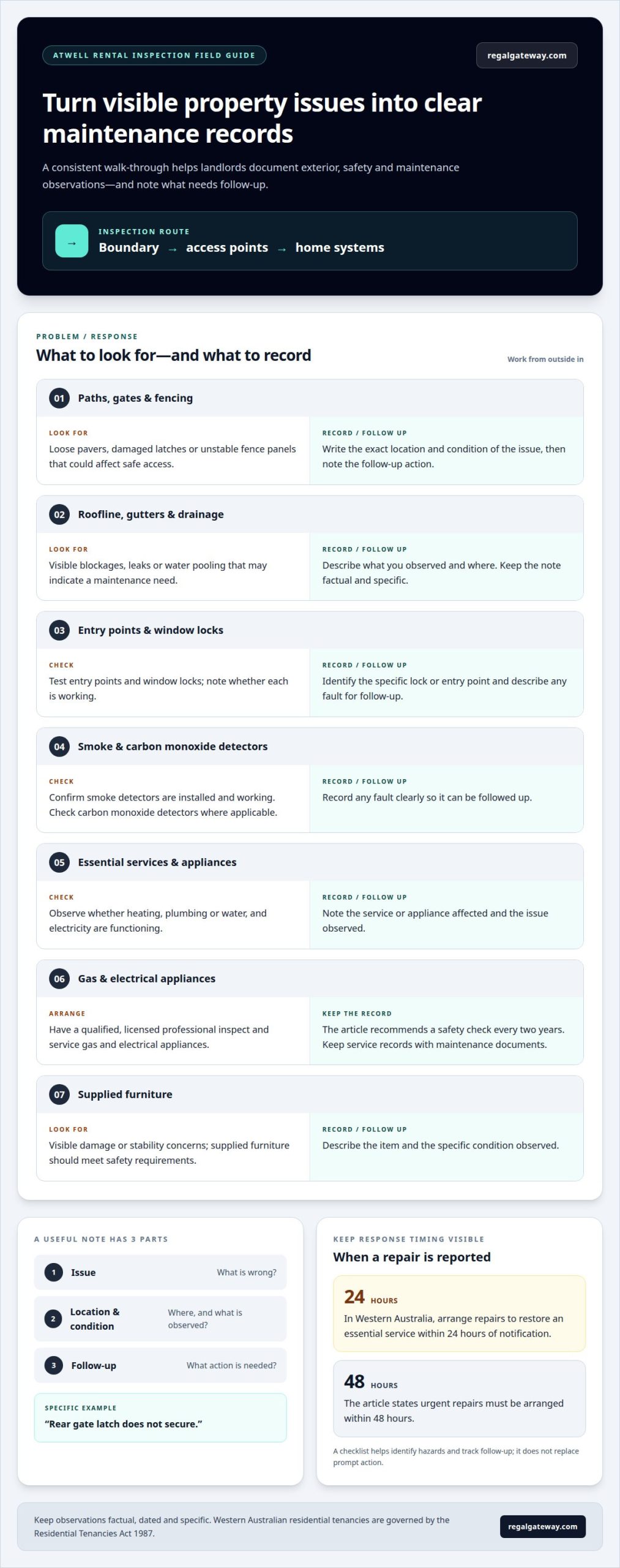
Start at the boundary and move towards the home, recording each observation against the property’s condition. In Western Australia, the Residential Tenancies Act 1987 governs residential tenancies, according to the Government of Western Australia. A clear record helps connect maintenance findings with the tenancy agreement and supports a thorough account of the home.
- Inspect paths, gates and fencing. Note loose pavers, damaged latches or unstable fence panels that could affect safe access.
- Check the roofline, gutters and visible drainage. Record blockages, leaks or water pooling that may indicate maintenance needs.
- Test entry points and window locks. Working locks support security and residents’ rights to a safe home.
- Confirm smoke detectors are installed and working. Check carbon monoxide detectors where applicable, and record any fault for follow-up.
- Observe essential services and appliances. Check that heating, plumbing or water, and electricity are functioning, and note any issues for follow-up.
Arrange for a qualified, licensed professional to inspect and service gas and electrical appliances. The guidance in this article recommends a safety check every two years; keep service records with your maintenance documents. Supplied furniture should meet safety requirements, so note any visible damage or stability concerns during inspections.
Follow a consistent sequence for safety and compliance checks: identify the issue, record its location and condition, then note the follow-up action. For example, distinguish a loose exterior light fitting from a failed smoke detector, as each needs a different response. Western Australian regulations and the tenancy agreement set the framework for responsibilities, while timely maintenance helps preserve the property and its use. Keep notes factual, dated and specific: write “rear gate latch does not secure” rather than “garden needs attention.”
Entry condition reports and property inventories
A useful entry condition report records each room, fixture and supplied item at the start of a tenancy. In Western Australia, the property condition report must be completed within seven days of the tenancy starting, according to Consumer Protection WA. Describe specific details, such as a chipped kitchen tile, carpet marks beside a doorway or a cracked bathroom mirror. Dated photographs can clarify written observations, and agreed notes help establish a shared record.
Build the inventory room by room, separating property features from movable items. Record the oven, dishwasher and supplied refrigerator, for example, noting their condition and whether they operate. Include keys, remotes and furniture where provided. A clear inventory helps identify what comes with the rental and gives both parties a practical reference for their responsibilities under the tenancy agreement. Keep records organised with maintenance documents and relevant insurance paperwork.
- Describe condition precisely. Replace “good” with details such as “living-room wall freshly painted, no visible marks.”
- Record defects and included items. Note a loose cupboard hinge or a supplied dining table with a scratched surface.
- Retain the completed report. Share the report with the tenant and preserve an accessible copy for later comparisons.
Routine inspection entry has separate notice requirements. In Western Australia, landlords must give seven to fourteen days’ written notice using Form 19. No more than four routine inspections may occur in a twelve-month period. Permitted times are 8am-6pm on weekdays and 9am-5pm on Saturdays, excluding public holidays. Agree on inspection photographs with the tenant, especially where personal possessions may appear.
At the end of the tenancy, compare the final condition with the original report, allowing for fair wear and tear. Record each difference with its location and a relevant photograph. Landlords must provide the tenant with a copy of the final property condition report within fourteen days of the tenancy ending. This documented comparison keeps discussions focused on observable changes rather than general impressions.
Routine inspection checklist for kitchens and bathrooms
For an Atwell rental inspection, check visible surfaces, plumbing, ventilation, dampness, mould and appliance condition. These checks can reveal maintenance concerns and document the kitchen and bathroom’s condition during the tenancy.
- Look beneath kitchen and bathroom sinks. Note visible drips, damp cabinet bases, swollen panels or staining that may indicate a leak.
- Observe taps, basins and shower fittings. Record persistent dripping, damaged seals or water that drains slowly, as these can point to maintenance needs.
- Check walls, ceilings and grout for dampness or mould. Record the location and extent, then identify whether ventilation may need attention.
- Inspect fans and windows for ventilation. Note whether fans appear damaged or windows are obstructed, since adequate ventilation helps address moisture concerns.
- Review supplied appliances for visible damage and safe working order. Record concerns with an oven, cooktop or rangehood so follow-up can be arranged.
- Note cupboard doors, hinges and worktops. Specific observations, such as a loose hinge or chipped edge, make maintenance documents more useful.
Keep observations factual and tied to a location. “Damp patch beside the bathroom shower” gives clearer direction for follow-up than “bathroom needs work.” Note whether the issue appeared in the previous report or is newly visible, then file relevant documents with the property’s maintenance records. This approach supports clear expectations between landlord and tenant while helping protect the residential investment.
During an inspection, distinguish ordinary presentation from a repair concern. A marked splashback, for example, is different from a loose power point or leaking pipe. Don’t diagnose hidden faults during a visual review. Record what you can see and arrange suitable follow-up for maintenance issues. Government information and tenancy requirements set the framework for landlords’ responsibilities; a consistent checklist helps organise observations.
For support coordinating the ongoing care of a rental property, explore property management with Regal Gateway Property.
Regal Gateway Property
Regal Gateway Property supports Atwell landlords with residential property management, tenant selection and screening, and sales. Property Management can help when coordinating tenancy matters and property care becomes difficult alongside other responsibilities. Tenant Selection and Screening supports the process of choosing a tenant, while Residential Property Sales is an option if your investment plans change.
A consistent inspection checklist is valuable whether you manage the property yourself or appoint support. Clear condition records, timely maintenance follow-up and organised tenancy documents help keep decisions grounded in the property’s needs. Regal Gateway Property can help landlords in Atwell, Aubin Grove, Wandi, Hammond Park, Success, Treeby and Mandogalup manage these responsibilities or consider their next step.
Contact Regal Gateway Property to discuss your property plans.
Build a More Confident Ownership Routine
Make property care part of a regular ownership routine, rather than revisiting it only when something goes wrong. An Atwell rental property checklist for landlords provides a practical framework for consistent decisions and helps keep attention on your investment’s long-term condition and appeal. Over time, inspection notes can reveal patterns that help you plan maintenance and make informed decisions about the property’s future.
Decide how you want to manage the responsibilities of ownership. You can oversee tenancy matters yourself or seek professional support that suits your priorities. Regal Gateway Property offers Property Management, Tenant Selection and Screening, and Residential Property Sales to support different stages of property ownership.
Consider the approach that best suits your plans and begin a conversation with Regal Gateway Property. A considered next step can help you move forward with greater clarity and confidence.
Frequently Asked Questions
What documentation is required for a rental safety inspection?
Keep a clear record of inspection findings and follow-up work. A useful file can include the current condition report, dated photographs, appliance service records, maintenance requests and invoices, and relevant tenancy agreement details. If an electrician services a faulty light fitting, for example, file the service record with the inspection note. Organised documents connect observed issues with the action taken and its outcome.
What are the landlord’s legal obligations in Western Australia for rental property condition and repairs?
Landlords must maintain a habitable rental property and respond to repair notices within the applicable timeframes. The Residential Tenancies Act 1987 governs residential tenancies in Western Australia, according to the Government of Western Australia. Repairs restoring an essential service must be arranged within 24 hours of notification; urgent repairs must be arranged within 48 hours. Keep a dated record of the tenant’s notice and repair coordination.
What smoke alarm, electrical, gas and pool safety requirements apply to Atwell rental properties?
Ensure smoke detectors are installed and working, and provide carbon monoxide detectors where applicable. Have gas and electrical appliances checked and serviced by a qualified, licensed professional; the guidance in this article recommends a safety check every two years. If the property has a pool, note the visible condition of its barrier and gate, and arrange appropriate follow-up if you observe damage or a safety concern.