
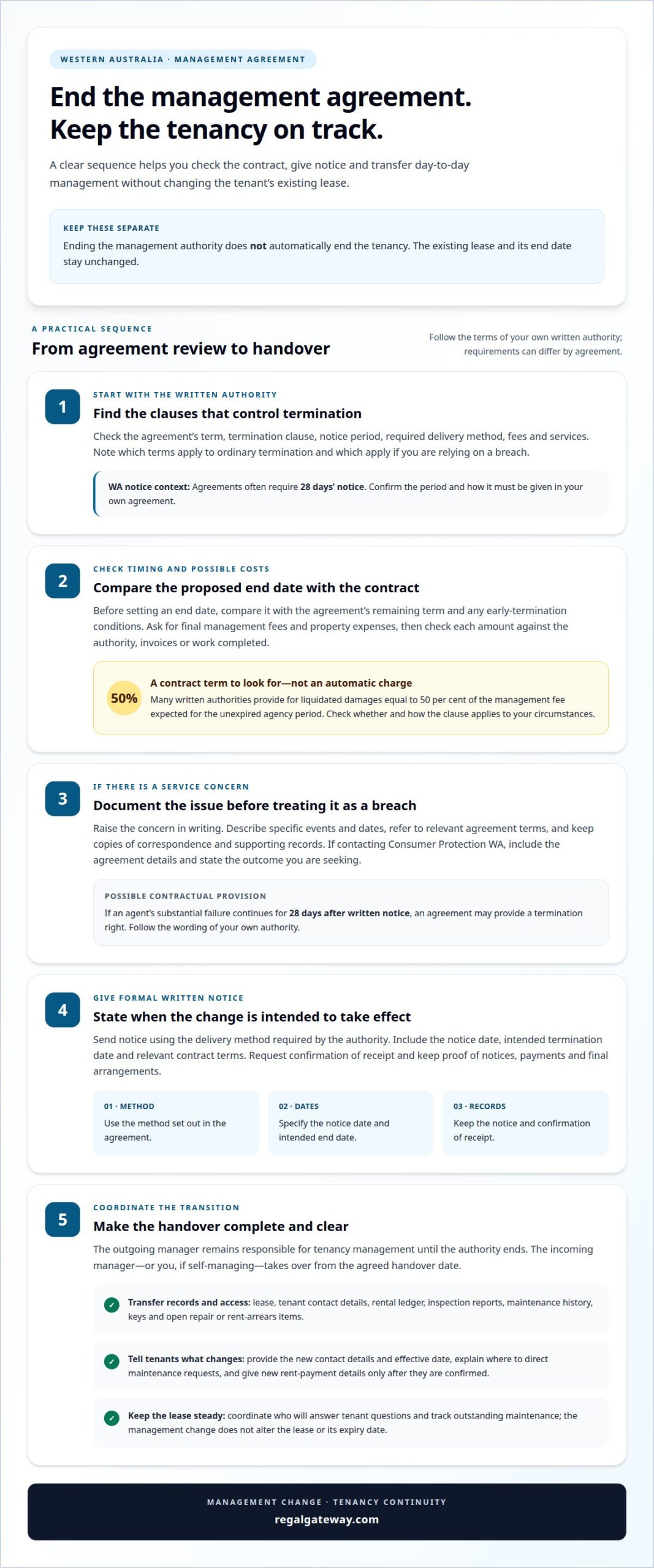
Ending the management agreement early doesn’t automatically mean ending the tenancy. In WA, agreements often require 28 days’ notice, and many written authorities provide for liquidated damages equal to 50 per cent of the management fee the agent would expect for the unexpired agency period. How to fire your property manager in WA, and whether extra costs apply, depends on the terms of your written authority.
If communication has stalled or you’re concerned about how your property is managed, it’s reasonable to want a clear, orderly change. Before giving notice, review your management agreement so you can plan the transition and meet any outstanding obligations.
This guide explains how to review termination terms, change managers during a lease, give written notice and organise the handover. It also covers how to document concerns about the current manager’s contractual duties, helping you protect continuity for your property and tenant.
Key Takeaways
- Read your written authority closely to understand the termination process, any notice requirements and how fees may be calculated.
- A change of property manager during a tenancy can be planned without changing the existing lease or its end date.
- Put your termination notice in writing, specify when it takes effect and request confirmation of receipt.
- Document service concerns against the agreement and relevant duties, then plan a handover that accounts for tenant records, finances and keys.
Can I end my property management agreement early?
Yes, you can end a management agreement early, but the agreement may set notice requirements or termination costs. To understand how to fire your property manager WA, start by reviewing the written authority before selecting an end date or arranging the handover.
-
Review Termination Clauses and Notice Periods
Read the termination clause and identify the agreement’s term, notice period, fees, and services. In Western Australia, agreements often require 28 days’ notice. Many written authorities provide for liquidated damages equal to 50 per cent of the management fee expected for the unexpired agency period. These are contract terms to assess, not automatic charges in every case.
Check the agreement’s terms for early termination, breach and notice delivery. The steps for how to fire your property manager WA depend on the clauses that apply to your circumstances. Under the Australian Consumer Law, a term may be unfair if it creates a significant imbalance, isn’t reasonably necessary to protect legitimate interests, and causes detriment when applied. Before disputing a fee, record the relevant clause and how the fee is calculated.
-
Plan Final Tasks and the Handover
Set out the intended termination date and ask the outgoing manager to confirm final tasks, outstanding management fees and property expenses. Check each amount against the written authority, invoices or work completed. Request the rental records, tenant details, keys and information needed to manage ongoing maintenance. A written handover list helps prevent gaps.
The outgoing manager remains responsible for tenancy management until the authority ends. The incoming manager or owner takes over from the agreed handover date. You can manage the WA rental yourself after termination, but you’ll take on the day-to-day work of managing the tenancy and property.
- Before treating a service concern as a breach, raise it in writing. Describe specific events and dates, refer to relevant agreement terms, and keep copies of replies and supporting records. If you complain to Consumer Protection WA, provide a clear account with relevant correspondence and agreement details. State the outcome you’re seeking, such as a response to a disputed charge or service concern.
- Before ending a fixed-term agreement, compare the proposed termination date with its remaining period and any liquidated-damages clause. If the agent’s substantial failure continues for 28 days after written notice, an agreement may provide a termination right. Follow the wording of your own authority, and keep proof of notices, payments, and final arrangements.
Can you change property managers mid-lease?
Yes. In Western Australia, changing managers does not change the existing lease or its end date. Set a clear handover date and tell tenants who will handle rent, repairs and tenancy questions.
-
Transfer Tenancy Records and Keys
Arrange a complete transfer of each lease, tenant contact details, rental ledger, inspection reports, maintenance history and keys. Match records to each tenancy and list any open repair requests or rent arrears for follow-up. Ask the outgoing manager to provide records securely and confirm which keys and documents have been handed over. Missing information can delay decisions about rent or maintenance.
-
Tell Tenants About the Management Change
Write to tenants with the new contact’s details and the date the change takes effect. Explain where to direct maintenance requests. Provide new rent payment details only after the incoming manager confirms them, and state when they apply. Tell tenants to rely on the written instructions, not informal messages, when changing payment arrangements. Clear communication helps prevent missed rent or requests going to the wrong person.
- Keep the tenancy terms unchanged during the transition. Changing managers does not alter the lease or its expiry date, but incomplete records or unclear payment instructions can disrupt routine management. Coordinate the outgoing and incoming managers’ responsibilities through the handover date, including who will answer tenant questions and track outstanding maintenance.
- Appoint a replacement manager under a written authority that sets out services, fees and terms. In WA, a property manager who provides services for a fee must be a registered real estate sales representative working for a licensed real estate agent in charge of the agency. Ask for a handover plan covering current tenants and open tasks.
- Keep tenant selection records for any future vacancy. Use consistent, tenancy-related criteria, document decisions and avoid discriminatory screening. Keep the current tenant’s lease and records separate from any future application process. This helps the landlord and incoming manager handle applications without confusing a management change with a new tenancy.
Giving written notice to terminate the management agreement
Use the written authority as your guide. Its termination clause explains how to give notice and when management ends. Coordinate the outgoing and incoming arrangements in a clear, documented sequence.
-
Check the Agreement and Termination Requirements
Read the signed authority and locate the termination clause, required notice method, and effective-date rules. In Western Australia, agreements often require 28 days’ notice. Compare the notice period with the agreement’s end date, and check whether early termination has separate conditions. Keep a copy of the signed agreement and note which clauses govern ordinary termination and termination following a breach.
-
Send Written Notice to End the Agreement
Write to the agent using the delivery method required by the authority. State the notice date, intended termination date, relevant contract terms and any reason you choose to give. Include outstanding obligations and the replacement manager’s contact details, if applicable. Request written confirmation of receipt, then keep the notice and reply with your agreement records.
- If you’re relying on a fundamental breach, describe the failure clearly and identify the relevant clause. In Western Australia, a written authority may generally be terminated after a fundamental breach by giving the other party 28 days’ written notice, subject to the authority’s terms. Follow the contract’s process and keep dated evidence of the notice and any response.
- Before appointing a replacement, compare its written authority with your existing agreement. Review services, fees, termination provisions, notice methods and responsibility for final tasks. Looking at the transparent service models of established lettings firms such as Key2Key Property Management can offer a valuable benchmark for expectations. Align the proposed start date with the outgoing agreement’s end date. Record outstanding fees or expenses for resolution, and avoid signing terms that conflict with your planned handover.
How do I check whether my WA property manager has breached their agreement or duties?
- Compare the manager’s actions with the written authority. Note each concern beside the relevant service or obligation, then gather emails, inspection reports, rental statements, invoices and maintenance records. For example, a reported leak with no recorded follow-up is a specific issue to raise, unlike a general complaint about service.
- Assess communication and property oversight using dated examples. Responses taking days or weeks, or not arriving, may indicate poor communication. Regular inspections help owners understand the property’s condition and identify maintenance needs. Check whether reports record observed issues and whether the manager brought even minor maintenance matters to your attention.
- Review rent and tenancy management against the information you received. If rent has stayed unchanged for five years, ask whether the manager has compared it with current market rents. Consider the rent history alongside any market updates, and keep the discussion focused on the authority’s requirements and the available records.
- Identify the applicable framework before alleging a breach. Property managers in Western Australia are governed by the Real Estate and Business Agents Act 1978 and the Code of Conduct for Agents and Sales Representatives. According to Government of Western Australia, Western Australian Legislation, they must be familiar with landlords’ and tenants’ rights under the Residential Tenancies Act 1987.
- Raise your concerns in writing and request a response to each documented example. For repairs, compare the manager’s actions with the authority’s maintenance terms, including any spending limit and notice requirements. Keep the reply with your records. A clear account helps you decide whether to seek a resolution or end the arrangement.
For ongoing oversight of your rental, explore property management.
Regal Gateway Property
Regal Gateway Property can help you consider the next step for your residential investment after reviewing your current management agreement. If you’re preparing to appoint a new manager, Property Management and Tenant Selection and Screening are relevant to ongoing tenancy oversight and future rental applications. For owners weighing a broader change in their investment plans, Residential Property Sales may also be relevant.
Explain your priorities, such as continuity for current tenants, clear communication or a considered approach to future tenant selection. The next step depends on whether you plan to retain the property, change its management or consider a sale. Contact Regal Gateway Property to discuss your property and the direction you’re considering.
Set a clear direction for your property
Regal Gateway Property can support your next step, whether you’re considering ongoing property management, tenant selection or a change in your property plans. Share what matters most to you and discuss the direction that suits your circumstances.
Contact Regal Gateway Property to start a conversation about your next move. A clear plan can help you approach the transition with confidence and keep your investment strategy moving forward.
Frequently Asked Questions
Can my old agency refuse to hand over the file?
Ask the outgoing agency in writing to transfer the tenancy file, listing any missing items individually. The handover should include the lease, tenant information, financial records and keys, as well as relevant correspondence and records of open maintenance. If an item is disputed or the transfer is delayed, keep the request and response, then identify the outstanding material for follow-up with the incoming manager.
Does it cost anything to switch property managers?
It can, depending on the termination terms in your current authority and the costs set out in a replacement agreement. Check any claimed exit charge against the relevant clause and request its calculation in writing. Separate final management fees and property expenses from termination charges so you can see what each amount covers before settling the account.
What happens to your tenant when you switch?
The tenant’s existing lease and end date remain in place when management changes. The tenant continues under the same agreement, but the contact for rent, repairs and tenancy questions changes. Send a clear handover message naming the new contact and the date their role begins. In Western Australia, the rental bond is lodged with the state, so it does not transfer between agencies.
How do I terminate a property management agreement in Western Australia?
Follow the termination process in your written authority and give notice in writing. State the intended end date, identify the relevant contract terms and request confirmation of receipt. Keep a copy of the notice and the agency’s response. Before the termination takes effect, arrange who will handle tenant enquiries, rent administration and open maintenance so responsibilities are clear throughout the transition.
What notice period is required to end a property management agreement in WA?
Many Western Australian management agreements require 28 days’ notice, but the period and notice process depend on the written authority. Check how the agreement calculates the notice period and specifies delivery. Regal Gateway Property’s website states that owners must give 28 days’ written notice, including when an agreement has already expired. Use the applicable written terms to set your termination date.
What does a WA property management agreement say about termination fees or break costs?
Some Western Australian written authorities provide for liquidated damages equal to 50 per cent of the management fee expected for the unexpired agency period. This isn’t an automatic charge for every agreement. Read the termination clause to see whether it applies to your circumstances, how the amount is calculated, and whether the agreement distinguishes early termination from termination following a breach.