
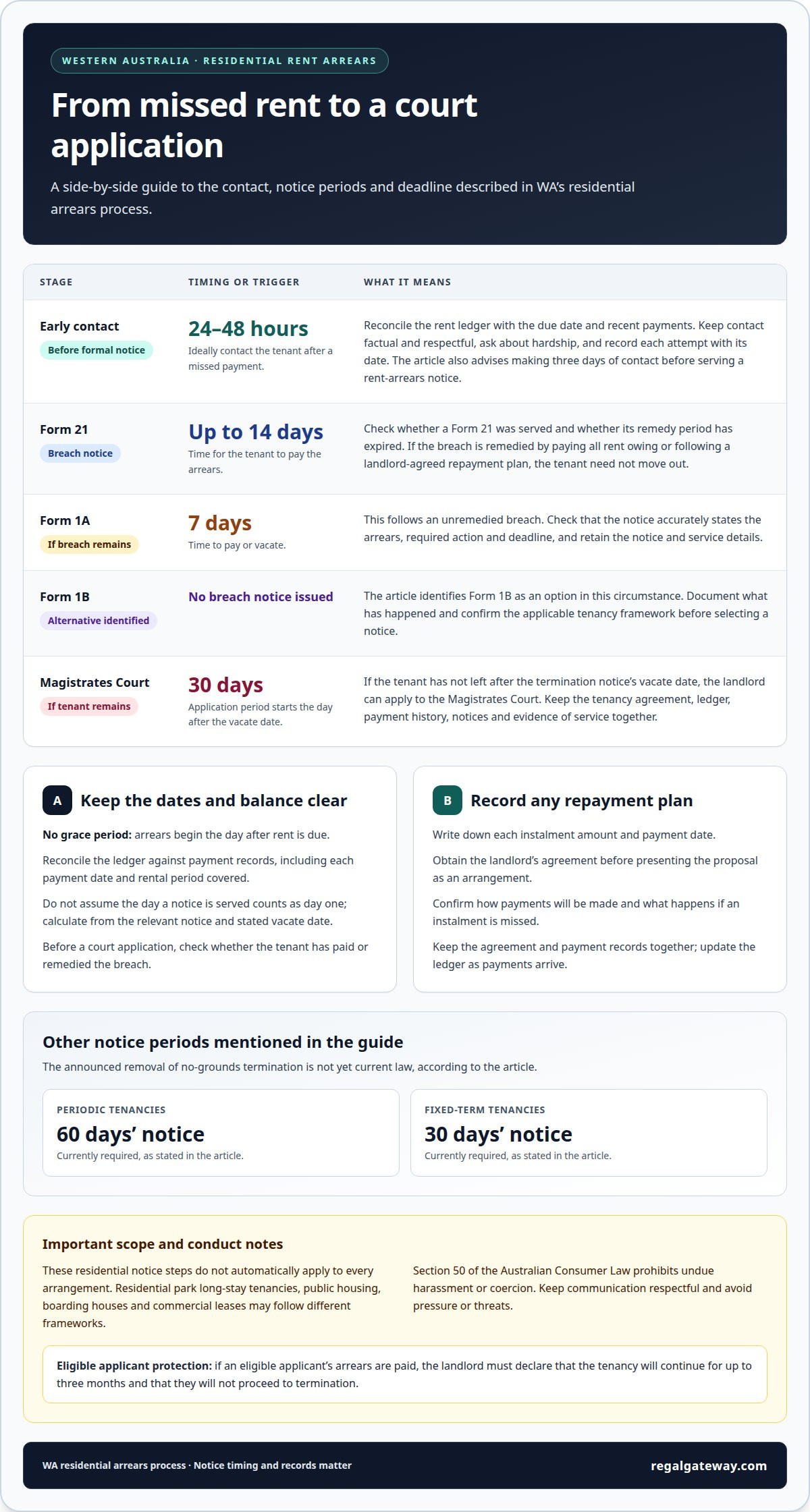
A rent arrears notice is a formal step, not the starting point. In the managing rental arrears process in WA, a Form 21 gives a tenant up to 14 days to pay arrears; if the breach isn’t remedied, a Form 1A gives seven days to pay or vacate. If the tenant doesn’t leave after the termination notice, the landlord has thirty days from the day after the vacate date to apply to the Magistrates Court.
When managing rental arrears process WA is your concern, notice dates matter, but early, clear contact can help establish what’s owed and whether a workable repayment arrangement is possible before formal steps begin.
This guide explains how rental arrears are managed in Western Australia: documenting missed rent and contact, considering repayment plans, and following the relevant notice and court processes. It also shows how professional property management can bring structure to a sensitive situation, from the first conversation through to the next appropriate step.
Key Takeaways
- Early, respectful contact and dated records help establish the arrears position and create a clear path for discussion.
- Put any repayment arrangement in writing, with agreed amounts and dates, and obtain the owner’s agreement.
- Understand how WA’s statutory notice stages connect, and keep each step aligned with the applicable tenancy rules.
- A property manager can coordinate communication, records and the transition to formal action when arrears remain unresolved.
Professional support with early tenant contact and repayment arrangements
Residential tenancies and residential park long-stay tenancies in WA are governed by different legislation. Public housing, boarding houses and commercial leases may also follow distinct arrangements. The agreement and applicable legal framework determine which process applies.
For residential tenants, paying all rent owing or following a landlord-agreed repayment plan means they need not move out. Section 50 of the Australian Consumer Law prohibits undue harassment or coercion.
-
How a Property Manager Contacts the Tenant Early
Contact the tenant promptly after a missed payment, ideally within 24-48 hours, and record each attempt with its date. First, reconcile the rent ledger against the payment due date and any recent payments. Rent arrears begin the day after rent is due, with no grace period under the Act. Keep the message factual, respectful and focused on the amount unpaid and a practical next conversation.
-
How a Property Manager Discusses Hardship and Debt Collection
Ask whether hardship is affecting the tenant’s ability to pay, then listen before discussing formal action. Invite the tenant to explain what they can pay and when, without pressure or threats. Make three days of contact before serving a rent-arrears notice. Keep dated notes of the discussion and avoid repeated or coercive contact; section 50 of the Australian Consumer Law prohibits undue harassment or coercion.
-
How a Property Manager Arranges Repayment Agreements
Prepare a written repayment proposal that sets out each amount and payment date, and obtain the landlord’s agreement before presenting it as an arrangement. Confirm how payments will be made and what happens if an instalment is missed. If an eligible applicant’s arrears are paid, the landlord must declare that they will continue the tenancy for up to three months and will not proceed to termination. Keep the agreement and payment records together.
How many days notice for a termination notice in WA?
According to Western Australian Legislation, Western Australia’s residential rent arrears process is governed by the Residential Tenancies Act 1987 (WA). A Form 21 gives the tenant up to 14 days to pay; if the breach remains, Form 1A gives seven days to pay or vacate.
-
How a Property Manager Identifies the Relevant Termination Notice
Match the notice to the tenancy and the action already taken. For unpaid rent, first check whether a Form 21 breach notice was served and whether its remedy period has expired. If the breach remains, Form 1A provides seven days to pay or vacate. Form 1B is identified as an option when no breach notice has been issued, so document the circumstances before selecting a notice.
-
How a Property Manager Checks the Notice Period and Reforms
Calculate the notice period using the relevant notice and its stated vacate date. Don’t assume the day it is served counts as day one. Check that the notice accurately records the arrears, the action required and the deadline. The announced removal of no-grounds termination is not yet current law: periodic tenancies currently require sixty days’ notice, while fixed-term tenancies require thirty days.
- Reconcile the rent ledger against payment records, noting each payment, its date and the rental period it covers. This establishes a documented arrears balance and supports accurate notices. Before applying to the Magistrates Court, keep the agreement, ledger, contact records, notices and service details together, and check whether the tenant has paid or remedied the breach.
- Use a written payment plan to record instalment amounts and dates, with the landlord’s agreement. A manageable plan may resolve unpaid rent without termination. Record payments in the ledger and follow up promptly if an instalment is missed. These steps apply to residential tenancies in Western Australia, not automatically to every consumer, public housing, boarding-house or commercial arrangement. Confirm which tenancy framework applies before using residential notice steps.
Magistrates Court application deadlines
In Western Australia, if the tenant remains after the termination notice’s vacate date, the landlord can apply to the Magistrates Court. The application deadline is thirty days from the day after that date.
- Confirm the court deadline and tenancy status. Record the vacate date in the termination notice, then calculate the thirty-day application period from the following day. If the tenant leaves by the notice deadline, a possession application is not the next step. If they remain, organise the application promptly and keep the notice and service records.
- Assemble a clear application record. Prepare the tenancy agreement, rent ledger, payment history, breach notice, termination notice and evidence of how each notice was served. Check that the arrears calculation matches the rental periods and payments recorded. A tenant may dispute the balance or notice process, so keep supporting documents together and ready to explain.
- Apply for vacant possession when the tenant has not left. The application asks the Magistrates Court to address possession after the termination notice. Set out the sequence clearly: rent became unpaid, the relevant notices were served, the remedy period passed, and the tenant remained after the vacate date. Keep copies of filed documents and court correspondence with the tenancy records.
- Plan for the application charge and any dispute. Court proceedings include an application fee, which is separate from the unpaid rent; allow for the fee applicable to the application. The fee amount and any further costs depend on the matter’s requirements. If tenancy-process questions arise, Consumer Protection WA can be contacted on 1300 30 40 54. A clear ledger and dated notice records help the landlord present the matter efficiently.
Property manager support with arrears
A property manager can bring the rent ledger, tenant communication and formal notices into one coordinated record, helping the landlord make informed decisions at each stage. Consistent documentation and follow-up are central to managing rental arrears in WA.
- Establish a reliable arrears position. Reconcile the rent ledger with payments received and the rental periods they cover. Record contact attempts, tenant responses and agreed next steps in one chronology. This gives the landlord a clear view of the unpaid amount and helps prevent notices from relying on an outdated balance. In Western Australia, landlords cannot charge late fees or interest for overdue rent.
- Keep the landlord informed before formal action. Present the tenant’s response, payment proposal and relevant records together, so the landlord can consider practical options. If a Form 1A termination notice becomes relevant, coordinate its timing with earlier notices and the tenant’s current payment position. A documented process makes decisions easier to explain if the tenant raises a dispute.
- Coordinate support when hardship affects payment. A property manager can clarify the arrears position and provide the landlord statement needed for a WA Rent Relief Program application. This assistance can support a tenancy, while accurate records remain essential to managing rental arrears in WA.
- Maintain a clear path from resolution to possession. Track plan payments against the ledger, update the landlord when circumstances change, and preserve copies of notices and service records. If the tenant doesn’t meet an agreement, the property manager can organise records for the next formal step, including a Magistrates Court application where appropriate. For structured professional property management, bring the tenancy records and arrears history together early.
Regal Gateway Property
Regal Gateway Property provides Property Management for residential property owners who want support with tenancy matters, including rental arrears. This is a practical option when you want consistent oversight of tenant communication, rent records and the process around notices. Tenant Selection and Screening supports decisions before a tenancy begins, while Residential Property Sales can help if your property plans change.
For a current arrears matter, gather the tenancy agreement, rent records and notices already served. These documents provide a clear starting point for discussing the next management steps. Contact Regal Gateway Property to discuss support for your residential property in Atwell, Aubin Grove, Wandi, Hammond Park, Success, Treeby or Mandogalup.
Set a steadier course for your property
A rental arrears matter can also prompt a review of how tenancy communication and record-keeping are managed. Consider the oversight you want, how updates should reach you, and how decisions will be documented. Clear expectations create a stronger foundation for future tenancy management.
For owners weighing professional support, managing the rental arrears process in WA is part of a wider commitment to protecting the quality and continuity of a residential investment. Regal Gateway Property can discuss the management support that fits your property and circumstances, helping you identify a practical next step without losing sight of your longer-term plans.
Contact Regal Gateway Property to discuss support for your property. A deliberate next step can help you approach what comes next with greater clarity.
Frequently Asked Questions
Does the day I serve the notice count as day one?
The service day is not automatically day one; calculate the deadline using the notice’s valid service date and applicable counting rules. A Form 21 gives a tenant up to 14 days to remedy rent arrears. Record when and how the notice was served, then use the resulting deadline consistently in tenant communications and any later termination step.
How is this service delivered?
For residential arrears, property management coordinates communication between the property owner and tenant. The manager can organise tenancy and payment records, document relevant updates, and coordinate notices or court paperwork when needed. The owner provides the tenancy agreement and payment information, and makes decisions on proposed arrangements, giving the manager a clear basis for managing the matter.
What are the current WA rules for rent arrears in residential tenancies?
According to Western Australian Legislation, residential rent arrears are governed by the Residential Tenancies Act 1987 (WA). A Form 21 gives the tenant up to 14 days to remedy the breach; if it remains unresolved, a Form 1A provides seven days to pay or vacate.
How many days of unpaid rent can trigger a breach notice in WA?
A breach notice can follow a missed rent payment; there is no grace period before arrears begin. In WA, rent is in arrears from the day after it is due. The Form 21 then gives the tenant up to 14 days to pay the rent owing. The notice should identify the arrears and the deadline for remedying the breach.
How does the WA court process work for rent arrears and termination of a tenancy?
If the tenant remains after the termination notice’s vacate date, the landlord can apply to the Magistrates Court. The application deadline is thirty days from the day after that date. The landlord’s records should show the tenancy, arrears, notices and service history. The court process addresses possession; keep the application documents together so the sequence is clear.
Can a WA tenant get a payment plan or financial assistance for rent arrears?
Yes. A tenant and landlord can agree to a written repayment plan that records instalment amounts and dates. Eligible private tenants may also apply for WA Rent Relief Program support through a Housing Case Manager or Financial Counsellor.