
A final bond inspection and a buyer’s pre-settlement inspection serve different purposes. Preparing for a final bond inspection in WA means comparing the property’s end-of-tenancy condition with its entry condition report and documenting cleaning, damage and repairs. Whether professional cleaning is required before settlement depends on the sale contract.
It’s understandable to want a clear standard before the inspection, particularly if the report may inform discussions about cleaning or repair costs. The key is to compare the property accurately with its original condition record, rather than assume every mark or cleaning issue will be treated alike.
This article explains how a property manager prepares for the inspection, what information is useful and what can affect the reporting process. It also distinguishes end-of-tenancy checks from settlement requirements, helping you plan for the property’s transition.
Key Takeaways
- Room-by-room checks can reveal issues with doors, appliances, water and finishes that need to be recorded clearly.
- In Western Australia, property condition reports must use Property Condition Report (Form 1), according to Government of Western Australia – Consumer Protection.
- Exterior areas and included items are part of the overall condition assessment, so clear records help distinguish their state from the entry report.
- A final inspection is best conducted with the tenant where possible, and the report should document findings carefully after the tenancy ends.
How a property manager checks doors, appliances, water and finishes room by room
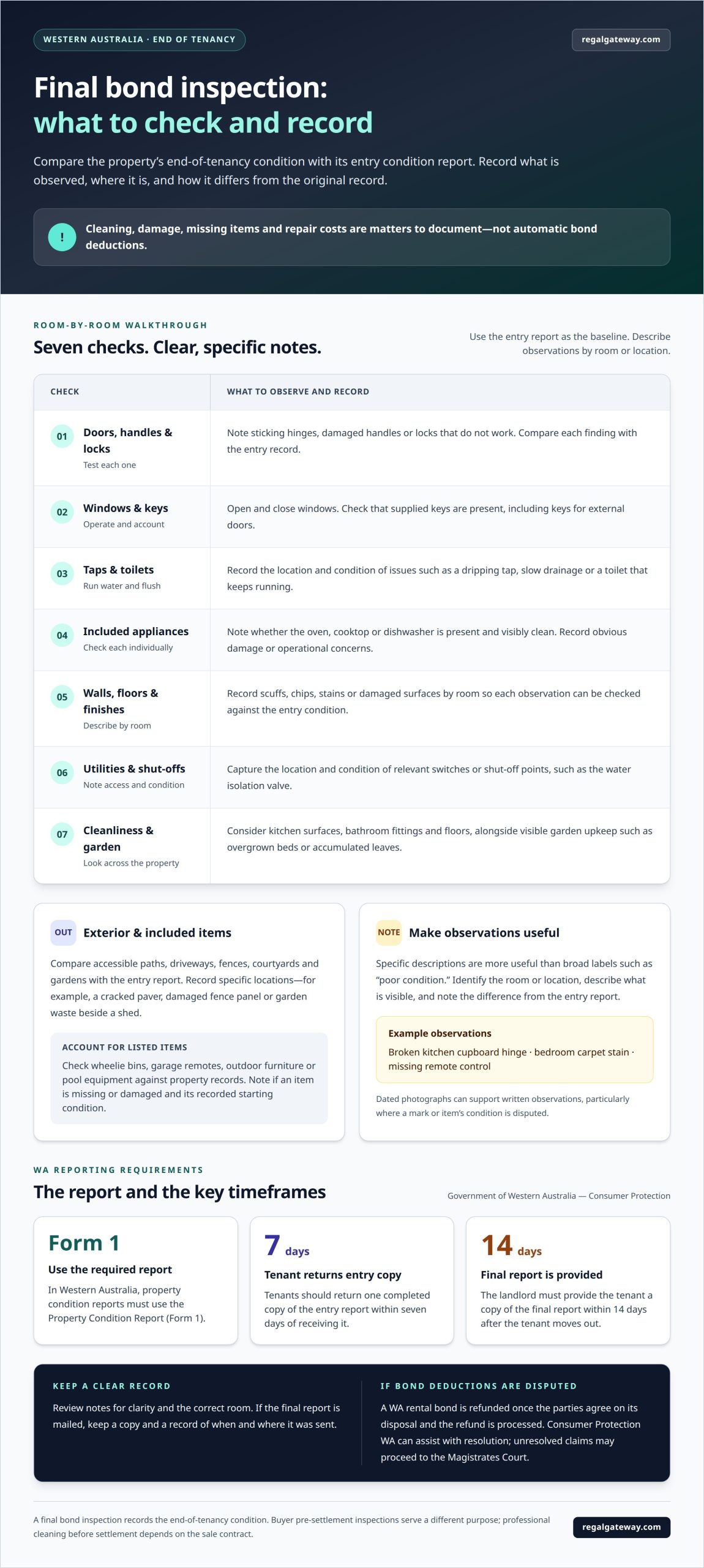
A room-by-room walkthrough compares each area with the entry condition report and records its current state and any changes. The checklist covers practical details, from a sticking bedroom door to marks beside a kitchen appliance, so findings can be assessed against the original record.
Potential bond deductions may relate to cleaning, damage, missing items or repair costs. These are matters to document in the final condition report, not automatic deductions. The entry report helps establish the property’s condition at the start of the tenancy.
- Test each door, handle and lock. The property manager notes sticking hinges, damaged handles or locks that do not work, then compares these with the entry record.
- Open and close windows, and account for keys. This check records whether windows operate and whether supplied keys are present, including keys for external doors.
- Run taps and flush toilets. The manager looks for issues such as a dripping kitchen tap, slow drainage or a toilet that keeps running, then records the location and condition.
- Check included appliances individually. The report can note whether an oven, cooktop or dishwasher is present and visibly clean, while recording obvious damage or operational concerns.
- Review walls, floors and other finishes. Scuffs, chips, stains or damaged surfaces are recorded by room, making it easier to compare each finding with the entry condition.
- Locate utilities and emergency shut-off points. The manager notes access to relevant switches or shut-off points, such as the water isolation valve, so their location and condition are captured.
- Assess cleanliness and garden condition. Kitchen surfaces, bathroom fittings and floors are considered alongside visible garden upkeep, such as overgrown beds or accumulated leaves.
The inspection can also put maintenance requests in context. If a tenant previously reported a dripping tap or a pool gate that does not lock, the property manager can record the report and the item’s condition at the final inspection. Clear, room-specific notes help distinguish maintenance concerns from cleaning, missing-item or damage observations.
How a property manager records findings in a property condition report
In Western Australia, property condition reports must use Property Condition Report (Form 1), according to Government of Western Australia – Consumer Protection. The manager completes the report by recording each area’s condition, then comparing it with the entry record. Specific descriptions make stronger evidence than broad labels such as “poor condition”.
For example, a checklist might identify a broken kitchen cupboard hinge, a bedroom carpet stain or a missing remote control. The manager records the location, describes what they observe and notes relevant differences from the entry report. Dated photographs can support written observations, particularly if a mark or item’s condition is disputed.
After completing the inspection, the property manager reviews entries for clarity, checks that observations relate to the correct room, and prepares the final report for the tenant. In WA, the landlord must provide a copy of the final property condition report within 14 days after the tenant moves out. If the report is mailed, keeping a copy and a record of when and where it was sent helps maintain a clear document trail.
Tenants should return one completed copy of the entry report within seven days of receiving it, according to Government of Western Australia – Consumer Protection. At the end of the tenancy, a careful review of the final report helps both parties identify differences and provide relevant evidence.
A WA rental bond is refunded once the parties agree on its disposal and the refund is processed. If they dispute deductions, Consumer Protection WA can assist with resolution. Unresolved claims may proceed to the Magistrates Court.
An independent professional inspection can provide a structured record of visible condition, helping clarify observations about cleaning, damage or missing items. It supports the reporting process but does not determine whether a deduction is justified. For managed rentals, property management support can help coordinate inspection records and reporting.
How a property manager assesses exterior condition and included items
The exterior walkthrough covers areas beyond the interior rooms, such as the entry path, driveway, fence, courtyard and garden. The property manager compares these with the entry condition report. A cracked paver, damaged fence panel or garden waste beside a shed can be recorded by location, making the report clearer than a general note that the yard needs attention.
Check included items against the property records rather than assume they are present because of their appearance. The manager can confirm whether items such as wheelie bins, garage remotes, outdoor furniture or pool equipment are accounted for. If something is missing or damaged, the report identifies it and records its condition at the start of the tenancy. This helps distinguish the tenancy handover from a buyer’s inspection.
- Walk accessible boundaries. Note visible fence damage, an open gate or a latch that does not secure properly.
- Review paved areas and paths. Record examples such as a new stain, loose paver or debris obstructing the entrance.
- Assess garden presentation. Describe visible conditions, including overgrown lawn, weeds in garden beds or accumulated leaves.
- Match supplied items to records. Note whether listed bins, remotes or outdoor equipment are present and appear intact.
- Record outdoor structures. Check accessible sheds, patios and storage areas for visible changes from the entry record.
Photographs can show the location and context of an exterior issue, such as a damaged gate beside the driveway. Clear descriptions distinguish an observed condition from an assumption about its cause. For changes to the garden or outdoor items, the entry report provides a useful comparison. The final report should describe what is visible, not speculate about when or why it happened.
These observations create a more complete handover record, whether the property is returning to the rental market or may later be offered for sale. A bond inspection documents the tenancy’s condition; it does not replace a buyer’s separate assessment before purchase.
How property managers conduct final inspections when tenants move out
A final inspection closes the tenancy record by comparing the property’s condition with its entry report. In Western Australia, landlords and tenants should try to attend together. If the tenant had a reasonable opportunity to attend, the inspection may proceed without them. Preparing for a final bond inspection in WA starts with coordinating attendance and focusing the inspection on the tenancy handover.
When scheduling, consider practical commitments. FIFO rosters and shift work may be relevant when assessing whether a tenant had a reasonable opportunity to attend. The inspection then covers changes and included items, with issues such as a broken fixture, missing remote or cleaning concern clearly described and located.
Schedule the inspection to give the tenant a reasonable opportunity to attend. Choosing a suitable time can accommodate work commitments and support a considered handover.
The final report records the property’s condition; it does not automatically decide how the bond is handled. In Western Australia, it can serve as evidence in disputes about missing items, damage, cleaning or repair costs. When preparing for a final bond inspection in WA, distinguish observed conditions from assumptions about when or why a change occurred.
After the tenant moves out, the landlord must provide a copy of the final property condition report within 14 days. The tenant may ask permission to return after the tenancy ends to address an issue, but has no automatic right to re-enter. Access requires the landlord’s permission.
For a property manager, the process is to arrange attendance, inspect against the entry record, document findings and provide the completed report within the required period. This creates a traceable handover, whether concerns involve dusty blinds, a missing garage remote or a damaged fixture. Both parties can refer to the record if they disagree about the property’s condition.
For considered support through a rental handover, discuss a managed tenancy transition.
Regal Gateway Property
Regal Gateway Property helps owners manage the transition between tenancies through its Property Management service, including rental handover coordination and records. Clear inspection notes and condition reports help organise the property’s history, whether you’re preparing for a new tenant or considering a future sale.
Turn to Regal Gateway Property for professional support with a residential rental or guidance on your property’s next stage. Its services also include Residential Property Sales and Tenant Selection and Screening, supporting owners as their needs evolve.
For a considered conversation about your property, contact Regal Gateway Property.
Make the handover your next confident step
A final inspection is part of a wider transition for the property and the people connected to it. An organised handover gives owners a clear record to carry forward, whether they plan to prepare the home for another tenancy or consider a different direction for the property.
Preparing for a final bond inspection in WA starts with a shared understanding of the property’s condition and a clear, evidence-led reporting process. Considering the next steps early can make the transition feel more deliberate, whether the property is moving into a new tenancy or a different phase.
Regal Gateway Property can support your broader residential property needs as they evolve. For a conversation about your circumstances, contact Regal Gateway Property. Take the next step with clarity and confidence.
Frequently Asked Questions
Does a property manager arrange professional cleaning before settlement?
Not automatically. Whether professional cleaning is required before settlement depends on the sale contract. A property manager may coordinate a rental handover, but that is separate from the buyer’s and seller’s contractual obligations. For example, a vacated home in Atwell may need attention before sale, but the contract sets the relevant standard. Keep tenancy cleaning and settlement arrangements separate when planning the property’s next stage.
Is a PCI the same as a pre-handover inspection?
A practical completion inspection, or PCI, is part of a new-home handover, not an end-of-tenancy bond inspection. In Western Australia, it takes place after the builder issues the practical completion notice and before the homeowner takes possession. A rental final inspection instead records the property’s condition at the end of a tenancy. The terms may sound similar, but they concern different transitions and records.
What happens if agreed repairs are unfinished?
Record which agreed items remain incomplete, where they are and any relevant communication about the work. For example, note that a repaired door latch still does not close properly rather than describing the entire door as unrepaired. Keep repair observations separate from cleaning or tenant-damage findings. This gives a clearer account of outstanding work and helps prevent separate issues being treated as one.
What cleaning standards apply at the end of a tenancy in WA?
Use the tenancy agreement and the property’s documented starting condition as references. Describe a cleaning concern specifically, such as grease on a rangehood or residue inside a shower, rather than labelling the property simply “unclean”. This makes the issue easier to assess against the records. Conditions can vary between homes in Wandi, Success and other Western Australian suburbs.
What does a professional WA end-of-lease cleaning service cover?
The cleaning scope depends on the agreed service, so the phrase alone does not define exactly what is included. Areas to clarify may include kitchen surfaces and appliances, bathroom fittings, floors and internal windows. For a home in Aubin Grove, a written scope can distinguish a standard clean from additional tasks, such as cleaning inside an oven or treating a particular stain.
Do WA tenants have to pay for professional carpet cleaning or pest control?
Whether a charge is appropriate depends on the tenancy agreement, the property’s recorded starting condition and evidence of its condition at the end. Assess a carpet mark or pest concern on its own facts rather than treating it as an automatic reason for a charge. Keep relevant inspection records, correspondence and service documentation together when discussing the issue.