
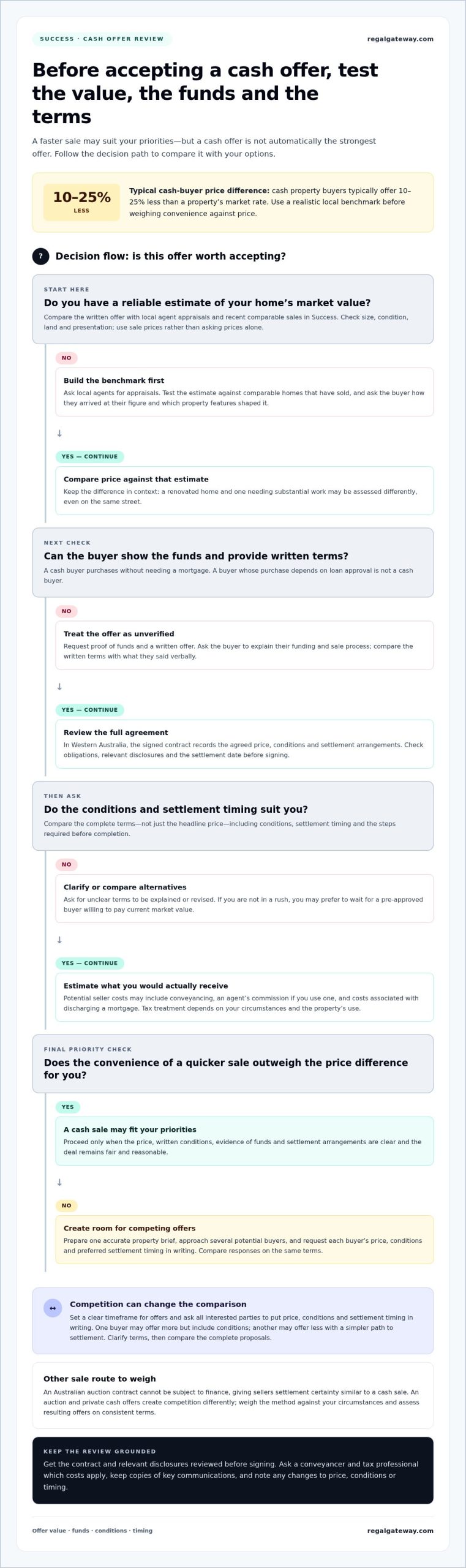
A cash offer can simplify a sale, but it isn’t automatically the strongest offer. Cash property buyers typically offer 10-25% less than a property’s market rate, so learning how to find cash buyers for my house in Success starts with comparing each offer against a realistic estimate of your home’s value. A quick sale may suit your priorities, but the price and terms still deserve careful attention.
It’s understandable to value certainty and a smoother path to settlement, particularly when you’re ready to move on. Look beyond the headline figure: consider how the buyer arrived at the offer, whether they can show they have the funds, and what the sale process involves.
This guide explains how to compare a cash offer with local market value, review a buyer’s records and communications, and invite competing offers. You’ll also learn what to clarify before accepting, so you can weigh convenience against price and choose a sale path that suits your circumstances in Success.
Key Takeaways
- Use local agent appraisals to establish a market-value benchmark, then weigh the offer against your preferred timing and sale conditions.
- Invite competing buyers to make offers, creating an opportunity to improve the terms without relying on a single proposal.
- Before accepting, request written terms and evidence of funds, and understand how the buyer calculated the offer and plans to complete the sale.
- Compare the types of cash buyers active in Success and Perth, including investment businesses, and assess their communication and track record.
Comparing the offer with the property’s market rate
- Begin with appraisals or quotes from local real estate agents to estimate your Success property’s market value. Cash property buyers typically pay 10-25% less than a property’s market rate, so compare each written offer with that estimate. Ask how the buyer reached the figure and which property features shaped it. A clear valuation basis makes negotiations more informed.
- Research comparable homes in Success, checking recent sale prices alongside property size, condition, land and presentation. A renovated home and one needing substantial work may attract different assessments, even on the same street. Use comparable sales to test whether an agent’s appraisal reflects your property, rather than relying on asking prices alone.
- If you’re learning how to find cash buyers for a house in Success, consider how your property will reach potential buyers. Ask a local agent about private buyer interest and off-market opportunities, then compare that approach with a public campaign. Clarify how each route may affect exposure, competition and your preferred settlement timing.
- Choose a real estate agent who puts your interests first, not just a quick sale. Discuss the appraisal, proposed marketing approach and how the agent will present your property’s features to buyers. A finance professional can help buyers understand their funding, but a buyer whose purchase depends on loan approval isn’t a cash buyer.
- Compare the full terms, not just the headline offer. Cash buyers may negotiate the price down, so note the proposed conditions, settlement timing and steps required before completion. If you’re not in a rush, you may prefer to wait for a pre-approved buyer willing to pay current market value. If speed matters, accepting less may suit your priorities, provided the deal remains fair and reasonable.
Creating competition among buyers
- Prepare one consistent property brief before approaching buyers in Success. Include the home’s features, condition, inclusions and your preferred settlement timing. Accurate details help every buyer assess the same opportunity, making offers easier to compare. Keep supporting information ready, such as photographs and relevant documents, so interested parties can evaluate the home without avoidable delays.
- Reach several potential buyers through a coordinated campaign rather than negotiating privately with just one. Cash-buying businesses often purchase properties as investments, so present your home’s features clearly and invite each party to make an offer. A broader pool of buyers creates room for competition and may encourage cash buyers to improve their proposals.
- Set a clear process for receiving offers. Tell interested parties when you’ll review proposals, and ask them to put their price, conditions and preferred settlement timing in writing. A shared timeframe keeps discussions organised while giving buyers a fair chance to assess the Success property. Compare the complete terms before indicating that any offer is preferred.
- Compare each response side by side, including the proposed price, conditions and certainty of completion. One buyer, for example, may offer more but include conditions, while another may offer less with a simpler path to settlement. Ask buyers to clarify unclear terms, then invite suitable parties to improve their offers if competition supports further negotiation.
- Consider an auction if open competition suits your circumstances. In Australia, an auction contract cannot be subject to finance, giving sellers settlement certainty similar to a cash sale. This can be useful when comparing buyer conditions, although an auction and private cash offers create competition differently. Choose the method that aligns with your priorities, then assess the resulting offers on consistent terms.
Understanding the cash sale process
- Clarify what “cash” means before treating an offer as finance-free. A cash buyer purchases without needing a mortgage; a buyer whose purchase depends on loan approval isn’t a cash buyer. Ask the buyer to explain their funding and how they calculated the proposed price. Clear answers help you understand the offer and distinguish a cash purchase from one dependent on lending.
- In Western Australia, the signed contract of sale records the agreed price, conditions and settlement arrangements. Disclosure requirements depend on the property and transaction, so identify relevant property information and have the contract and disclosures reviewed before signing. Pay particular attention to conditions that affect the sale, the settlement date and each party’s obligations.
- Map out likely seller costs before comparing net proceeds. These may include conveyancing, an agent’s commission if you use one, and costs associated with discharging a mortgage. Tax treatment depends on your circumstances and the property’s use. Ask your conveyancer and tax professional which costs apply, then compare the estimated amount remaining from each offer.
- Complete due diligence before accepting. Request proof of funds and a written offer, then compare the written terms with the buyer’s verbal explanation. Ask the buyer to outline each stage of the sale, including contract preparation and settlement arrangements. Keep copies of key communications, and note any changes to price, conditions or timing so the final agreement reflects what you accepted.
- Assess cash-buying businesses, low offers and sale-and-leaseback proposals individually. A low figure may reduce your proceeds, while unclear funding or inconsistent communication can complicate the transaction. For a leaseback, examine the occupancy terms, rent, duration and what happens when the arrangement ends. Review buyer records and reviews, and pause negotiations if explanations conflict with the written terms.
Which property investor groups and cash-buying companies operate in Success and Perth?
- Start by distinguishing investor businesses from individual buyers. In Success and Perth, many cash property buyers are businesses purchasing homes as investments rather than private individuals. Their investment focus may shape how they assess a property, so record each buyer’s stated purpose and compare it with your sale priorities.
- Build a local prospect list by searching for cash property buyers, property investors and investment businesses operating in Perth. Include Success in your searches, then note each business name, the properties it says it buys and how it invites sellers to make contact. Treat promotional claims as a starting point, not proof of a suitable offer.
- Separate buyers who approach you directly from those you find through an agent or property advertising. For each prospect, track the contact date, stated purchasing criteria, offer status and next step. This simple record helps distinguish active interest in your Success home from broad advertising aimed at property owners generally.
- Review each business’s public profile and seller feedback before progressing discussions. Look for consistent details about its buying process, communication and completed transactions. If the business name differs between its correspondence and public materials, ask for a clear explanation before sharing sensitive information or considering contractual terms.
- Compare how well a buyer fits your property, not just its label as an investor. A business seeking homes in a particular condition or location may not suit every Success property. Ask what features influence its interest, how it assesses the home and what steps lead from an initial discussion to a written offer.
For a broader view of your selling options alongside investor interest, review residential sale options before choosing your next step.
Applicants for the Australian Government 5% Deposit Scheme must plan to live in the property as owner-occupiers, rather than use it as an investment property. Sellers can check reviews of cash-buying businesses to learn about other sellers’ experiences. A cash property buyer should communicate clearly and respond without undue delay.
Regal Gateway Property: Residential Property Sales
Regal Gateway Property offers residential property sales for homeowners considering a broader route than approaching cash buyers directly. If you want to compare a private cash proposal with a sale to the wider market, this service is a relevant next step. It can help you consider how the sale aligns with your priorities, including the offer, marketing approach and settlement timing. For homeowners weighing a quick transaction against reaching a broader range of buyers, residential property sales offer a way to explore that decision as part of a formal sale. The aim is to help you move forward with a clearer view of your options. Contact Regal Gateway Property to discuss residential property sales.
Choose the sale path that fits your next move
Your next decision is not simply whether to accept a cash offer. It’s which route best supports your priorities, from timing and certainty to the opportunity to reach a broader pool of buyers. With those priorities clear, you can assess each proposal against the outcome you want for your property and plan your next move.
If you’re still weighing how to find cash buyers for your house in Success, define what matters most before moving forward. A direct cash sale may suit a need for simplicity, while a broader selling approach may better match your goals. Choose a route you can assess with confidence and whose terms align with your plans.
For a considered conversation about your sale, contact Regal Gateway Property to discuss your sale. Take the next step when you’re ready to shape a clear path forward.
Frequently Asked Questions
How can I find genuine cash buyers for a house in Success, WA?
Start with buyers who can explain why a Success home fits their purchasing criteria. Search local property investment groups and cash-purchase businesses, then compare the locations and property types each says it targets. Contact the organisation through a business channel you find independently, rather than relying only on an unsolicited message. Before proceeding, check that the person or entity named in the offer matches the party expected to sign the contract.
What are the steps to sell a house privately to a cash buyer in Western Australia?
Agree on the proposed sale terms, then have a Western Australian conveyancer prepare or review the written contract and relevant disclosures. Confirm the buyer’s legal name, property details, inclusions, conditions, deposit arrangements and settlement date before signing. Keep a copy of the completed agreement and arrange settlement coordination through your conveyancer. A verbal agreement or informal message is no substitute for documenting the final written terms.
How can I avoid property-sale scams and misleading cash-buyer offers in Australia?
Slow down if a buyer unexpectedly changes payment instructions, identity details or contract terms. Verify requests using contact details you’ve sourced independently, and never share online banking passwords or one-time security codes. Keep communications and documents together, then compare the purchaser named in the contract with the party making payment. Ask your conveyancer to review unusual clauses before signing or transferring funds.