
A tenant’s change to a rental isn’t automatically theirs to make. In WA, tenants must get written consent before making alterations, and landlords have 14 days to respond to a written request for a minor modification. A rental property wear and tear guide for WA also needs to distinguish ordinary deterioration from damage caused by misuse or negligence.
It’s understandable to want a clear line between everyday use and damage, especially when a tenant wants to personalise a home or an inspection uncovers a change. This guide explains when tenants need permission, how minor and major modification requests are handled, and what landlords must inspect and maintain. It also explores how a property’s age, quality and tenancy length can affect whether wear is considered reasonable, helping make condition reports and end-of-tenancy discussions clearer.
Key Takeaways
- Keep clear condition records at the start and end of a tenancy to help distinguish pre-existing issues from later damage.
- Understand how a rental’s age, character and expected lifespan shape the landlord’s reasonable-state-of-repair obligations.
- Use the difference between ordinary deterioration and damage caused by misuse or negligence to guide end-of-tenancy discussions.
- Know when tenants need written consent for changes, and how inspection findings can inform decisions about repairs and modifications.
Landlord inspections, repairs and record-keeping
In WA, inspections and clear records help distinguish a property’s starting condition from changes during a tenancy. Consistent documentation gives landlords and tenants a shared basis for discussing maintenance and end-of-tenancy concerns.
Inspecting the Property and Its Fittings
An inspection records the state of the residential property, its furnishings and its fittings, including whether items work. This matters because a note about a fault helps separate an existing issue from a later change. Routine inspections in WA require 7-14 days’ written notice using Form 19, and condition reports may be updated after inspections held up to four times a year. Check curtains, carpets, doors and appliances, recording visible wear and any faults with specific descriptions.
Condition Reports and Inspection Records
A condition report documents the property’s state at the beginning or end of a tenancy, room by room. Owners and tenants should inspect and record the home at both points, so later comparisons can identify pre-existing damage. A tenant should receive two copies and return the report within seven days, according to Consumer Protection WA. Record furnishings and fittings as well as walls, floors and window coverings; “carpet stained” is more useful than “carpet poor”. Keep inspection notes alongside the report so the history remains clear.
Preparing for the Final Inspection
The final inspection compares the home’s current condition with the entry report and later records. This helps identify actual changes instead of treating every sign of age as tenant-caused damage. Review each room, including less visible areas such as cupboard interiors and window tracks. Note the condition of curtains and carpets, and distinguish a recorded pre-existing mark from a new stain. Tenants should return the property in a similar condition to its starting state, allowing for fair wear and tear.
Evidence for Wear-and-Tear Disputes
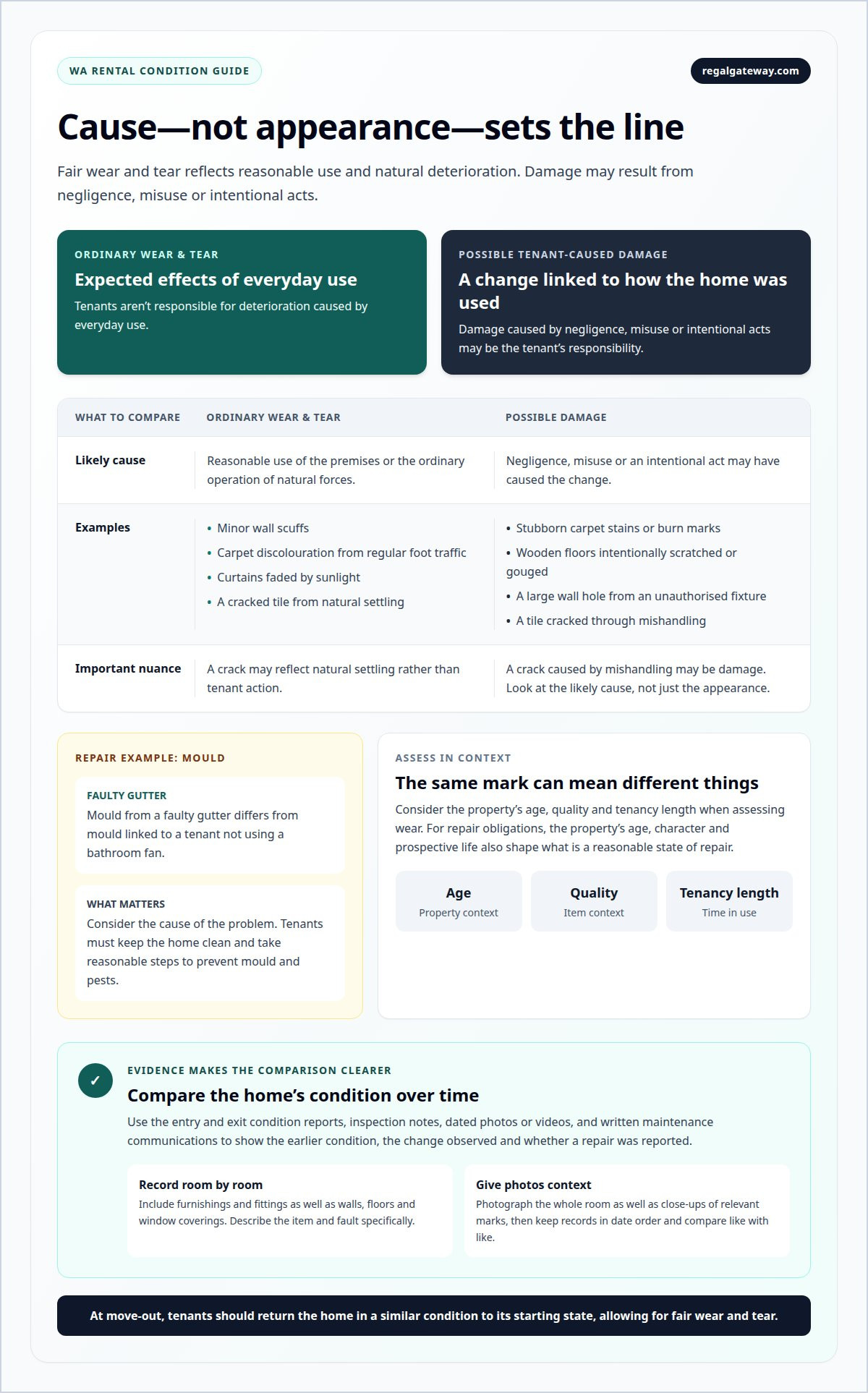
For a wear-and-tear dispute, landlords and tenants should gather the entry and exit condition reports, inspection notes, dated photos or videos, and written maintenance communications. Together, these records show an item’s earlier condition, the change observed and whether a repair was reported. Photograph the whole room as well as close-ups of relevant marks, such as a carpet stain or wall scuff, so each image has context. Keep records in date order and compare like with like to make discussions about damage specific and evidence-based.
What Does “Reasonable State of Repair” Mean?
In WA, a landlord’s repair duty depends on the property’s age, character and prospective life. The Residential Tenancies Act 1987 (WA) sets that standard, while the cause and urgency of a fault shape what happens next.
Landlord Responsibilities for Maintenance and Repairs
Landlords must keep the rental in a reasonable state of repair and maintain fixtures, fittings and services covered by the rental agreement. A leaking tap, damaged roof or clogged gutter needs attention; mould from a faulty gutter differs from mould linked to a tenant not using a bathroom fan. Tenants must keep the home clean and take reasonable steps to prevent mould and pests. If an item was recorded as not working in the rental agreement, the landlord isn’t required to fix it.
Urgency affects the response. After notification, landlords must organise repairs to failed essential services within 24 hours. Other urgent issues require repairs to be organised within 48 hours, with completion as soon as practicable. For non-urgent work, tenants should report the issue in writing or raise it at an inspection; repairs must be completed within a reasonable time. A tenant’s written description helps show what happened and when.
Recording Repairs in the Condition Report
A condition report records the property’s state, including visible faults and items that aren’t working. Clear entries help distinguish an existing problem from damage caused during the tenancy. Describe the affected fixture, its location and the issue, such as a loose kitchen tap or a cracked tile. Add repair updates to the property records so the timeline is clear when the condition is reviewed later.
Cleaning and Repairs When Moving Out
At the end of the tenancy, tenants should return the home in a reasonably clean condition, excluding fair wear and tear. They must repair damage they caused or allowed pets or guests to cause, and restore modifications. For example, a large wall hole from an unauthorised fixture differs from ordinary surface wear. Property Management can help owners coordinate maintenance and assess condition records throughout a tenancy. Explore Property Management support when ongoing oversight would help.
Reasonable wear and tear in WA rentals
In Western Australia, the distinction depends on ordinary use, natural deterioration and the cause of a change. The assessment also considers the property’s age, quality and tenancy length.
Understanding Reasonable Wear and Tear
Fair wear and tear means reasonable use of the premises and the ordinary operation of natural forces. This distinction matters because tenants aren’t responsible for deterioration caused by everyday use, while damage from negligence, misuse or intentional acts may be their responsibility. WA-specific rules sit within the Residential Tenancies Act 1987 (WA); the relevant assessment compares the property’s condition with the likely effects of ordinary use. For example, a cracked tile from natural settling may be wear, while a crack caused by mishandling may be damage.
Assessing Wear on Surfaces and Appliances
Carpets, paint, flooring and appliances are assessed by the type of change and its likely cause, not by appearance alone. Minor wall scuffs, carpet discolouration from regular foot traffic and curtains faded by sunlight can reflect ordinary use. Stubborn carpet stains, burn marks, or wooden floors intentionally scratched or gouged, by contrast, are examples of actual damage. Chipped paint may be consistent with age, while paint damaged when decorations are removed can point to tenant damage. An appliance broken through misuse is different from normal deterioration.
Are ordinary marks automatically chargeable to a tenant? No. The distinction is whether the change reflects reasonable use or harm beyond it, such as a large stain or deliberate gouge. A rental property wear and tear guide WA landlords use should keep that cause-based distinction clear.
Age, Quality, and Expected Lifespan
Age, quality and tenancy length help determine what condition could reasonably be expected when the property is returned. A surface that already showed wear at the start should not be judged as though it were new; its earlier condition and the extent of the change matter. Existing carpet discolouration, for example, provides context for later wear. Apply the same reasoning to paint, flooring and fittings: consider each item’s age and quality alongside evidence of how it was used.
For landlords and tenants, the practical takeaway is to assess each item in context. A rental property wear and tear guide WA owners use should distinguish ordinary deterioration from identifiable damage, rather than treating every changed surface as a breach of tenant obligations.
How is fair wear and tear assessed during a WA rental property condition report and final inspection?
Assessment compares the property’s entry condition with its state at the final inspection. In WA, the key distinction is between ordinary deterioration from everyday use and damage linked to misuse, negligence or intentional acts.
Review each item against its recorded starting condition, then consider its age, quality and the tenancy’s length. A small scuff on a frequently used floor may reflect normal use; a deliberate gouge suggests a different cause. Note the location, size and appearance of each change instead of relying on broad labels such as “worn” or “damaged”.
Examples that may reflect fair wear and tear include:
- Loose window hinges or door handles, worn cords and sliding tracks.
- Faded curtains, chipped paint, wall cracks or aged kitchen benchtops.
- Wooden-floor scuffs or carpet water marks caused by rain or seepage.
These examples still need context. A water mark from rain or seepage differs from staining caused by careless use. Assess a wall crack alongside the entry report and its appearance rather than assuming it is tenant damage. Compare photographs and written descriptions where available, and record any clear difference between the earlier and current condition.
By contrast, excessive filth or stubborn stains, pet damage beyond normal wear, appliances broken through misuse, and holes from unauthorised fixtures may indicate damage. Torn or missing curtains, carpet burn marks, broken glass and paint damaged while removing decorations are other examples. Evidence should connect the observed condition with its likely cause; a mark alone may not establish who caused it.
For a considered review across inspections and tenancy records, explore property management support for your rental.
Regal Gateway Property
Regal Gateway Property helps rental owners oversee their properties and manage tenancies. Its Property Management service supports owners with tenancy matters, maintenance coordination and clear property records. For owners preparing to lease a home, Tenant Selection and Screening supports the process of finding a suitable tenant. If your plans shift from holding to selling, Regal Gateway Property also provides Residential Property Sales.
Whether you’re reviewing an inspection outcome, considering a rental investment or planning a change in ownership, Regal Gateway Property can help you consider the next step in context. Contact Regal Gateway Property to discuss your property needs.
Set a Clear Standard for the Next Tenancy
A considered approach to a rental begins before the next tenant arrives. Use this rental property wear and tear guide for WA as a reference when planning how the home will be presented, maintained and managed over time. Clear expectations help owners make deliberate decisions about the property’s future, whether they intend to keep renting it or prepare for a change in ownership.
For tenants, raising proposed changes early allows for a more orderly discussion before work begins. For owners, professional property management can bring continuity to tenancy decisions and keep longer-term plans in view. Consider what your home needs now and which direction best serves your goals.
Contact Regal Gateway Property to discuss your next property decision and move forward with greater clarity.
Frequently Asked Questions
Who pays and who fixes what?
Landlords generally arrange and pay for property repairs, while tenants are responsible for damage they cause through misuse, negligence or intentional acts. Tenants should report maintenance needs promptly and in writing, describing the affected item and the issue. A failed hot-water service, for example, needs the landlord’s attention, while a tenant-caused broken fitting may be the tenant’s responsibility.
What counts as fair wear and tear in a Western Australian rental property?
Fair wear and tear is deterioration from reasonable everyday use and natural forces, rather than harm caused by careless or deliberate actions. A faded curtain or lightly scuffed floor can reflect ordinary use; a deep gouge or large stain is different. The property’s condition at the start of the tenancy helps put each change into context.
How does fair wear and tear differ from tenant damage in WA?
The difference usually comes down to the cause and extent of the change. Gradual fading from sunlight or carpet wear along a regular walkway may be normal deterioration; a burn mark or damage from a misused appliance points to tenant damage. Compare the item’s earlier condition with its current state, then consider whether ordinary use could reasonably explain the change.
What are the landlord and tenant responsibilities for property maintenance in Western Australia?
Landlords must maintain the rental and its agreed fixtures, fittings and services, while tenants must keep it reasonably clean, report faults and avoid causing damage. A tenant should tell the landlord about a leaking tap rather than letting the problem worsen. For properties in Atwell, Aubin Grove, Wandi, Hammond Park, Success, Treeby or Mandogalup, written maintenance updates help clarify what needs attention.
Can a WA landlord deduct repair or replacement costs from a tenant’s bond for wear and tear?
No. Fair wear and tear alone is not a basis for charging a tenant for repairs or replacement. A bond claim needs grounds such as evidenced tenant-caused damage, unpaid rent, substandard cleaning or missing items under the agreement. Ordinary fading, for example, differs from a torn curtain. Keep condition records and supporting evidence for any proposed deduction.
How can a tenant dispute a bond deduction for alleged damage through WA’s bond dispute process?
A tenant can dispute a deduction they believe is unfair by explaining the disagreement and providing records, such as condition reports, dated photos and relevant communications. If the tenant and property manager cannot resolve the bond dispute, either may apply to the State Administrative Tribunal of WA. A clear comparison of the property’s earlier and final condition can support the case.